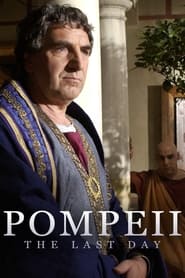
In 79 AD, one of the infamous natural disasters in human history occurred when Mount Vesuvius erupted. With speculative dramatizations of various inhabitants' final hours along with detailed documentation of the known facts concerning the eruption, the horrific day is vividly brought to life.
Before the breakout of the Sino-Japanese War, Hong, Wang, and Peng were best friends. Hong and Wang secretly joined the local guerrillas after the Japanese began invading China. Hong ran a small business and Wang worked as a courier for a Japanese trading firm, hiding their true identities in order to collect intelligence on the Japanese for the Eight Route Army, and established a railway guerrilla unit. Wang soon found out that the trading firm he was working for was indeed an intelligence unit of the Japanese. They infiltrated the Japanese special forces and eliminated many Japanese. Suspicions arise from the Japanese as to the real identity of the individuals suspected of being part of the railway guerrilla forces, so called Flying Tigers unit, so the Japanese began to form a counter-spying operation and other under-handed means by recruiting Chinese traitors to uncover and eliminate them all.
The year is 1805. Napoleon ruled Europe. Ienari is the 11th Tokugawa Shogun. An incident, which was an open official secret, took place on the foothills of Mt. Fuji. Fearing attacks from within and without, the Shogunate planned to build a training castle utilizing the most advanced techniques. Two master castle architects, Sato Kikutaro and Kumai Hakuten, were selected to compete for the honor of building this castle. Lord Mizuno Dewa has even ordered the townspeople to assist both sides with their land surveys and preparations. This leads to fear on the part of farmers that their land will be taken away from them, and sets off a series of events which rock the nation to its very roots. With an all-star cast, this is an important story with relevance to current times. One of Ichikawa Utaemon's finest performances, a true classic!
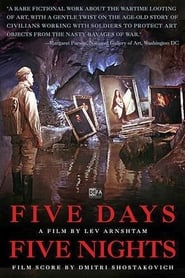
Five Days, Five Nights (Fünf Tage, Fünf Nächte) takes place in Dresden in the immediate aftermath of the Second World War. While Dresden is in ruins, over two thousand paintings by artists including Rembrandt, Raphael, Rubens, Giorgione, and Vermeer have disappeared from the city’s Old Masters Picture Gallery. Red Army captain Leonov and his soldiers have been ordered to recover the lost paintings. During the next five days, Dresden’s residents join the search for the collection. A secret Nazi document offers a first lead…
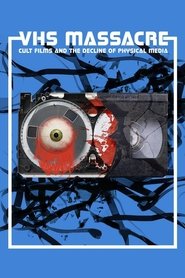
This lively documentary explores the rise and fall of physical media from the origin of film all the way through the video store era into digital media, focusing on B-movie and cult films. With icons like Joe Bob Briggs (MonsterVision), Lloyd Kaufman (Toxic Avenger), Greg Sestero (The Room), Debbie Rochon (Return to Nuke 'Em High), Deborah Reed (Troll 2), Mark Frazer (Samurai Cop), James Nguyen (Birdemic) and many others.
The peaceful passage of daily life in the Pacific Ocean is upended in a flash on March 1, 1954, with the first American nuclear test at Bikini Atoll. The far-reaching fallout forever changes the lives of the ocean’s cheerful inhabitants.
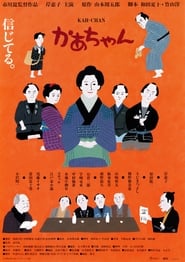
Okatsu is a widow raising five children - adults but still mama-dependent - in mid-eighteenth century Edo, Japan. Her frugality attracts unflattering comment even amid national tough times (the region is in famine) What Okatsu tells no one is that she saves so that a friend can start his own business once he's released from prison.
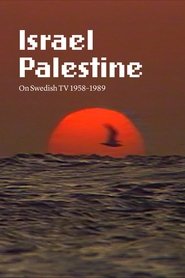
Archival film maestro Göran Hugo Olsson has assembled—from a vast catalogue of footage in the vaults of Sweden’s national television service SVT—accounts of the Israeli-Palestinian conflict as witnessed and represented by Swedish journalists. Stories of the beginning of the Israeli state interwoven with the Palestinian struggle for independence. News coverage with Yasser Arafat and interviews with Israeli foreign minister Abba Eban during a visit to Sweden unseen since first broadcast. From the tenth anniversary of Israel’s founding to the First Intifada, perspectives and encounters with statesmen, civilians, revolutionaries, and intellectuals tell the story from myriad angles of an evolving media landscape, revivifying a history of the ongoing conflict.
King Frederick II (aka "Frederick the Great") of Prussia is engaged in a major battle against the Austrian army at Kunersdorf, and things aren't going well. The Austrians are inflicting major casualties, and his army is beginning to crumble. Defeat seems inevitable when a combination of events gives him hope that he may pull victory from the jaws of defeat after all.
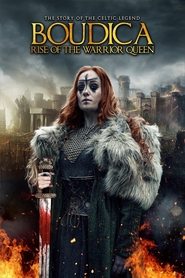
Boudica is an innocent sixteen-year-old girl who is forced into an arranged marriage by her father, the leader of a Celtic Tribe. However, her mother is unsure, doing whatever it takes to protect her daughter; so much so that she takes Boudica and persuades her to flee the village and live in her childhood home, away from an arranged marriage and a miserable life.
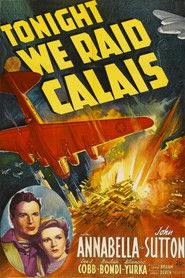
A British commando is on a one-man raid to destroy a bomb factory in Nazi-occupied France. He must enlist the aid of French farmers to complete his mission.
The Dutch declare unilaterally that they are not longer bound by the Renville Treaty, and to stop the ceasefire. On December 19, 1948, Army Commander General Spoor Noord Simons leads military aggression II to attack Yogyakarta, the capital of the Republic of Indonesia at the time. The Dutch arrested Soekarno-Hatta and exiled them to the island of Bangka. General Soedirman who suffered from tuberculosis leads the guerrilla war for seven months against the Dutch.
Leo and Lucille Frank are a newly wed Jewish couple struggling to make a life in the old red hills of Georgia. When Leo is accused of an unspeakable crime, it propels them into an unimaginable test of faith, humanity, justice, and devotion.
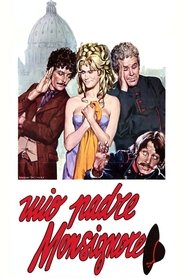
Against the backdrop of the Unification of Italy, two men have the dream of being recognized by their respective, illustrious, fathers: a bishop and the King.
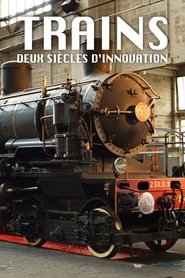
Nearly 200 years ago, the train revolutionized our lives. It redrew the maps of states and nations, and changed concepts of distance and time like no other invention before. What visionaries imagined the development of the railroad? How did we get from the first chugging locomotives to the smooth giants of speed we see today? How does France's extensive rail network keep running smoothly, 24/7?
We have detected that you are using an ad blocker. In order to view this page please disable your ad blocker or whitelist this site from your ad blocker. Thanks!