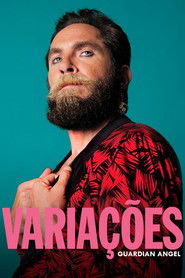
Film biography dwelling on the hectic artistic life of António Variações, a famous Portuguese pop rock singer from the 80s, who died from AIDS-related complications in 1984.
The story follows a young man who gets to know a girl and causes her many problems. But when he's exposed to an accident, his life takes a drastic turn.
It's 1947 and the borderlines between India and Pakistan are being drawn. A young girl bears witnesses to tragedy as her ayah is caught between the love of two men and the rising tide of political and religious violence.
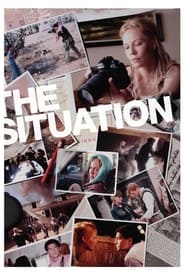
The first U.S.-made film drama set during the Iraq war, THE SITUATION chronicles the tragic death of an Iraqi teenager at the hands of U.S. soldiers. The incident sets off an "investigation," a cover-up, and complications involving Iraqi mayor Sheikh Tahsin (Saïd Amadis), who has a complex relationship with the Americans.
Benito Freire, a pedlar in a small village in northern Spain suffers from epileptic seizures and rumours start to spread that he may be a werewolf and responsible for a series of killings. The local Abbot is called upon to form a team to investigate, in an effort to halt the harrowing murders.
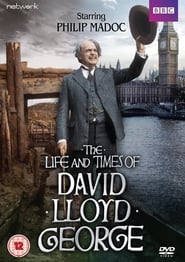
The Life and Times of David Lloyd George charts the life of the controversial Liberal politician with Philip Madoc in the titular role. The title theme, Chi Mai, was by Ennio Morricone
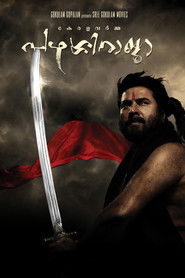
Set in the backdrop of the seventeenth century, the royal family of Kottayam is ruled by Pazhassi. The British government begins to impose heavy taxes on the locals in the Thalassery region of Kerala.
[...] "History has made Vietnam one of my favourite places... The links that you establish with people and places very often seem totally unexpected. But it is not a question of chance. It is, among other things, a question of history, of a sequence of events, "that's how it is". Once that is admitted, you can spend a lot of time trying to understand why that is how it is." (Robert Kramer)
A history drama portraying the confrontation between the indigenous Ainu people living on Japan’s northernmost main island—then called “Ezo” and now known as “Hokkaido”—and the “sisam”, the Ainu word for ethnic Japanese.
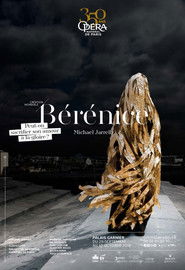
Titus and Berenice love each other; under the watchful eye of Antiochus, the hopeless lover, they try yet refuse to understand each other. Taking up the “majestic sadness” of these alexandrines, among the greatest verses in the French language, Michael Jarrell amplifies the power of words, making them a vehicle for spaces and identities that, from Rome to Jerusalem, are unceasingly questioned.
In the Edo period of Japan, a samurai’s life belonged to his lord. On the battlefield or in the home, a loyal samurai must always obey his lord’s commands. This is the tragic story of one such loyal samurai, whose love for his family forced him to make the ultimate choice of disobeying the wishes of his lord.
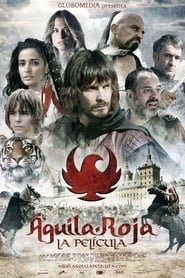
Early XVII century. A summit between France, England, Portugal and the Pope is to take place in Spain, home of the masked hero known as Red Eagle. The countries are coming together under the guise of looking for a solution to the conflict between Spain and Portugal; however, the ulterior motive is to attack the Kingdom of Spain. The Marchioness of Santillana and her fellow conspirators have hired an assassin to finish off the Red Eagle to guarantee the outcome of their plot. The townspeople and the whole kingdom will be at the mercy of the traitors, but the Red Eagle will be there to help them.
Set in Goianinha, a small town in the Brazilian countryside, the film follows the journey of young people who feel out of place in their own land. As they question their identity and sense of belonging, they face challenges in an environment where gender, racial, and sexual diversity still encounters resistance. While navigating both internal and external conflicts, they realize that, despite the town’s limitations, certain memories can redefine their connection to it.
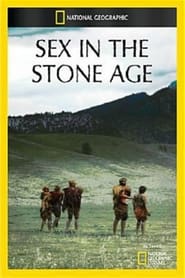
A fragment of a pinky bone and a tooth twice the size of today's average molar are the only remnants of a species we now know lived at the same time and place as modern humans—and interbred with them. They are a part of us we never knew existed. What did these "people" look like? And how do they fit into what we thought we knew about our biological development as a species?
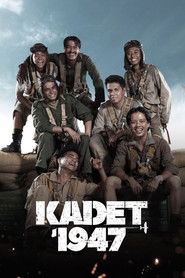
When the Dutch initiates an aggression against Indonesia to regain its rule post World War II, a group of inexperienced cadets need to defend the last remaining airbase so they may have a chance to help the Republic win the revolutionary war and to protect what they have come to care for.
We have detected that you are using an ad blocker. In order to view this page please disable your ad blocker or whitelist this site from your ad blocker. Thanks!