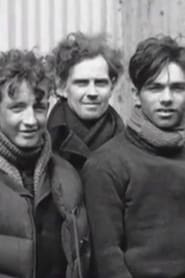
Canada: A People's History - Episode 14: 1940 to 1946 CE. Canada comes of age in the anguish of World War II, with soldiers on the beaches at Dieppe and women in the industrial work force back home. The country's military role, and the domestic, social and political consequences of the war are traced through poignant stories of Canadians on both sides of the Atlantic. The horrific global conflict steals the innocence of a generation... but brings hope for a new future.
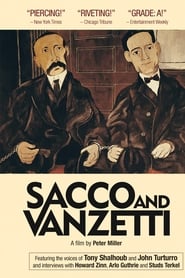
SACCO AND VANZETTI is an 80-minute-long documentary that tells the story of Nicola Sacco and Bartolomeo Vanzetti, two Italian immigrant anarchists who were accused of a murder in 1920, and executed in Boston in 1927 after a notoriously prejudiced trial. It is the first major documentary film about this landmark story.
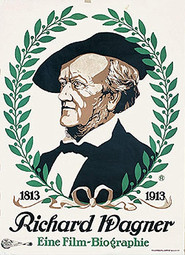
This biographical portrait of composer Richard Wagner (1813-1883), feature-length and lavishly produced, was released in conjunction with the centennial of his birth. It's an outstanding achievement in many respects. Naturally it looks primitive by modern standards, but contemporary viewers should bear in mind that it was made at a time when the motion picture industry was still in its infancy, and feature films were still a novelty. The very notion of a silent movie about a composer may seem odd, but Wagner is an ideal choice, simply because his life was so tempestuous and dramatic. Wagner's personality was operatic, while his tumultuous love life unfolded like a soap opera. He knew great success and abysmal failure, luxury one day and poverty the next. He participated in the wave of revolutions that swept Europe in the late 1840s, and had to flee Germany under threat of arrest.
In the middle of a broadcast about Typhoon Yolanda's initial impact, reporter Jiggy Manicad was faced with the reality that he no longer had communication with his station. They were, for all intents and purposes, stranded in Tacloban. With little option, and his crew started the six hour walk to Alto, where the closest broadcast antenna was to be found. Letting the world know what was happening to was a priority, but they were driven by the need to let their families and friends know they were all still alive. Along the way, they encountered residents and victims of the massive typhoon, and with each step it became increasingly clear just how devastating this storm was. This was a storm that was going to change lives.
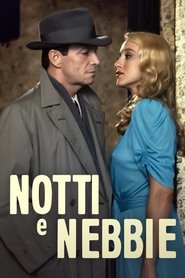
Milan, the last months of WWII. While everything starts to crumble down, RSI police chief Bruno Spada tries to crush the local anti-fascist resistance.
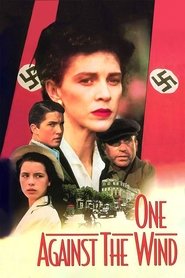
Mary Linden works for the French Red Cross in Occupied France during World War II and helps allied soldiers who have been shot down to escape to the unoccupied side. Her activities are complicated by her high profile and her daughter's love affair with a German officer. Based on the true story.
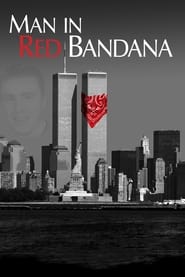
"Man in Red Bandana" is about Welles Remy Crowther, an extraordinary 9/11 hero. However, how his heroics became known is even more remarkable. Eight months after the disaster, his parents learned about how their son spent his last hour due to an ordinary object ... a red bandana. This revelation dramatically shifts their perspective on their loss. After hearing his remarkable story and how it unfolds, viewers will see how the actions of one man have touched 1,000s. This inspirational segment of the film depicts the unique, diverse and folklore ways that Welles is honored throughout the United States including in art, sports and song. Even President Barack Obama pays homage to this young man in the film. Our uplifting ending culminates in the revelation of a secret about Welles that can only be described as "perfect".
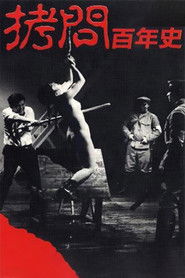
The movie takes place in four periods: the first, a group of female Christians are raped and crucified in 18th century Japan. The second deals with a man who beats his cheating wife and her lover. The third, is set in WW2 where inquisition soldiers torture, rape and abuse female traitors, and the fourth story deals with soldiers raping and abusing suspected female spies.
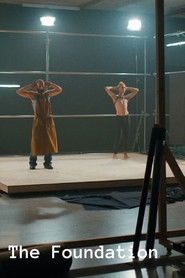
A portrait of a site and its multiple layers of existence, The Foundation takes place around Tom of Finland’s Foundation in Los Angeles, exploring the multiple layers, sub-communities, interpersonal relations, and erotic and artistic imaginaries that this site hosts, promotes, and projects.
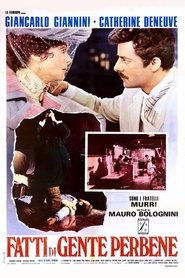
Based on a true incident, this tells the story of a troubled young man who kills his sister's reactionary, violent and abusive husband and is eventually arrested for the murder. However, the dead husband happened to be a member of the Italian nobility, and the trial starts to turn into more of a prosecution of the defendant's socialist politics and the activities of his father, a well known liberal social reformer, than the actual crime itself.
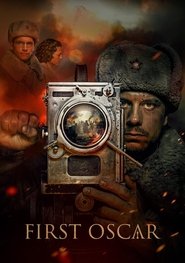
The film follows two student cinematographers who, as the war approaches Moscow, refuse to be evacuated and instead volunteer to be front-line cameramen capturing the horrors of war and heroism of the soviet soldiers. At the same time, we witness another storyline taking place in the US. After the premiere screening of the already completed documentary “Moscow Strikes Back”, one of the members of the Academy Awards selection committee is trying to persuade his fellow colleagues to establish a new category of Best Documentary in the upcoming Oscars event.
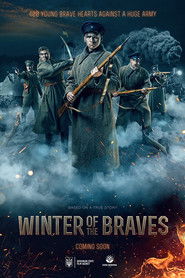
1918 Ukraine. Patriotic students, protagonists of the film, get ready to defend Kyiv and fight heroically in the Battle of Kruty. On this historical background reveals the story of the Savytskyi family - the general of Ukraine's counterintelligence and his two sons, Andrii and Oleksa.
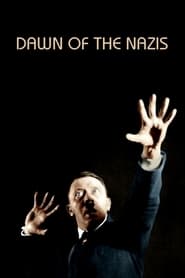
How Germany was when its people entered the nightmare of World War II? Despair and fear lead a hungry population to follow the chilling call of just one man to world domination. A real-life horror story, an ominous tale of violence and deception, which takes place from 1919 to 1934. (Entirely made up of restored, colorized archival footage.)
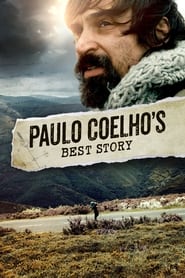
Paulo Coelho is the world’s most translated living author, his books having sold over 165 million copies. But he was not always the inspirational global phenomenon he is today. Like the heroes in his spiritual classics THE ALCHEMIST and THE PILGRIMAGE, he long-searched for his calling, flirting with death, escaping madness, falling in love, and making rock ’n’ roll history in Brazil, all-the-while striving for success as a writer. A wild ride through a lifetime of stranger-than-fiction adventures, PAULO COELHO’S BEST STORY is a profoundly moving film that goes straight to the heart of the most beloved literary guru of our time, revealing the most incredible wonder of all: the man behind the masterpieces.
We have detected that you are using an ad blocker. In order to view this page please disable your ad blocker or whitelist this site from your ad blocker. Thanks!