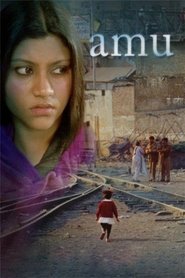
Amu is the story of Kaju, a twenty-one-year-old Indian American woman who returns to India to visit her family and discover the place where she was born. The film takes a dark turn as Kaju stumbles against secrets and lies from her past. A horrifying genocide that took place twenty years ago turns out to hold the key to her mysterious origins.
Tuur and Lambert are best friends. But the war is closing in and is about to change their lives forever. Tuurs dad joined the resistance and even his big brother seems so be part of it. Lamberts family on the other hand choose to obey the Germans. Then a new girls from the city shows up, befriending the boys but telling her secret to only one of them. A choice that separates the boys and ultimately gets her in trouble.
French-American artist Niki de Saint-Phalle, from the age of 23, is a model and an aspiring actor who is married and has a two year old daughter. Together, they flee the U.S. during the oppressive McCarthy era and come to France, where they experience a short-lived euphoria. Soon, distant and frightening memories begin to emerge in Niki’s mind. Her vocation as an artist will be her salvation.
Nick is a writer in New York when he gets posted to a bureau in Greece. He has waited 30 years for this. He wants to know why his mother was killed in the civil war years earlier. In a parallel plot line we see Nick as a young boy and his family as they struggle to survive in the occupied Greek hillside. The plot lines converge as Nick's investigations bring him closer to the answers.
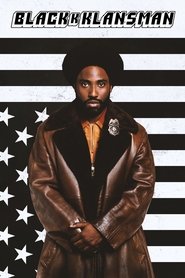
Colorado Springs, late 1970s. Ron Stallworth, an African American police officer, and Flip Zimmerman, his Jewish colleague, run an undercover operation to infiltrate the Ku Klux Klan.
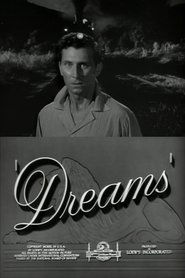
In World War I, a Canadian soldier finds himself trapped in a hole while the war carries on around him. There, he finds himself conversing with a German soldier trapped in an adjacent crater, who reminds him of his own German heritage. While tensions are high, there’s a camaraderie there that can’t be denied.
Before there was Disneyland, there was Coney Island. By the turn of the century, this tiny piece of New York real estate was internationally famous. On summer Sundays, three great pleasure domes--Steeplechase, Luna Park and Dreamland--competed for the patronage of a half-million people. By day it was the world's most amazing amusement park, by night, an electric "Eden".
Starring Masahiko Nishimura, "MADO(Window)" is an extremely closed, socially conscious drama based on a true story of the actual court case known as “Yokohama Secondhand Smoke Trial" in Japan, This is the first feature film directed by a successful commercial director, Mao. Being a son of the plaintiff, he had a great passion for tackling this sensitive issue caused by chemical sensitivities.
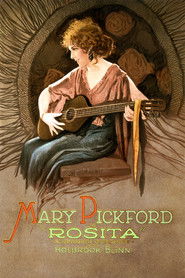
The King tosses Rosita in jail and when Don Diego, who Rosita loves, tries to defend her, he too is thrown in jail. While Don Diego is sentenced to be executed, the King lusts after Rosita and decides to put her up in a luxurious villa. To give her a title, he marries her to a masked nobleman, who turns out to be Don Diego.
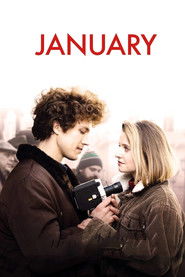
It is 1991 in Latvia and nineteen-year-old aspiring cinematographer Jazis’s whole world is thrown into chaos as he is dragged into the people’s peaceful protests against the Soviet Army’s attempted takeover of power in his country.
Orphans is the true story of a forbidden love affair set in the oppressive and violent atmosphere of nineteenth century Mexico. One man, Melchor Ocampo, driven by the twin passions of love and idealism, defies the stain of illegitimacy to shake off the crippling yoke of Spain and the Catholic Church. In so doing he becomes a founding figure of modern day Mexico.
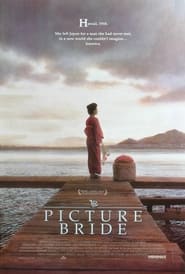
Riyo, an orphaned 17-year old, sails from Yokohama to Hawaii in 1918 to marry Matsuji, a man she has never met. Hoping to escape a troubled past and start anew, Riyo is bitterly disappointed upon her arrival: her husband is twice her age. The miserable girl finds solace with her new friend Kana, a young mother who helps Riyo accept her new life.
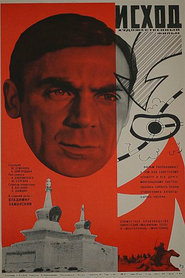
It shows how the October Revolution affected the hearts of the Mongolian people, and how they defeated the white bandit Baron Ungern at the beginning of the revolution and put an end to his evil activities.
It is the night of March 25, 1949. A full moon hangs over Estonia. Endless rows of cattle cars are waiting to transport thousands of Estonian families, asleep in their homes, to Siberia. The Stalinist regime is ready to treat people like animals.
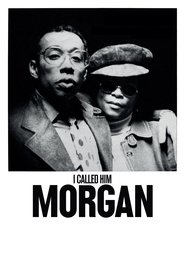
Part jazz history, part true-crime tale, Kasper Collin’s new documentary employs extensive archival footage and new interviews to tell the tragic story of the magnificently talented trumpeter Lee Morgan and his common-law wife Helen, who murdered him in a New York bar in 1972.
We have detected that you are using an ad blocker. In order to view this page please disable your ad blocker or whitelist this site from your ad blocker. Thanks!