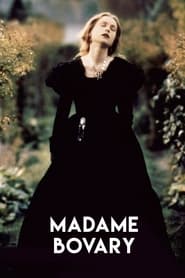
In 19th-century France, doctor's wife Emma Bovary seeks to escape her dull provincial life through various extramarital affairs and extravagant spending, leading to tragic consequences.
In 1928 Philippines, under the shadow of American colonialism, Pepito dreams of a life beyond his village, while his father pressures him to inherit the ancient role of circumciser. Amidst forbidden friendships and unrequited loves, Pepito’s journey takes an unexpected turn, challenging the very heart of tradition and identity.
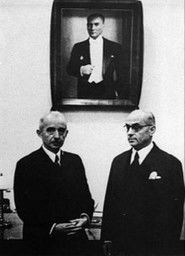
The multi-party democratic regime that we take for granted in Turkey today is actually the product of 23 years of struggle and search. From the establishment of the Republic until 1946, three attempts were made to transition from a single party to a multi-party. The first of these was in 1924. Progressive Republican Party came up against the Republican People's Party that ruled the country. However, this period, when a new republic was built in pain, did not allow an oppositional voice to survive. The Progressive Party was closed after six months. Some of the rulers were imprisoned. Some of them were sentenced on death rows in the case of the assassination of Atatürk.The second attempt was made six months later, in 1930, with the Free Party. But the Free Party survived only 97 days.Finally, after another 16 years, the Democrat Party came in 1946 and the one-party regime became history for Turkey, never to return.
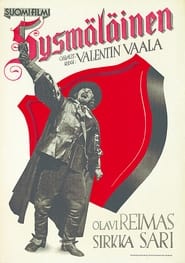
In 17th century Finland young Arvid is forced to marry Brita but their ways soon part when their respective fathers move to different places. Years roll by and Arvid grows up into a handsome and respected Thirty Years' War veteran known for his excellent fencing skills. However, he has fallen madly in love with a local maiden who does not reciprocate his advances, not to mention that his forced marriage to Brita is still valid.
In the middle of the 17th century, the Marquise de Sévigné wanted to make her daughter a brilliant and independent woman in her own image. But the more she tries to control the young woman's destiny, the more she alienates her. Mother and daughter then experience the throes of a singular and devastating passion. A major work of French literature is born from this devastation.
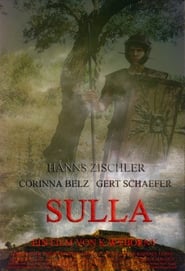
The story is set against the background of a bloody civil war in the Roman Empire. Sulla is in the countryside outside Rome and prepares to move into the city, that is in the hands of his enemies. He waits and turns to reflections. And to his lust.
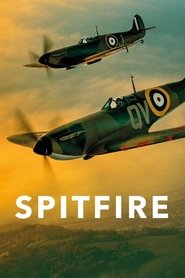
A feature documentary about the people and the planes that helped win World War War II. Through people personally connected to the events, the film investigates the story of how the Spitfire, its stable-mate, the Hawker Hurricane and its great adversary, the Messerschmitt 109 came into being during the huge advances in aviation in the interwar period—and then how the pilots fared in combat, three miles up in the skies over Europe, Africa and Asia.
Booker tells the true story of Booker T. Washington, who, as a young slave, dreams of learning to read and write. After the Civil War frees him, Booker is forced to work long hours in a salt furnace to help his family survive. But with hard work and persistence, Booker finds a way to learn and gain the freedom that comes with education.
West of Ukraine, 1945. According to the intelligence of the First Ukrainian Front, a special detachment led by Hauptmann Hintze entered the Carpathian region in search of gold for the needs of Germany. In order to get ahead of the enemy, the Chekists recruit a forester. Together with the Chekist Olga, they are supposed to be looking for a place to cut down the forest. In fact, Krapivych is tasked with protecting Olga, who is gathering information about the actions of a German group of saboteurs, which she is hiding in a pursuit squad, and looking for gold ...
Having fought in the First Carlist War, Martin returns to his family farm in Gipuzkoa only to find that his younger brother, Joaquín, towers over him in height. Convinced that everyone will want to pay to see the tallest man on Earth, the siblings set out on a long trip all over Europe, during which ambition, money and fame will forever change the family’s fate. A story based on true events.
Conceived as a kaleidoscopic mosaic, the film follows the imprint Franz Kafka left on the world from his birth in 19th-century Prague to his death in post-WW1 Vienna.
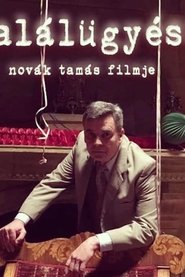
The Death Prosecutor (...) [focuses] on a significant court case in the period of the post-1956 retaliations, through the true story of a newly graduated prosecutor, Endre Grátz.
https://english.nmhh.hu/article/195551/Online_media_has_gained_ground_as_a_source_of_information_on_the_Hungarian_parliamentary_elections
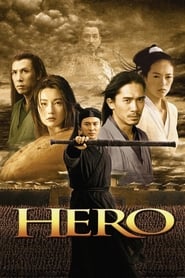
During China's Warring States period, a district prefect arrives at the palace of Qin Shi Huang, claiming to have killed the three assassins who had made an attempt on the king's life three years ago.
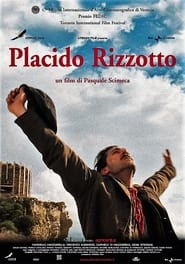
As a child, Sicilian Placido Rizzotto saw his father imprisoned for a crime he didn't commit, and as a young man he fought in World War II, first as a soldier and then as an anti-fascist partisan. These events have left Placido with little taste for petty tyranny and with a desire to promote social justice. Upon his return home, he becomes increasingly aware that the Mafia has taken hold of his village, witnessing angry and frustrated as gangsters control local politics and take whatever they want from the people. Placido helps to form a trade union as a challenge to the Mafia's authority, and attempts to organize the villagers into a collective to grow crops in the fields taken by the Mafia.
A historical drama set in Roman Egypt, concerning philosopher Hypatia of Alexandria and her relationship with her slave Davus, who is torn between his love for her and the possibility of gaining his freedom by joining the rising tide of Christianity.
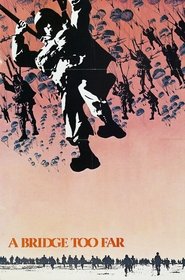
The story of Operation Market Garden—a failed attempt by the allies in the latter stages of WWII to end the war quickly by securing three bridges in Holland allowing access over the Rhine into Germany. A combination of poor allied intelligence and the presence of two crack German panzer divisions meant that the final part of this operation (the bridge in Arnhem over the Rhine) was doomed to failure.
We have detected that you are using an ad blocker. In order to view this page please disable your ad blocker or whitelist this site from your ad blocker. Thanks!