John Nisheto, a Native American, saves Senator's son Jack Burr during World War I. Upon returning to the United States, John begins a relationship with Jack's sister, Agnes, despite Jack's initial objections due to John's ethnicity and his ignorance of John's heroic act.
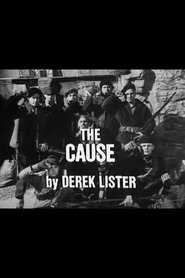
"I wish I could write ... about what Spain was like - a real cause. Not just Cornford, Hemingway and Orwell, but the ordinary blokes who went." A confused industrial dispute at a London hospital triggers off in trade unionist George Harley 's mind memories of his days fighting in the Spanish Civil War, when the issues seemed so much clearer.
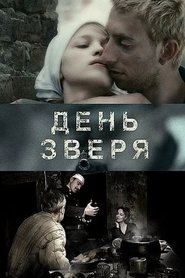
1945. Young German soldier is hiding from Soviet soldiers in abandoned house. Every day he sees a girl who moved to the house next door until finally he falls in love with her.
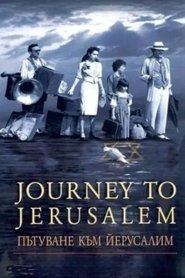
Two German-Jewish children flee Nazi Germany in the early 1940s and try to escape to Palestine via Bulgaria. When their uncle dies during the journey, they are taken in by a troupe of travelling performers.
Based on the true story of Air Force Combat Control Technician (CCT) Chapman, who died in battle on March 4, 2002 during the War in Afghanistan. Following his death, no one imagined it would take over a decade for the truth of what really happened on that snowy mountainside to emerge.
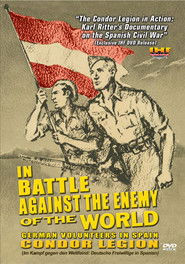
Nazi propaganda film about the Condor Legion, a unit of German "volunteers" who fought in the Spanish Civil War on the side of eventual dictator Francisco Franco against the elected government of Spain.
When a young SS soldier encounters an avant-garde theater-troupe of survivors celebrating the end of WWII, he must come to terms with his complicity in their grief.
Europe, autumn 1944. In the middle of a platoon of the 82nd Airborne, errors of command are going to isolate a small group of men who are under the command of Sgt. Pallumbo. Their destiny, mingled with hope and death, is going cross that of a family of citizens who struggle to survive too.
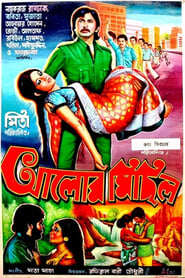
Alor Michil is a 1974 Bangladeshi patriotic film which focuses on the independence movement of 1971. Written and directed by Narayan Ghosh Mita, it stars Abdur Razzak, Babita, Faruk and Anwar Hussain in lead roles. It has been selected for preservation by the Bangladesh Film Archive
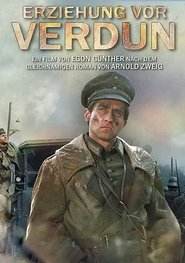
The armouring soldier and writer Werner Bertin is ordered to the Western Front to France during the First World War. The use before Verdun - with all the horrors of war in the period 1916/1917 - brings a fundamental change of consciousness for the academic from Berlin. The intellectual devoted to bravery by fate develops into a disappointed but rebellious being. He sees more and more the injustices of warlike conflicts and their social causes.
We have detected that you are using an ad blocker. In order to view this page please disable your ad blocker or whitelist this site from your ad blocker. Thanks!