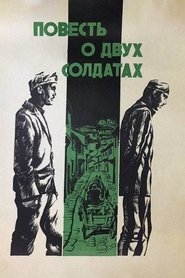
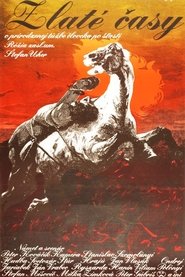
1943. WWII. Senior Sergeant Maksudov and his contact Zakirov, who were captured, manage to escape from Germany to Bulgaria. But here Zakirov ends up in prison, and Maksudov manages to escape from the chase and join the Bulgarian partisans.
There have been many evil men in the history of the world including serial killers, rapists and mass murderers – but none of them as extreme and as monstrous as Adolf Hitler.
Could a nineteen-year-old girl change the course of history simply by faith? From ordinary farm girl to extraordinary hero, the life of Joan of Arc was one of conviction and courage. Fifteenth-century France was devastated by an ongoing war in which women did not fight. Yet Joan heeded the counsel of angels and transformed into a military leader, something her country needed but many feared. In this BYUtv original special, discover the stalwart spirit, military prowess, and enduring influence of Joan of Arc.
The final stage of the great artist's life, a stage in which Witkacy decides to destroy himself. A growing sense of danger, the futility of all actions, and fear of what is to come accompany him constantly during his escape from Warsaw to the East at the outbreak of World War II. Everyday facts and events are intertwined in the film with reminiscences and images from his life, supported by the artist's inner monologue. The style of narration and the way of filming make the film a poignant study of the writer's inner disintegration. By emphasizing the painterly quality of the image and introducing dreamlike themes, Kluba captures on screen the characteristics of both Witkacy's playwriting and painting.
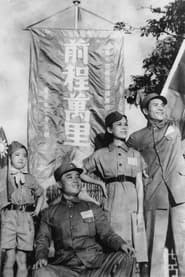
Driver Ko Wah (Lee Ching) refuses to transport ammunitions for the enemy, and is sent to jail after a scuffle with his traitorous boss. Although down and out, Ko takes in Siu-fung (Yung Siu-yi), an unwilling erotic dancer who has fled the war to Hong Kong. They may lead destitute lives, but their conscience remains intact. Director Cai Chusheng co-founded the National Salvation Association of Cinema. When Ko makes a uproar at the dance parlour and rips apart his friend's zombie costume, it represents Cai's criticism on the muddling-along attitude of Hong Kong society at the time. The characters' decision to return to the mainland to join the resistance effort also foretells Cai's decision to do the same in real-life.
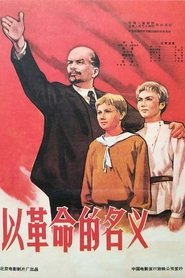
In 1918, shortly after the Soviet Socialist Revolution in October, the Red Army soldier Savelyev went to Moscow and was assassinated by counter-revolutionaries at a small station. The sons Vasya and Misha have just lost their mothers, and now they have lost their fathers, and they have no choice but to wander into Moscow. Lenin and Dzerzhinsky met the two children and took them in and took care of them.
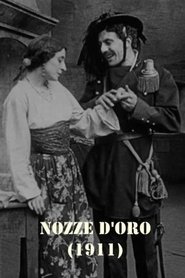
Evocation of a dramatic episode of the Second World War told by an old guard. Boarded as a non-commissioned officer on the battleship sailed from Pola and headed south. In time of danger, the man is forced to sacrifice the lives of seven sailors and the son of the Captain, his good friend, in order to save the rest of the crew.
Army Aviators say they fly "above the best" see the lengths these heroes will go to, to protect the soldiers on the ground, and each other during intense combat in the most dangerous places on Earth.
Three separate stories depicting the tense everyday life during occupation, as seen through the eyes of children. In “On the Road,” the two main protagonists are lost in the September’s strife: a young boy, and a soldier transporting the valueless documents of his broken unit. In “Letter from the Concentration Camp” the story’s protagonists are young boys who help their mother during the hardships of the occupation. Their treasure is an officer uniform belonging their father who is being held in a prisoner of war camp. In “Blood Drop,” the Germans find a set of typical Aryan characteristics in this story’s protagonist – a Jewish girl, hiding in an orphanage.
To mark the 80th anniversary of the end of the Second World War, Wim Wenders shot a short film that takes us to the most secret place in Europe at that time: a map room in a school in Reims, France, which served as a war room for the Allies. On May 7, 1945, Nazi Germany surrendered there and the world war ended.
We have detected that you are using an ad blocker. In order to view this page please disable your ad blocker or whitelist this site from your ad blocker. Thanks!