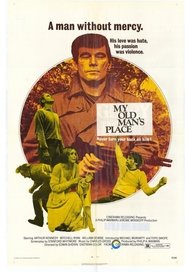
Two soldiers return from Vietnam with serious PTSD. They decide to go for a couple of days to a peaceful farm owned by the father of one of the men. A psychotic sergeant who also did tours in Nam, joins them. Personalities clash hard.
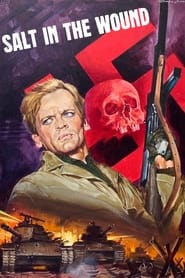
On April 1944, Joseph Stalin orders the Red Army to liberate the Crimea from the German occupiers. The Wehrmacht's local commanders beg Hitler to allow them to retreat from the vulnerable position, but he refuses. After a fierce battle, the Soviet forces destroy the German and Romanian units defending the peninsula and retake Sevastopol.
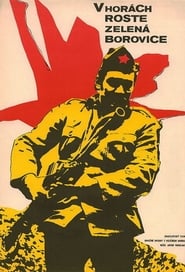
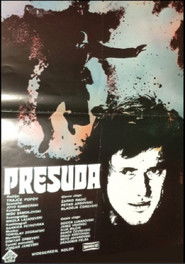
Communist party commissar Ivica is sent to the lowland village to monitor the local partisan squad. Despite their disagreements he befriends their leader Dikan and they plan to evacuate the chief headquarters. Dikan also sees the opportunity to have his personal revenge on an enemy officer, responsible for death of one of his men.
August 1944, and a captain in the Greek army in the Middle East, Jason, secretly disembarks on an island with the mission of gathering information on the state of the German defensive positions, in view of the imminent landing of the Allied Forces. To complete his mission, he makes contact with some rebels, but the Germans are aware of his presence and arrest twelve men to force him to surrender. Shortly before the deadline expires, a local man who had been declared a deserter shortly before the war began and had been in hiding, presents himself at his post and is executed, making his wife and son proud.
A documentary propaganda film produced by the U.S. Army Signal Corps about the Aleutian Islands Campaign during World War II. The film opens with a map showing the strategic importance of the island, and the thrust of the 1942 Japanese offensive into Midway and Dutch Harbor. Nominated for the Academy Award for Best Documentary Feature.
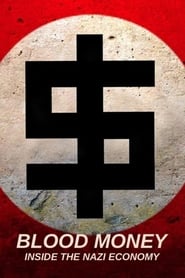
How did Nazi Germany, from limited natural resources, mass unemployment, little money and a damaged industry, manage to unfurl the cataclysm of World War Two and come to occupy a large part of the European continent? Based on recent historical works of and interviews with Adam Tooze, Richard Overy, Frank Bajohr and Marie-Bénédicte Vincent, and drawing on rare archival material.
In the conflict with the enemy in one battle lost in advance, the risk to die in vain, partisan Mitko Angelov, fleeing from the battlefield. He climbs onto the train and goes to see his mother, who has just returned from internment. When he returned to the brigade, Mitko was declared a deserter and was disarmed and bound. Since he lost his weapon, the Commissioner sent him to patrol the action to take weapons from the Germans. All partisans patrol that went with him dying and the only Mitko and Vane, who was seriously injured remain alive. Thinking it was dead Vane, Angelov returns to the brigade. But the commander did not believe him, thinking that he had fled from the battle, and that is why the prison in the basement. In the meantime, get wounded fighter Vane, and the story of the heroic struggle led by Mitko. But at the same time, a military court condemned him to death for desertion.
A twist of fate leads a recent Westpoint grad into being responsible for the execution of two fellow American GIs. The young lieutenant comes of age, and the two battle hardened veterans achieve a state of grace through acts of sacrifice.
During the Civil War a young soldier loses his nerve in battle and runs away to his home to hide; his sister puts on his uniform, takes her brother's place in the battle, and is killed. Their mother, not wanting the shameful truth to become known, closes all the shutters (hence the film's title) and keeps her son's presence a secret for many years, though two boyhood chums stumble upon the truth...
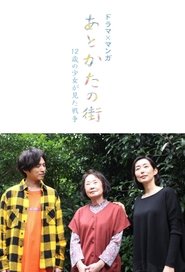
Yuki Ozawa is approaching her 50's and she has now began working on her first serialized manga. The theme of her manga will be based on her mother's personal war experience, who was only a 12 year old girl at that time. Yuki wants to create a piece that will pass down the memories of war to the future generations. With her editor, Sato, she goes to Nagoya to visit her mother, Ai (Ozawaai) to learn more about her mother's experience. At first, her mother reacts negatively to Yuki's request but soon she begins recalling her memories of love, life and the lives that were lost because of the air raids over Nagoya.
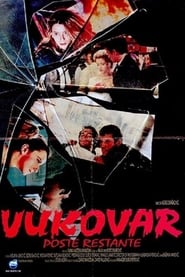
The violent break-up of former Yugoslavia is described from the Serbian point of view, using the story of ethnically mixed couple in war-torn city of Vukovar as metaphor.
We have detected that you are using an ad blocker. In order to view this page please disable your ad blocker or whitelist this site from your ad blocker. Thanks!