The story follows the Lorenzos and the Ojedas, the two land-owning clans in the island province of Negros, who were trying to cope and survive the war that lasted three tumultuous years, where they experienced or witnessed violence, blood, horror, and death. It is structured into three parts: Oro, a life of luxury and comfort in the city; Plata, a still-luxurious time of refuge in a provincial hacienda; and finally, Mata, a toilsome retreat deeper into the mountains. A war not only turned them into miserable people but also turned them into animals.
(Nadia), who was born and raised in (France), returns to (Iraq) to rediscover her roots and origins. During this journey, (Nadia) gradually uncovers the story of her grandfather, Haj (Najm) Al-Baqal, the owner of the date shop, and the man who was one of the prominent leaders of the revolution in (Najaf) against British colonialism in 1918. The film sheds light on the impact that Haj (Najm) Al-Baqal's struggle left on the people of (Najaf).
During the first Carlist war in the 1830s in Spain a lieutenant falls into the enemy's hands and is arrested. When condemned, he claims he only wanted to see his newborn baby.
Film reconstruction of five real stories about the heroic deeds of the residents of Kyiv region during the Russian occupation. A story about those who heroically and selflessly saved tens of thousands of Ukrainian lives.
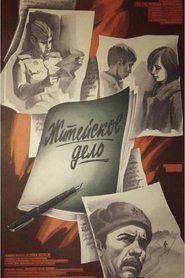
In 1917, the people of the Russian Empire are no longer willing to fight Germany, but the bourgeois government of Alexander Kerensky is unwilling to defy its imperialist allies and stop the war. Only Vladimir Lenin's Bolshevik Party is resolute in calling for peace. In the front, the soldiers of one battalion elect three delegates to travel to St. Petersburg with donations the troops collected for the Pravda newspaper: Gudushauri, Panasiuk and Ershov. The three arrive in the capital and describe the horrendous conditions in which the soldiers live to Joseph Stalin, Lenin's trusted aid and colleague. They join the Bolsheviks and take part in the storming of the Winter Palace, led by Stalin and Lenin. Stalin announces that the great dawn of revolution has broken.
The year is 1940 and tension is growing between the empires of United Europe and the Atlantic States. A bloody border incident puts both sides on high alert.
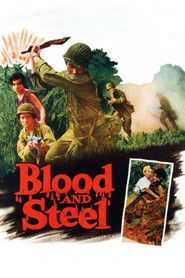
Two American POWs break out of a Japanese jungle prison camp with their captors' secret decoding device and try to reach freedom despite being slowed by an opportunistic sea captain, his pretty daughter, and a black marketeer.
Although released anonymously, as was the custom with all films produced by the Italian Navy, La Nave Bianca is the first feature-length effort directed by Roberto Rossellini; it is also very much the work of its co-writer and supervisor Francesco De Robertis. The film combines a documentary look at the Italian Navy during World War II with newsreel combat footage and a scripted love story performed by non-professional actors.
In the space between war and a new battle, NOT YET BEGUN TO FIGHT unfolds, offering an intimate look at the human cost of combat. A retired Marine Colonel reaches out to five men, a new generation returning from the battlefield. He brings them to the river. He puts a fly rod into their hand, teaches them to cast, and shares his secret: there are places where you can still be consumed by a simple act, find joy in a fight, and be redeemed as you gently release another creature, unharmed, into quiet waters.
A special forces operative is smuggled into a German POW camp with orders to blow up a nearby villa being used by the Nazis to house a secret weapons program.
In May 1940, feeling the RAF needs every man to fight to Luftwaffe, Geoffrey 'Boy' Wellum joins at 18, becoming the youngest ever Spitfire pilot. After an intense training, he soon bonds with the flying men of his squadron. In the air, danger is great, but on the ground drinks, sports and girls, in Geoff's case Sarah, provide great comfort. However in time, the casualties exact a grueling psychological toll, until his tour of duty is ended after 18 months.
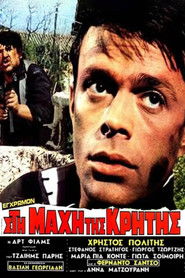
Summer 1949: end of the civil war in Greece. The last band of guerrillas of the Democratic Army is forced to abandon Mount Taygetus and to head for the sea. Everything behind them has collapsed and they can count on help from no one. In this long, desperate and aimless march, the group will end up by being annihilated by the National Army and the armed villagers.
The Mesopotamian Marshes, at the delta of the Euphrates and Tigris rivers, in the south of Iraq. This is where Mastour and Zahra grow up. Shortly after their marriage, Mastour and Zahra are forced to separate when the Gulf War breaks out. On the battlefield, Mastour befriends Riad, a young soldier from Baghdad. Mortally wounded, Mastour makes Riad promise to protect Zahra when the war is over. When Riad arrives in the village, he falls deeply in love with Zahra. But unable to bear the loss of her husband, Zahra shuts herself off. In this completely foreign environment that is hostile to this newcomer, and as a new conflict is on the verge of inflaming the whole area, Riad will do the impossible to find his place.
1933 in Germany. The rise of Nazism fears war and some officers, concerned the fate that hostilities would reserve to their country, organize an anti-Nazi group. They send a reporter, Golder, to communicate the plan of the German offensive allies.
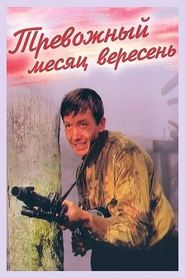
The first Polish film to discuss the failure of September 1939 Polish-German war, seen from the point of view of a university intellectual, fascinated by German culture, who decides to take active part in the conflict.
Six months after PETA's failure to fight Nippon, Hardo returns to his village in Blora. His presence is smelled by Nippon, tracked and pursued. In a chase one day and night before the proclamation of independence, a drama of struggle is revealed. The betrayal of Hardo's fiance's father is juxtaposed with the betrayal of his best friend Karmin; the resistance of Dipo and Kartiman juxtaposed with Hardo's resistance; the cruelty of the war and the ego of the invaders, a shidokan of Nippon juxtaposed with the deterioration of war victims of Hardo and Ningsih's father.
We have detected that you are using an ad blocker. In order to view this page please disable your ad blocker or whitelist this site from your ad blocker. Thanks!