Following the murder of Andre Toulon by Nazi assassins during the height of World War II, a young Danny Coogan finds his crate of mysterious puppets, and discovers their plan to attack a secret American manufacturing plant.
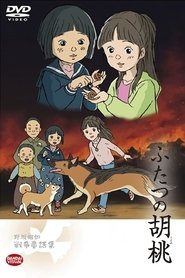
Chisato's journey home from Manchuria after the war. The story follows a young girl and her family as they get trapped in Manchuria during the Russo-Japanese War.
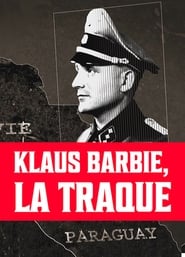
Historic archives shed new light on the secret history of Klaus Barbie, head of the Gestapo in Lyon in 1943-44, with particular attention being given to the scandalous protections that the German and American secret services provided him with.
In NATO-occupied Kosovo, a little girl writes an essay for the United Nations about her father who has gone missing. Meanwhile, the girl's grandfather becomes increasingly paranoid of the unseen threats that lurk in the dark.
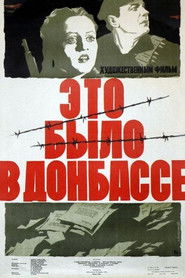
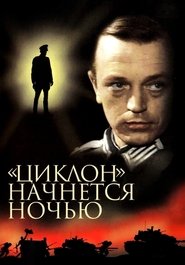
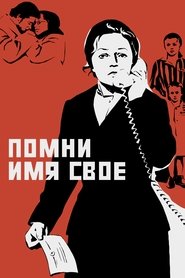
The film is about the Soviet youth who fearlessly fight in the years of the Great Patriotic War against the Nazi invaders in the German-occupied Donbass and continue the work of their fathers, who in their time defended the Soviet Union.
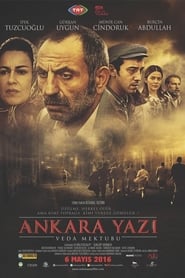
On August 10, 1978, a coffeehouse frequented by leftists in Ankara was raided. Even the strict rule in the country could not prevent this and similar atrocities. A few hours after the incident, which would later be known as the Balgat Massacre, the police detained many young nationalists in the surrounding neighborhoods whom they believed to be connected to the incident. Among those detained was Mustafa Pehlivanoğlu, who was only 20 years old at the time. Mustafa's detention marked the beginning of a legal battle for his mother, Zeynep, and his father, Ahmet Bey. Years later, Mustafa Pehlivanoğlu was sentenced to death by a court established by the September 12 Military Coup and was executed one morning without his parents even knowing about it...
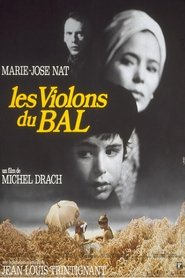
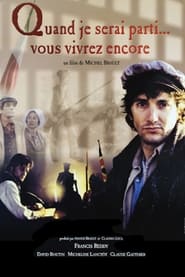
In this WW II drama based on an autobiographical story by director Michel Drach, a Jewish boy and his family living in Nazi occupied France, attempt to escape the cruel invaders. Later the boy grows up to become a filmmaker obsessed with chronicling his childhood.
Hnutove, Donbass, eastern Ukraine, 2015. Young Oleg lives in a war zone where anti-aircraft gunshots and missile attacks often resonate dangerously near. Although many inhabitants have already left this dangerous area, he remains with his grandmother, who has cared for him since his mother's death, because they have nowhere to go. They are just waiting for the war to end.
Beginning of WWII. Zinaida, a Russian woman, is taken prisoner by the Germans and sent to Auschwitz concentration camp together with several other women. She is imprisoned with her baby son, Gena, who is learning to walk and takes his first steps in the snow, in the concentration camp. They spend a few years together in the camp until they are separated, first within Auschwitz itself, then, for good, when the Germans are losing the war and decide to evacuate.
When East Baltimore drug King Pin, Ontario Banks (Nelson Irizarry) decides he wants total control of the entire city-wide drug trade, he enlists the help of his closest friends, Lucky (Micaiah Jones), Vince (Chris Clanton) and Littles (Kelvin Page), and his crew to take it all, one body at a time. Even if it means one of his own people. A war will rage in between Ontario, and Italian Drug cartel leader Michael Caprisci (Mike McMullin) on who will hold the crown.
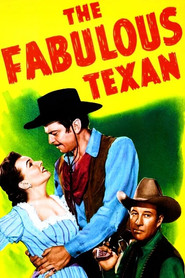
A couple of Confederate soldiers, returning home from the Civil War, find Texas transformed into an armed camp with a quasi-dictator gathering up land and power as fast as he can. The two former Rebels take on this despot each in his own way.
Ayaka Nakanishi is an ordinary twelve year old girl walking Ryan, her German shepherd, when heavy rain obliges her to seek refuge inside a telephone booth. The storm causes a strange phenomenon that sends both Ayaka and her dog back in time to March 7th, 1945.
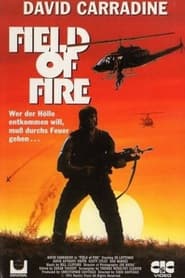
Sergeant Thomas Duncan takes his men behind enemy lines to recover a secret government fighter copter and its pilot, a secret weapon all his own. But once stationed in the dense jungle brush of Vietnam, their radio goes out all hope of contacting their home base is out, and it is up to Duncan and his men to get to the hook up point by the agreed time. A traitor in the home camp is sending messages to the enemy side; Duncan must hurry!
This short passion project delves deep into the trauma surrounding recent political strife. A fight over trust and purpose breaks out in the rubble of a post-apocalyptic town.
We have detected that you are using an ad blocker. In order to view this page please disable your ad blocker or whitelist this site from your ad blocker. Thanks!