The film begins with his capture by Philippine and US forces under Frederick Funston's command in 1901, then flashes back to 1886, when an old woman gives Aguinaldo and his childhood friend Candido Tirona cryptic prophecies. Ten years later, Aguinaldo is inducted into the Katipunan and later assumes leadership of its Cavite chapter while becoming mayor of Cavite El Viejo. When the trouble breaks out in Manila in late August 1896, Aguinaldo tries to assure the Spanish provincial government of non-interference and covertly marshals his forces despite a lack of weapons. Learning that the Spanish mostly put their forces in Manila, Aguinaldo finally mobilizes his troops and take the command of the Katipunan forces in Cavite
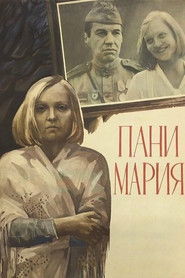
1944, WWII. Fierce fighting is underway in the Warsaw area. In a provincial rear town, soldier Ivan and merchant Marya meet, unaware that this meeting will change their destinies...
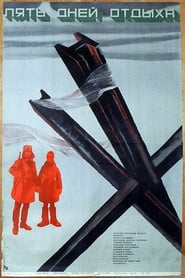
In December 1941. For five days from the front line in besieged Leningrad arrives for re-forming company. The soldiers are placed in barracks outside the city. A young soldier Alexei Kazantsev pays attention to the girl Olya. She comes to the barracks every day to see her father, Private Koshkin, who among the St. Petersburg volunteers is going to go to the front. Olya is sick, and from hunger she can hardly stand on her feet. Koshkin gives her his tiny ration, which is given to soldiers. Alexei meets Olga and does his best to save the girl. On the eve of Alexei's return to the front, Olga becomes his wife.
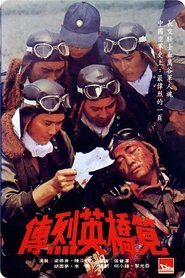
The true story of a small group of Chinese flying aces in 1937 at the beginning of the Second Sino-Japanese War, specifically the Battle of Shanghai and the Battle of Nanking.
During the Homeland War (1991-1995) Croatia was devastated with estimates ranging from 20-25% of its economy destroyed. Tens of thousands were killed and many more were left homeless. Through the voices of common people, Homecoming tells a story about the raise of a small, invisible Balkan country with enormous natural and human beauty from the ashes of terror; the country which still bears the scars, both physical and psychological, of the conflict during the War of Independence. It reflects upon a part of history that, although can never be changed, has molded and influenced a generation in a positive way.
Alexander Nikolaevich is very old. The war turned his whole life upside down. But he does not remember the war, and he does not remember insults, he remembers something completely different. He remembers gestures, hand movements, his hands. He forgave everyone. He is ready to shake hands with former enemies. Ready. But he can't. He has no hands. He lost them in the war.
As WW2 comes to an end in the former Yugoslavia, a man without an arm and his young son are on a mission. Their goal is to find and kill five members of the fascist militia who had tortured and killed their wife and mother
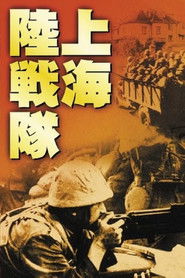
This film attempts to reconstruct the tension of the Battle of Shanghai through an episode in an understated way, introducting its story in a documentary mode. In the film story, Japan's marine regiment protects Japanese residents and Chinese refugees-women and young children-from rampant street fighting, Shanhai Rikusentai unsparingly uses its first eight minutes for an official-mannered self-justification of the war. From the viewpoint of explaining Japan's military operation,the narration refers to the city s spatial division in sync with maps on screen.
A two-hour documentary which recreates for the viewer one of the greatest battles in Canadian military history. The film was made to show that Canadian character at its best, forging an identity for a country that before the First World War had been seen only as a British colony - an identity and a character that became recognized and respected throughout Europe.
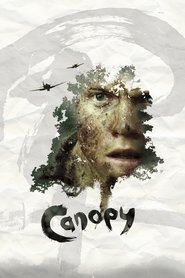
Wartime, 1942. Singapore. An Australian fighter pilot shot down in combat awakens suspended in the treetops. As night devours day, he must navigate through dangerous jungle in search of sanctuary.
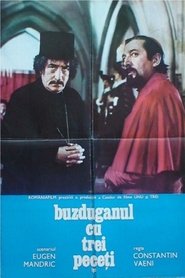
At the end of the 16th century, Wallachia's ruler Michael the Brave dreams of uniting the kingdoms of Wallachia,Transylvania and Moldavia into a single country known as The United Principalities.
Deeply hurt by his wife's adultery, a man leaves her and his son to live high up alone in the mountains of Montenegro. Many years later, the war breaks out and the two enemy factions must cross the very mountain. One of them seeks the man's help to find a path through the snow. Later that day, he finds out that one of the other side's members is no other than his son.
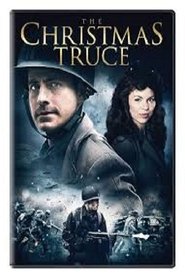
During a shaky 24-hour holiday truce amid the Battle of the Bulge, American Captain John Myers and a Belgian farm girl, Alina, fall in love. Forced to separate when fighting resumes, the couple vows to reunite, under a bell tower, the first Christmas Eve after the war ends, if each is alive and eager.
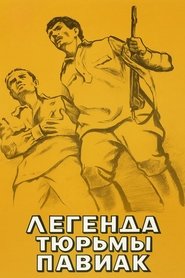
About the courage and resilience of two Tajik pilots who were captured by the fascists at the beginning of the war and ended up in the Pawiak political prison in Warsaw. At the first opportunity, the heroes make their escape.
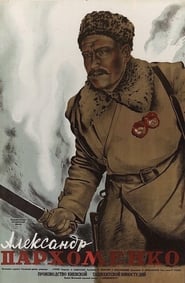
About the life and heroic death of the old Bolshevik-Lugansk resident, participant in the civil war, Aleksandr Yakovlevich Parkhomenko. In 1918, capturing Ukraine, the German occupiers sought to use the Haidamaks, the White Guards and the Greens in their struggle. By order of Voroshilov, Aleksandr Parkhomenko from Lugansk arrives in Tsaritsyn. At the same time, the Germans launched an active offensive. The "red" battalions are poorly armed, however, Parkhomenko manages to raise them to the attack and put the enemy to flight.
We have detected that you are using an ad blocker. In order to view this page please disable your ad blocker or whitelist this site from your ad blocker. Thanks!