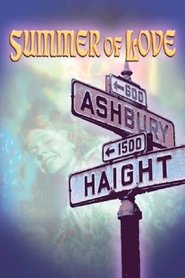
American Experience presents Summer of Love, a striking picture of San Francisco's Haight Ashbury district during the summer of 1967 -- from the utopian beginnings, when peace and love prevailed, to the chaos, unsanitary conditions, and widespread drug use that ultimately signaled the end. Academy Award-nominated filmmakers Gail Dolgin and Vicente Franco (Daughter from Danang) examine the social and cultural forces that sparked the largest migration of young people in America's history.
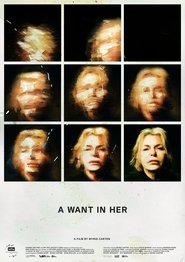
When her mother Nuala goes missing somewhere in Ireland, artist Myrid Carten returns from London to find her. Her search takes her into a feuding family, a contested house; and a history that threatens to take everyone down, including herself.
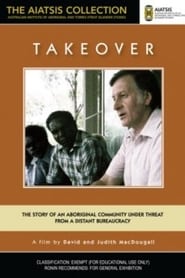
About Aborigines and Australian politics. On 13 March 1978 the Queensland Government announced its intention to take over management of the Aurukun Aboriginal Reserve from the Uniting Church. The people of Aurukun complained bitterly, believing that the Church was more sympathetic to their aims and fearing that the State was merely seeking easier access to the rich bauxite deposits on their Reserve. When the Federal Government took the side of the Aborigines the stage was set for national confrontation. Shows the situation at Aurukun during those crucial three weeks.
In the fall of 2002, it was announced that Benjamin Netanyahu would deliver a speech at Concordia University in Montreal, and reaction from the student body was swift and sudden.
THE OPENER is a feel-good, underdog music doc about a street performer who wrote 30 songs in 30 days to process his grief and isolation during the pandemic, and found that his music spoke to millions. When it reached the ears of one of his heroes, Grammy-winner Jason Mraz, he was invited on his very first tour and given a chance to prove himself on the big stage.
Elektro Moskva is an essayistic documentary about the Soviet electronic age and its legacy. The story begins with the inventor of the world's first electronic instrument, Leon Theremin, unveiling the KGB's huge pile of fascinating devices, some of which were musical. They all came into existence as a by-product of a rampant defense industry. Nowadays, those aged and abandoned 'musical coffins', as solidly made as a Kalashnikov, are being recycled and reinterpreted by the post-Soviet generations of musicians, sound collectors and circuit benders. The story of the Soviet synthesizers as an allegory to the everyday life under the Soviet system: nothing works, but you have to make the best out of it. An electronic fairy tale about the inventive spirit of the free mind inside the iron curtain- and beyond.
A musical journey through the swamps of the Louisiana Bayou, the juke joints of the Mississippi Delta and Moonshine soaked BBQs in the North Mississippi Hill Country. Visiting the last original blues devils, many in their 80's, still living in the deep south, working without management and touring the Chitlin' Circuit. Let Bobby Rush, Barbara Lynn, Henry Gray, Carol Fran, Lazy Lester, Bilbo Walker, RL Boyce, Jimmy 'Duck' Holmes, Lil Buck Sinegal, LC Ulmer and their friends awaken the blues in all of us.
In relation to some of Pasolini's visits to Palermo for this last film, in 2000 Ciprì and Maresco shot Arruso, which begins with a phrase by Pasolini ("I banished the word hope from my vocabulary") and consists of imaginary interviews with some local characters who are presumed to have had homosexual relationships with the director. The two record the testimonies, sometimes affectionate others less, of those who had the opportunity to meet him and know the trends on the occasion of that trip.
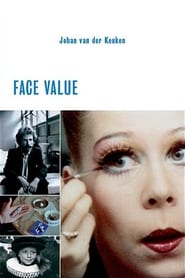
Face Value is a film combining a conscious approach with spontaneity, and contemplation with action. It presents us with the differing views of a region we call “Europe”, an imaginary Europe situated somewhere between London, Marseilles, Prague and the Netherlands.
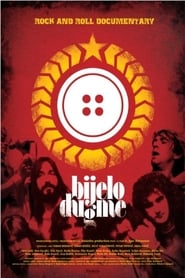
'Bijelo Dugme' was a legendary rock and roll band of the former Yugoslavia that is still enormously popular. The leader of the band was Goran Bregović - today a globally acclaimed composer of film scores and world music. This documentary, full of exciting archival footage, great music and juicy confessions deals with the specific time, culture, friendship and politics of the band, as well as the effect that Western popular culture had on the youth in this vibrant socialist country before it disintegrated.
One of the most daring and radical shows presented in Brazilian television: "Abertura". It was broadcast between February and October, 1979, with weekly editions, presented by Brazilian filmmaker Glauber Rocha. The video is a compilation of characters, statements, and interviews about the political and cultural situation of the country during the final stages of the Military Dictatorship.
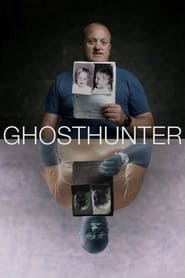
In Sydney, Australia, Jason King, a security guard and a part-time ghost hunter, has spent decades searching for his absent father. When this personal endeavor crosses paths with a police investigation, an unspeakable family secret comes to light.
The tapes in the program consist of some of Mekas’ earliest cassettes from the 1990s not long after he first began working with video as well as more recent mini-DV tapes from 2010s. The contents of the tapes have not been previously seen in their entirety. The footage provides rare insight into aspects of Mekas’ video-making practice, as well as his activities, thoughts, dreams, and concerns, especially during the later years of his life.
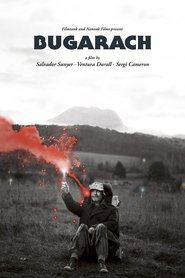
Bugarach. Nothing ever really happens in this bucolic village in Southern France at the base of the mountain that gives it its name. But the villagers' peace and quiet vanishes when the news story circulates around the globe like a viral video that this close-knit community of 194 inhabitants will be the only place on the planet to survive the December 21st apocalypse foretold by the Mayans. 'Bugarach' dives deep into the subject of the apocalypse to reflect on the fears and coping strategies of humankind in times of deep material and spiritual crisis in the Western world.
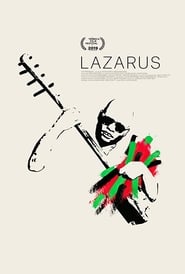
Following Lazarus Chigwandali, a street musician with Albinism from Malawi as he teams up with a London-based music producer to record his debut album.
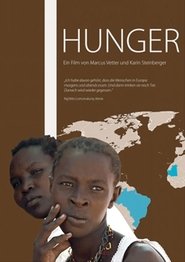
In five different countries, the filmmakers explore the question of why so many development aid projects have been so unsuccessful to date and how the so-called Third World could free itself from the grip of the First World. By undertaking a long journey through several continents, this committed documentary film impressively shows many facets of the problem, which it links together, puts its finger on wounds and reveals some frightening mechanisms. He is not concerned with "images of hunger", but with the connections between poverty and (European) prosperity, with justice in a globalized world.
We have detected that you are using an ad blocker. In order to view this page please disable your ad blocker or whitelist this site from your ad blocker. Thanks!