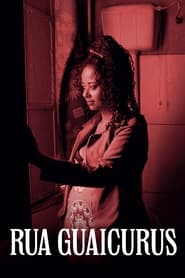
A red-light district in Belo Horizonte, Brazil. The camera is admitted into a "running house". Love for sale looks like a routine, dreary assembly line exercise here, sometimes almost like a comedy.
The Spanish Civil War (1936-1939) caused a great impression on the lives of most of the American artists of that era, so many movies were made in Hollywood about it. The final defeat of the Spanish Republic left an open wound in the hearts of those who sympathized with its cause. The eventful life of screenwriter Alvah Bessie (1904-1985), one of the Hollywood Ten, serves to analyze this sadness, the tragedy of Spain and its consequences.
A colour anamorphic musical look at London's Heathrow airport over 24-hours in November 1971. The subject was shot entirely at Heathrow airport without recording any direct sound. LHR's many layered tracks were all compiled, recorded and laid in post-production.
A filmed conversation between Winton Dean and Jonathan Balcon about their fathers Basil Dean (1888 –1978) and Michael Balcon (1896 –1977). Both men helped to pave the way for the British film industry.
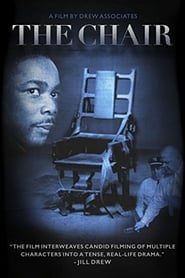
Follows a crusading lawyer as he embarks on a campaign to save an African-American man, Paul Crump, from the electric chair. Preserved by the Academy Film Archive in partnership with The Film Foundation in 2007.
A lyric documentary about home, time, memory and mortality, commissioned by the Centre Pompidou to accompany their retrospective of Terence Davies' work. Davies began to design this film based on his poems, but passed away before it could be realised. The film was produced posthumously according to Davies' instructions.
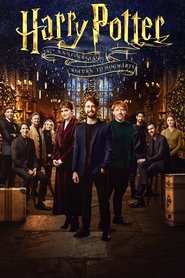
An enchanting making-of story told through all-new in-depth interviews and cast conversations, inviting fans on a magical first-person journey through one of the most beloved film franchises of all time.
Content creator Ethan Nestor battles personal and artistic crises as he races against the clock to develop a live show under increasingly-heavy pressure for his impending, sold-out, first-ever North American tour.
This investigation into the layers of mass incarceration and its shaping of the modern black American family is seen through the eyes of a single mother in New Orleans, Louisiana.
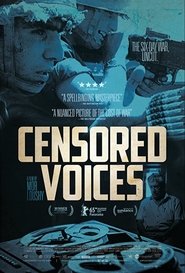
The 1967 'Six-Day' war ended with Israel's decisive victory; conquering Jerusalem, Gaza, Sinai and the West Bank. It is a war portrayed, to this day, as a righteous undertaking - a radiant emblem of Jewish pride. One week after the war, a group of young kibbutzniks, led by renowned author Amos Oz, recorded intimate conversations with soldiers returning from the battlefield. The recording revealed an honest look at the moment Israel turned from David to Goliath. The Israeli army censored the recordings, allowing the kibbutzniks to publish only a fragment of the conversations. 'Censored Voices' reveals the original recordings for the first time.
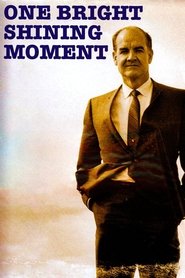
ONE BRIGHT SHINING MOMENT retraces George McGovern's bold presidential campaign of 1972 - a grassroots campaign that fought for peace and justice, and positioned ideas and people first. But what is remembered today as being the ultimate political defeat of the American Century may also have been its high watermark. The film poses this central question: what does the crushing electoral defeat of a man so well respected for his decency and intellect say about the electoral process, the American government, and more importantly, what does it say about the forces at work on the American people- then and now? Featuring interviews with the candidate himself, supporters and activists like Gore Vidal, Gloria Steinem, Warren Beatty, Howard Zinn, and music from Bob Dylan, Robbie Robertson, Donovan, and Elvis Costello.
Arena cameras were on hand to film the return of Dire Straits from their triumphant 1980 Brothers in Arms world tour. The film features a superb concert they played at The Rainbow, and band members talk about their music and the pressures and the consequences of success.
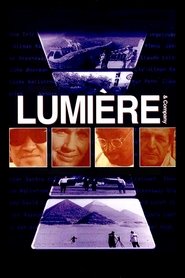
40 international directors were asked to make a short film using the original Cinematographe invented by the Lumière Brothers, working under conditions similar to those of 1895. There were three rules: (1) The film could be no longer than 52 seconds, (2) no synchronized sound was permitted, and (3) no more than three takes.
We have detected that you are using an ad blocker. In order to view this page please disable your ad blocker or whitelist this site from your ad blocker. Thanks!