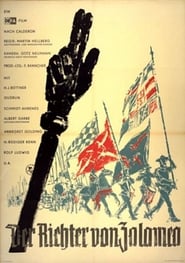
Historical drama set during the reign of Philip II of Spain. The royal troops have taken up quarters in the village of Zalamea. Captain Don Alvaro is staying with the farmer Pedro Crespo. His daughter Isabel behaves very coldly and dismissively toward the captain, which irritates him. Finally, he takes her by force and humiliates her father. The captain is put on trial in the village. Pedro is appointed judge and, despite all the threats from General de Lope, sentences the captain to death. De Lope then wants to deny him his judicial authority. Surprisingly, King Philip II appears in the village and confirms the harsh sentence, but wants to pardon the offender. However, the sentence has already been carried out.
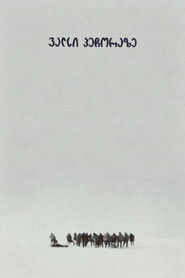
Set in 1937 Stalinist Georgia, the film traces the parallel destinies of a mother, condemned by the government as "an enemy of the people" and exiled to a work camp in Siberia, and her daughter, who meanwhile is sent to an orphanage. Arriving at the overcrowded work camp, the mother and other women who are not considered strong enough to be labourers, must journey still farther, crossing the icy Siberian landscape in search of food and shelter. At the same time, the daughter escapes the orphanage and returns to her former home, where she finds that a KGB officer has taken up residence. He protects her and an uneasy rapport between them develops—one of abhorrence and attraction, need and suspicion.
The 30-minute film centers around a group of high school students who became nurses called Himeyuri and served during the Battle of Okinawa during World War II. The Himeyuri Alumnae Incorporated Foundation, which runs the Himeyuri Peace Museum in Okinawa, produced the film with the aim to convey the experiences of those high school students, many of whom lost their lives during the battle, to children.
At the close of the Cultural Revolution, a group of young idealists battle for the right to return home and restart their lives after years of toil on a state run re-education farm in China.
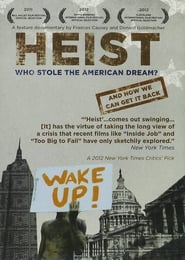
Heist: Who Stole the American Dream? reveals how American corporations orchestrated the dismantling of middle-class prosperity through rampant deregulation, the outsourcing of jobs, and tax policies favoring businesses and the wealthy. The collapse of the U.S. economy is the result of conscious choices made over thirty five years by a small group: leaders of corporations and their elected allies, and the biggest lobbying interest in Washington, the U.S. Chamber of Commerce. To these individuals, the collapse is not a catastrophe, but rather the planned outcome of their long, patient work. For the rest of the country, it is merely the biggest heist in American history.
The elegy film is dedicated to the memory of the remarkable Soviet and Russian poet, translator and writer of the second half of the twentieth century, Bella Akhmadulina.
This is the thrilling tale of one of the most famous battles in history. Hour by hour and often minute by minute, Waterloo describes the battle's twists and turns. Based on the written testimonies of actual combatants, Waterloo describes, without romanticising, the experience of battle, the hopes, fears, suffering, and death.
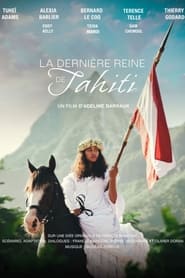
In the kingdom of the lagoons where the custom wants that only the men can become kings. The young Aïmata Pomaré will break this law. Faced with the hostility of her fellow men, threatened by the covetousness of England and France, Aïmata, a young Tahitian princess, will try to save her traditions and her people in order to offer them a destiny. This is how she will become the last queen of Tahiti and make peace with France.
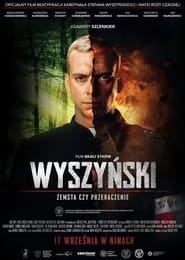
This film tells the story of lieutenant Stefan Wyszynski (Ksawery Szlenkier) - the future Primate of Poland, unknown to a wider audience. It is 1944, in the heat of war, we meet a young priest Wyszynski, who has recently been appointed chaplain of the branch in the Kampinos Forest. It is also active in the insurgent hospital. Everyone knows him there under the pseudonym "Radwan III". The reality of the war is for Fr. Wyszynski, a forge of character, a fight for hope and love, especially against enemies. How are we to forgive in everyday warfare? The hero asks, turning to the Source of his vocation.
The special edition and the third edition of the "Ooka Echizen", starring Higashiyama Noriyuki, will be broadcast during the new year of 2021. In this SP, Higashiyama Noriyuki will play two roles. It is a swordsman who drives the blade to use it for revenge of a pathetic prostitute. How does the confrontation confront the man who is very different from the circumstances and is different in the circumstances? You can find the answer in this SP.
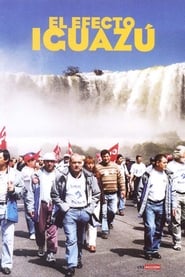
Documentary about the so-called "hope camp", which narrates the long protest carried out by the Sintel workers camped in the middle of Castellana Street in Madrid in defence of their labour rights. The documentary follows the evolution of the events during 4 months, from April to August 2001, reflecting the life of these people during their encampment and the negotiations between the government and the trade unions.
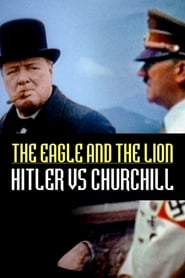
Winston Churchill, one of the most revered men of the twentieth century. Adolf Hitler, one of the most hated leaders in contemporary history. Between 1940 and 1945, these two enormously contradictory personalities faced each other in both politics and war. A clash of giants whose story begins in the trenches of the World War I and ends with the debacle of the World War II.
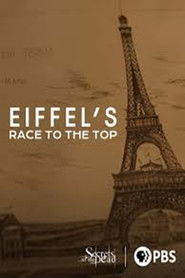
Behind the iconic Eiffel Tower lies the story of an incredible challenge to erect a thousand-foot tower that went far beyond a design competition, and marked a major turning point in engineering history. It was the beginning of radical transformation where iron was pitted against stone, engineering against architecture, and modern design against ancients. Press campaigns, lobbying, public conferences, denigration of opposing projects, bragging about big names - all participants engaged in a fierce battle without concession. Using 3D recreations, official sources (reports, letters, drawings...) and intimate archives obtained from their descendants, this film will bring to life this vertical race through a fresh and visual way to mark the centenary of Eiffel death.
We have detected that you are using an ad blocker. In order to view this page please disable your ad blocker or whitelist this site from your ad blocker. Thanks!