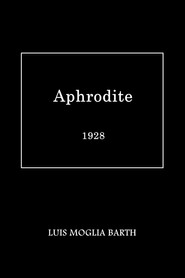
According to historian Fernando Martín Peña, this film was produced by Julio Tello's Argentine Cinematographic Union distributor and premiered at the San Martín Theater as if it were French "presumably for reasons of respectability." After the campaign against him by the Catholic newspaper El Pueblo, San Martín took it down from the billboard. On November 4 it was announced that the film would be shown again in a downtown theater and finally on November 7 the interim mayor Adrián Fernández Castro resolved the ban for "amoral".
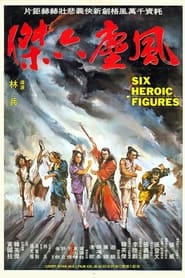
Six crippled kung fu students are each given an Imperial Decree starting an anti-Ching rebellion, and are instructed to deliver them to the Commander-in-Chief.
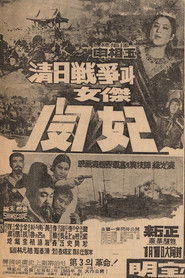
Queen Yun reigned with King Sunjong since she was just 13 years old. She hid the royal seals needed to complete an agreement between Korea and Japan which would lead to Korea's annexation. However, her patriotic display wins her many enemies.
A brief, fictionalized time period in the life of Professor Kant. The story is set in his hometown, Konigsberg, chronicling his last few years prior to his death in 1804 at the age of 79.
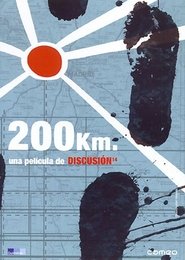
200 km follows the marches carried out by Sintel workers to reach Madrid on May 1, 2002. Sintel was a subsidiary of Telefónica that, when it was privatized, was closed, leaving its 1,800 workers on the streets. One year after setting up the "Camp of Hope" with which they occupied Madrid's Avenida de la Castellana for months, and with the promises they were made unfulfilled, Sintel workers began a 10-day, 200-km march to Madrid to claim your job. Premiered on San Sebastian Film Festival 2003.
In 1885, Africa is a succulent cake destined to be wildly divided and everyone wants a piece. A disturbed European king, a Pygmy working in a luxury hotel, a successful but lonely businessman, an enslaved porter, a young army deserter, a ghostly clarinetist. Some benefit from colonialism and greed. Others suffer racism and violence.
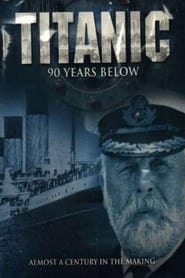
Deep on the ocean's floor, one landmark continues to fascinate above all the rest, It's tragic tale has been told many times. But there is another story... an ongoing technological drama... a high-tech adventure to discover and explore the mysteries of th RMS Titanic. This is that story... a quest marked by failure, success, classified operations, and moral uncertainty. 90 years after the loss of over 1500 souls, the story continues to this day.
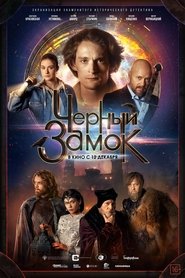
Young professor Anton Kosmich studies the history of Belarus. One day he is mystically transported to the Middle Ages, where he will have to unravel the secrets of the past millennia.
Heroic Struggle in Snow and Ice is a 1917 Austro-Hungarian propaganda newsreel film produced by Sascha-Film for the Imperial and Royal War Press Headquarters. The film is hand-colored and presented in two parts. It depicts the fighting on the Alpine Front between Italy and Austria-Hungary.
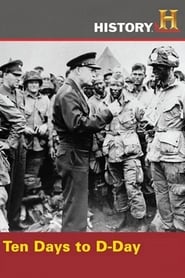
Following the lives of ten characters through their letters and diaries in the ten days before D-Day. The mini-series contains documentary interviews with the people on which the book, and this mini-series were based.
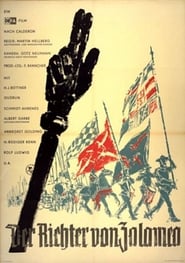
Historical drama set during the reign of Philip II of Spain. The royal troops have taken up quarters in the village of Zalamea. Captain Don Alvaro is staying with the farmer Pedro Crespo. His daughter Isabel behaves very coldly and dismissively toward the captain, which irritates him. Finally, he takes her by force and humiliates her father. The captain is put on trial in the village. Pedro is appointed judge and, despite all the threats from General de Lope, sentences the captain to death. De Lope then wants to deny him his judicial authority. Surprisingly, King Philip II appears in the village and confirms the harsh sentence, but wants to pardon the offender. However, the sentence has already been carried out.
We have detected that you are using an ad blocker. In order to view this page please disable your ad blocker or whitelist this site from your ad blocker. Thanks!