Historical epic about the legendary Russian naval commander of the 18th century, admiral Fyodor Ushakov, and his fight for Crimea during the Russo-Turkish War.
In 1570, widowed Princess Ana de Mendoza becomes the love object of a deadly rivalry between her cousin Don Inigo, King Philip II of Spain and his secretary of state Antonio Perez.
To write In Cold Blood (1966), a nonfiction novel that revolutionized world literature, Truman Capote (1924-84) spent five years in Kansas researching the murder of members of the Clutter family and collecting the confidences of its two authors.
Journeys through some of the most significant events in America's rise to power, reliving the improbabilities that demonstrate what the Founders always believed: that events unfolded according to a master plan.
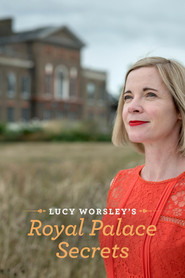
Chief curator of historic royal palaces Lucy Worsley provides an exclusive tour of London’s most extraordinary palaces: the Tower of London, Hampton Court, and Kensington Palace.
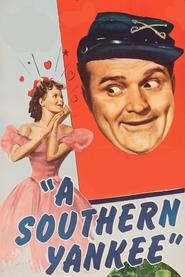
Red Skelton plays Aubrey Filmore, a feather-brained but lovable bellboy who dreams of becoming an agent for the Union's secret service during the Civil War.
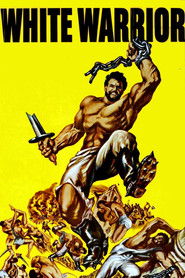
A mysterious knife-throwing viking warrior protects a young peasant woman and her young son from the clutches of a evil regent bent on claiming the title of king and the woman for himself.
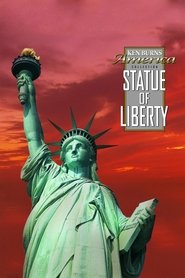
For more than 100 years, the Statue of Liberty has been a symbol of hope and refuge for generations of immigrants. In this lyrical, compelling and provocative portrait of the statue, Ken Burns explores both the history of America’s premier symbol and the meaning of liberty itself. Featuring rare archival photographs, paintings and drawings, readings from actual diaries, letters and newspapers of the day, the fascinating story of this universally admired monument is told. In interviews with Americans from all walks of life, including former New York governor Mario Cuomo, the late congresswoman Barbara Jordan and the late writers James Baldwin and Jerzy Kosinski, The Statue of Liberty examines the nature of liberty and the significance of the statue to American life. Nominated for both the Academy Award ® and the Emmy Award ®, The Statue of Liberty received the prestigious CINE Golden Eagle, the Christopher Award and the Blue Ribbon at the American Film Festival.
A woman in a man's world. Though strong-willed, intelligent and passionate, Queen Elizabeth I is keenly aware that her life is in constant peril. With her died the Tudor dynasty, but the changes she made to politics and parliament show the beginnings of the conception of the England that we know and love today.
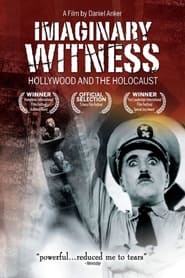
Daniel Anker’s 90-minute documentary takes on over 60 years of a very complex subject: Hollywood’s complicated, often contradictory relationship with Nazi Germany and the Holocaust. The questions it raises go right the very nature of how film functions in our culture, and while hardly exhaustive, Anker’s film makes for a good, thought provoking starting point.
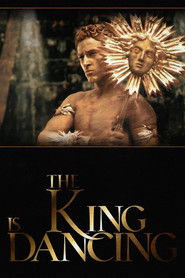
Louis XIV, the French sun-king has two passions, establishing absolute rule over the realm -after decades of religious/civil wars- by divine right and artistic brilliancy as a dancer
The legend of the "Five Poisons Trial" in the martial world is a life-and-death game where only one person can survive to claim a reward of a thousand taels of gold. The mysterious wanderer Lin Yun teams up with Qiao Yu, Feng Yiyang, and others to face various challenges and adversaries, engaging in fierce battles along the way. The trial reveals the dark sides of human nature—greed, anger, obsession, arrogance, and suspicion. Amidst the chaos, Lin Yun and Qiao Yu devise a clever plan to confront the true forces at play, seeking justice and resolution.
Turkey's history has been shaped by two major political figures: Mustafa Kemal (1881-1934), known as Atatürk, the Father of the Turks, founder of the modern state, and the current president Recep Tayyıp Erdoğan, who apparently wants Turkey to regain the political and military pre-eminence it had as an empire under the Ottoman dynasty.
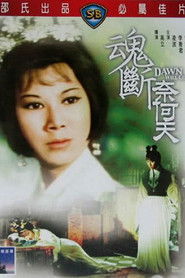
The lovely Li Hsiang-chun stars as a poor beauty who is drugged, ravished, lied to, locked in a burning store room, left to drown, and chased by sword-wielding ruffians, among other things. Her only hope is her betrayer's new wife, played by the strong and sensual Ivy Ling Po. Dawn may come, but the questions is: will it be too late? Director/writer Kao Li shows both restraint and sadism in this historical melodramatic tearjerker.
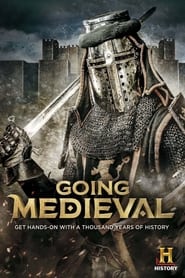
In this two-hour H2 special, historian and weapons expert Mike Loades goes medieval diving deep into the world of the Middle Ages. From the 5th to the 15th centuries, Mike battles the realities vs. the myths of this extraordinary time crusading for the core of real life while delivering fun-filled facts. From living, working and fighting to how to keep a knight's armor shiny using a vigorous rub of sand, vinegar and urine, Going Medieval is an expert account of life during medieval times.
At the end of the year 1942 and the start of 1943, to stop spreading the revolution in county of Bitola, bulgarian occupiers are reinforcing the persecutions and the acts of violence on civil population.
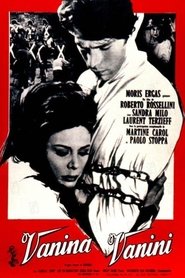
Vanina Vanini, a bored, spoiled Roman countess, falls in love with a dedicated young patriot who is in Rome to assassinate a traitor to the brotherhood of the Carboneria.
We have detected that you are using an ad blocker. In order to view this page please disable your ad blocker or whitelist this site from your ad blocker. Thanks!