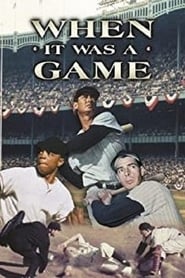
Composed entirely of never-before-seen 8mm and 16mm footage filmed between 1925 and 1961 by baseball players, their families and their fans, this second chapter in the HBO series "When It Was a Game" brings many lost moments to life. Narrated by Peter Kessler, the documentary features clips of Joe DiMaggio, Ty Cobb, Roy Campanella, Jackie Robinson, Hank Aaron, Willie Mays, Satchel Paige, Tommy Lasorda and Babe Ruth.
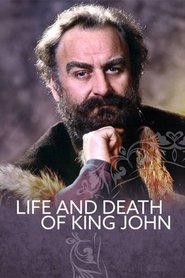
The reign of England's King John is threatened by Philip of France who demands that John's nephew Arthur be placed on the throne. Pragmatic and decisive, King John moves to plactate the French, but there are others who seek disputre his authority.
The Holy Week, around 1900, somewhere in Romania. The tense relationship between the Jewish innkeeper Leiba and Gheorghe, his Christian employee, reaches the point where the innkeeper decides to expel the latter. Revengeful, Gheorghe promises Leiba that he will return on Easter Night to “settle” his accounts. This threat comes as a last straw against Leiba’s attempts to cohabit with his hostile, anti-Semitic environment. From then on, Leiba will struggle distinguishing between the real danger and the one fabricated by his anxieties, engaging onto a path of transformation leading to extreme consequences.
Russian President Vladimir Putin was one of the first politicians to congratulate Donald Trump on his election as president of the United States in 2016, but over time the relationship between the two heads of state has had its ups and downs. Are they friends or enemies? Has their mutual admiration turned into mutual distrust?
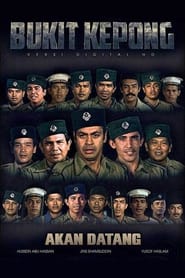
The dramatisation of a Communist Terrorist assault on a rural Federation of Malaya Police station at Bukit Kepong, Muar, Johor, of then Malaya, on February 23, 1950, during the height of the First Malayan Emergency, 1948-1960.
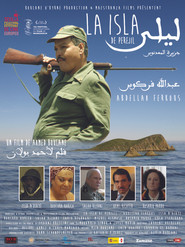
Ibrahim, a Moroccan soldier, is sent to a deserted island off the Mediterranean coast of Morocco to monitor the movements of smugglers and illegal immigrants. One day, Ibrahim finds a Sub-Saharan man, Mamadou, washed up on the beach. While the unlikely pair tries to survive on the miniscule island, they inadvertently trigger a diplomatic incident that crescendos into a regional military crisis.
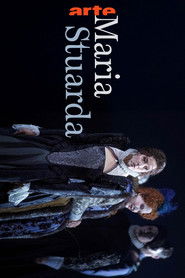
A masterpiece of bel canto at the Teatro Real in Madrid: conductor José Miguel Pérez-Sierra and director David McVicar take on Donizetti’s Maria Stuarda, with Lisette Oropesa in the title role.
Episodes of the Warsaw Uprising as reported by the insurgent radio station "Błyskawica," illustrated with archival photographs and photos of contemporary Warsaw. Professor Tomasz Strzembosz talks about the specifics of the insurgent struggle and the construction of the station's transmitter, which was constantly moved to different buildings in the city center during the fighting. The film attempts to show what "Błyskawica" meant to Home Army soldiers and the residents of Warsaw and recounts what the station reported on, namely the general situation in the city during the uprising, problems with weapons, food, and water, the insurgent postal service, the explosion of a tank trap, the work of ad hoc hospitals, teenage liaison officers and guides in the sewers, and the execution by the Germans of an entire unit that had surrendered.
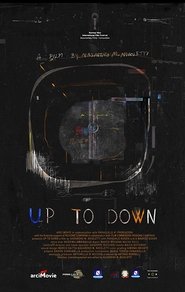
Naples. Home of the unbowed, of madmen and paupers. A city that refuses to lick anyone's boots, let alone stoop to pretense. This documentary bad trip takes us on a tour of the city's dismal suburbs and into the homes of the marginalized and rejected: a man, a girl, and a masked boxer - three protagonists yearning for something else, although they're not quite sure what. (Karlovy Vary Film Festival 2019)
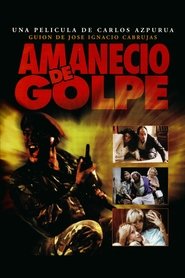
The film follows the events of the night of February 4, 1992 in Caracas, Venezuela. That night a group of military rebels staged a coup d'etat. Venezuelans found themselves as virtual prisoners. As the coup starts and fighting takes place from a military base which is in the center of the city's most affluent areas, with both luxury high rises and palatial mansions. The area of La Carlota provides a wealth of very interesting, often flamboyant and typical characters of the Latin America upper middle and upper classes. They are among the most affected. Various vignettes in these different characters' homes are developed. These people's reactions, lifestyles, vices, and humanity come out in a very honest fashion under duress.
A forgotten history of Northern Ireland is unveiled through a journey into Ulster Television’s archives, and the rediscovery of the first locally-produced network drama, Boatman Do Not Tarry.
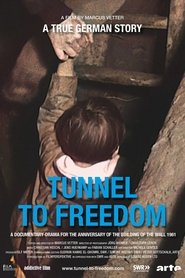
13 August 1961: the GDR closes the sector borders in Berlin. The city is divided overnight. Escape to the West becomes more dangerous every day. But on September 14, 1962, exactly one year, one month and one day after the Wall was built, a group of 29 people from the GDR managed to escape spectacularly through a 135-meter tunnel to the West. For more than 4 months, students from West Berlin, including 2 Italians, dug this tunnel. When the tunnel builders ran out of money after only a few meters of digging, they came up with the idea of marketing the escape tunnel. They sell the film rights to the story exclusively to NBC, an American television station.
The life story of Friedrich List, an influential 19th century German political economist who developed the liberal nationalist theory of political economy in both Europe and the United States.
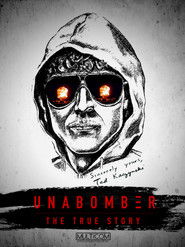
The real story behind the hunt for Theodore J. Kaczynski, later known as the Unabomber, a terrorist who sent several bombs through the mail, alarming authorities and society. The movie follows a postal inspector who tracks down the suspect; a obstinate detective; and Kaczynski's brother, who suspected of Ted after the publishing of his manifesto explaining the reasons for the bombings.
We have detected that you are using an ad blocker. In order to view this page please disable your ad blocker or whitelist this site from your ad blocker. Thanks!