Banović Strahinja takes place during the middle ages in Serbia. While estate owner Strahinja is hunting, a Turkish bandit, Alija, attacks his castle. The Turks kill his servants and kidnap his beloved Andja. When he discovers what has happened, Strahinja gathers a together a group of scoundrels and chases the bandits.
The movie takes Ji Gong on another adventure as he fights demons to save the people. It was a time of peace as word of Ji Gong's limitless powers has spread throughout the land and no demon, ghost nor evilbeing dares to wreak havoc except for the water demon that occasionally causes trouble by way of flooding the river. One day, the water demon gathers other forces to create a tsunami that threatens that threatens to engulf everything on its way. Ji Gong steps up to save the day, but realizes that a bigger conspiracy is in the works.
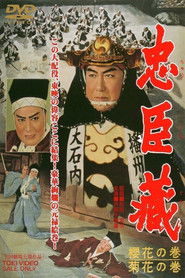
While the story of the Ako Clan's vendetta has been told countless times, never before has there been an array of major motion picture stars to bring new life to this timeless tale. Starting with the corrupt practices of Lord Kira and Yanagi-sawa, the Shogun's Secretary, which in essence led to the incident of Lord Asano's attacking Kira in the Pine Corridor of the Shogun's Palace, this is the definitive version. Asano Takumi no kami was a young lord with high scruples, who refused to join in the general corruption and bribery which ran rampant in the capital at that time. By not giving bribes, he angered Kira Kozuke no suke the elder lord in charge of protocol at the Palace. Refusing to teach the younger man, and giving him false instructions was only the beginning. Insults followed, and a man of honor had no choice but to draw his sword in anger. Forty seven masterless samurai are willing to give their lives to avenge their lord.
Scientists from the mid-nineteenth century have searched for the fossil remains of the "missing link" in evolution - the half-man, half-ape that would explain where mankind came from. But over the last century and a half, it has been the idea of what a missing link is that has evolved. The history of this scientific quest - peopled with fanatics, frauds, amateurs, professionals, the lucky, the unlucky, the unfairly neglected and the undeservedly praised - is the subject of this documentary. Reenactments depict scientists making their discoveries and then stretch back hundreds of thousands, even millions, of years to depict the typical lives of our human and human-like ancestors. Interviews with leading scientists fill in the details.
During a trip to Sicily in 1920, Luigi Pirandello meets two gravediggers-turned-playwrights rehearsing a play with their amateur dramatics. Pirandello takes an interest in the odd couple, having been suffering from writer's block while working on his eventual masterpiece, Six Characters in Search of an Author.
After World War II, 4,000 Polish families came to Australia. They were Jews, Fascists, anti-Communists, and others dispossessed. In a large hostel, where even married men and women were housed in separate barracks, the adults lived for two years while they worked off the government's payment of their passage. Even though he is married to Anna and has a son, Julian falls in love with Nina and she with him. As they and others face the new situations and prejudices that await immigrants and as they take on aspects of Australian culture, old-country values reassert themselves. Julian decides what to do about love and family, and Nina must find a way to move on.
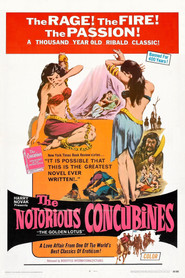
Based on the Chinese classic "Jin Ping Mei". Original Japanese cut directed by Koji Wakamatsu and produced by Shochiku. Set in Song-dynasty China, Wu Song rises to fame and becomes a guard captain. He is captivated by his brother’s wife, Pan Jinlian, whose beauty also ensnares the wealthy libertine Ximen Qing. To possess her, Ximen Qing has Wu Song’s brother murdered. When the corrupt authorities refuse justice, Wu Song is imprisoned, escapes with the help of the Liangshan bandits, and joins their ranks. Ximen Qing descends further into decadence, but Wu Song eventually returns, leading an attack on the town.
In the 15th year of the Genroku era (1688), the world praised the 47 ronin who avenged the death of their master Asano Takumi-no-kami. Shogun Tsunayoshi, who ruled at that time, experienced difficulties in what punishment to impose on the soldiers. As a result, it was decided to sentence them to seppuku (ritual suicide).
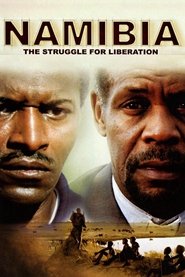
Namibia: The Struggle for Liberation is a 2007 epic film on the Namibian independence struggle against South African occupation as seen through the life of Sam Nujoma, the leader of the South-West Africa People's Organisation and the first president of the Republic of Namibia.
Algeria, 1956. Plunged into a war that does not speak its name, a young peasant girl becomes, in spite of herself, a maquis. But during an attack, she is captured by a group of commandos who take her to a forbidden interrogation site, where she is locked up with a former French Resistance fighter.
When a young teen marries the Prince of Cleves, more than twice her age, she automatically becomes an official Princess and takes her new position to heart. Although distracted by the elite entertainments found at court, the princess cannot help but mourn her impossible love for the dashing Duc de Nemours.
Untold stories from the frontlines of the 'Deterring Aggression' battle. This documentary chronicles the ten decisive days preceding the operation, casting light on a political milestone that catalyzed the liberation of Syrian lands and signaled the dawn of a new era of hope.
Hathane Udaya traces the deep-rooted connection between the mystical Theyyams and the people of North Malabar, unfolding amidst the sacred forests where tradition and belief walk hand in hand.
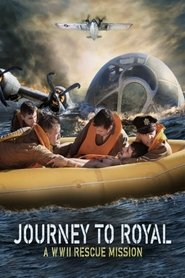
WWII hero with the 4th Emergency Rescue Squadron, Lt. Royal Stratton, leads a deadly mission to save the lives of nine downed airmen adrift in enemy waters of a war-torn South Pacific. Immersive cinematography and gripping action, mixed with firsthand accounts and historical images, showcase the valor of this squadron who faced overwhelming odds to bring their brothers home.
Director William A. Wellman adds another to his long line of salutes-to-aviation films in this bio of an aviation pioneer, John Montgomery (Glenn Ford.) In 1883 he built a practical glider despite the opposition of his friends, who thought he was crazy, and of his family, who were afraid that his dreams of flying would hurt his father's political ambitions. He pursues his education at Santa Clara University where the Jesuits lend a helping and understanding hand. An earthquake destroys what appears to be a working model for an airplane, but a gold-sorting machine Montgomery invented, and then neglected, promises to provide for his financial needs to keep working on his aircraft until he gets involved in costly lawsuits defending his invention.
As Newton devotes himself to the difficult and solitary path of challenging the existing view of the universe and proving his own theories on celestial movement and gravity, his young scribe Humphrey wavers between pursuing science or following his heart.
This film was shot entirely at the Gettysburg National Military Park, where the decisive battle of the American Civil War was fought. Leslie Nielsen narrates the story while contemporary songs and the sounds of battle are heard in the background. The sites of the various engagements, the statues of the leaders of the Northern and Southern troops, and the battlefield cemetery are featured. President Abraham Lincoln's Gettysburg Address is read at the end.
We have detected that you are using an ad blocker. In order to view this page please disable your ad blocker or whitelist this site from your ad blocker. Thanks!