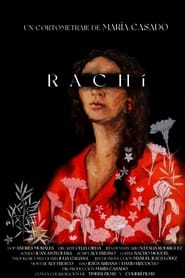
Combining modern footage with home movies and interviews, filmmaker María Casado's life is explored, focusing on themes of family, history, and belonging, with a particular emphasis on childhood experiences related to home.
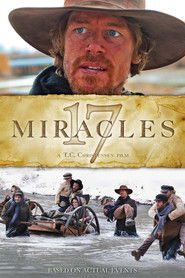
As part of the Willie Handcart Company, Levi Savage (Jasen Wade) feared that leaving late in the season would lead to despair and death. What he came to find out is that for every tragedy, there is a multitude of miracles. Based on unbelievable actual events, and brought to you by filmmaker T.C. Christensen (Praise to the Man, The Work and the Glory), 17 Miracles will open your eyes to the stories of the Mormon Pioneers as you have never seen them before. Something extraordinary is about to happen.
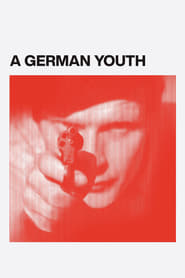
At the end of the 1960s the post-war generation began to revolt against their parents. This was a generation disillusioned by anti-communist capitalism and a state apparatus in which they believed they saw fascist tendencies. This generation included journalist Ulrike Meinhof, lawyer Horst Mahler, filmmaker Holger Meins as well as students Gudrun Ensslin and Andreas Baader.
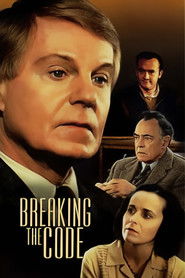
A biography of the English mathematician Alan Turing, who was one of the inventors of the digital computer and one of the key figures in the breaking of the Enigma code, used by the Germans to send secret orders to their U-boats in World War II. Turing was also a homosexual in Britain at a time when this was illegal, besides being a security risk.
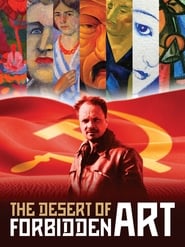
How does art survive in a time of oppression? During the Soviet rule artists who stay true to their vision are executed, sent to mental hospitals or Gulags. Their plight inspires young Igor Savitsky. He pretends to buy state-approved art but instead daringly rescues 40,000 forbidden fellow artist's works and creates a museum in the desert of Uzbekistan, far from the watchful eyes of the KGB. Though a penniless artist himself, he cajoles the cash to pay for the art from the same authorities who are banning it. Savitsky amasses an eclectic mix of Russian Avant-Garde art. But his greatest discovery is an unknown school of artists who settle in Uzbekistan after the Russian revolution of 1917, encountering a unique Islamic culture, as exotic to them as Tahiti was for Gauguin. They develop a startlingly original style, fusing European modernism with centuries-old Eastern traditions.
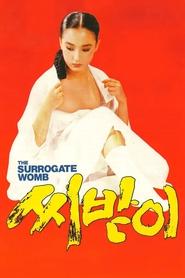
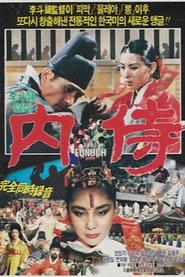
Jeong-ho is castrated by an ambitious minister for loving above his station. The minister also happens to be the father of Ja-ok, the girl Jeong-ho loved. He sends his daughter to the king as a concubine in a bid to gain favor, but the king sees through his motives and the instead forces Ja-ok into the position of a lowly kitchen maid. Jeong-ho sole hope in life is to save his former lover.
Maria suffers from the strangest illness; it resembles cancer but with one distinct difference: it somehow connects Maria to the fate of a 15th century woman named Donna Maria. Maria begins to time travel, gradually discovering the absolute brutality of history. She learns that Donna Maria was a Hungarian princess taken to a Bursa harem as a concubine of Ottoman's Sultan.
Diogo Álvares, a Portuguese map illustrator, reaches the Brazilian coast, after his caravel sinks. He is saved by the Indian chief Itaparica and his two daughters, Paraguaçu and Moema. They call him Caramuru and together they engage in a happy love triangle. But the chance to return to Portugal arises, and it is clear this amoral arrangement cannot last.
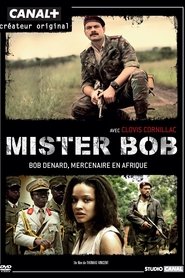
1965, Bob Denard, even early in his career, Battle in Congo. It strives to make its game in the middle of a bloody civil war fueled by rivalry and ambition postcolonial of a newcomer on the African scene: General Mobutu.
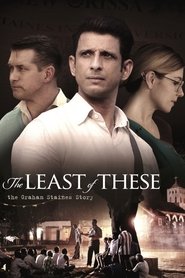
The story of missionary Graham Staines who was martyred in India in 1999. “The Least of These” shares the story leading up to the murders of the Australian Christian missionary and his sons, Philip, 10, and Timothy, 6, who were helping a community of lepers in India.
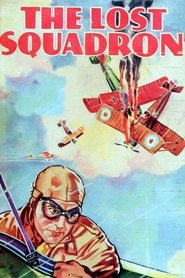
When World War I comes to an end, three pilots find themselves on hard times. They wind up in Hollywood, where they work as stunt fliers for a sadistic director.
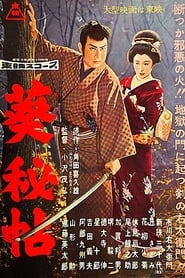
A Golden Age drama depicting the exploits of passionate patriot Uotaro Toge in the midst of a mysterious standoff over the Secret Book of Aoi, which will determine the rise or fall of the 350,000-koku Mito clan, and showcasing swashbuckling swordsmanship.
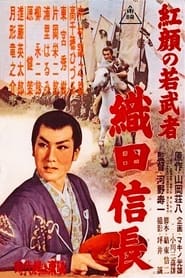
A dynamic story depicting the rise to power of Oda Nobunaga. The story of a young man on the battlefields of the Sengoku era, who possessed character and courage, and who became a great commander and ruler, while some called him a great dictator. A film adaptation of the novel by Sohachi Yamaoka.
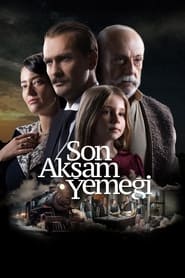
The movie takes place in the kitchen of Cankaya Mansion on Sunday night, October 28, 1923, a day before the proclamation of the establishment of the Republic of Turkey and formally marking the end of the Ottoman Empire.
The Black Book, drafted during World War II, gathers numerous unique historical testimonies, in an effort to document Nazi abuses against Jews in the USSR . Initially supported by the regime and aimed at providing evidence during the executioners’ trials in the post-war era, the Black Book was eventually banned and most of its authors executed on Stalin’s order. Told through the voices of its most famous instigators, soviet intellectuals Vassilli Grossman, Ilya Ehrenburg and Solomon Mikhoels, the documentary, provides a detailed account of the tragic destiny of this cursed book and puts the Holocaust and Stalinism in a new light.
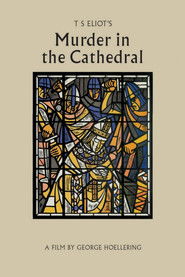
Murder in the Cathedral is a story about Thomas Becket, Archbishop of Canterbury, and his struggles against temptation and personal vanity prior to his murder in the great Cathedral.
We have detected that you are using an ad blocker. In order to view this page please disable your ad blocker or whitelist this site from your ad blocker. Thanks!