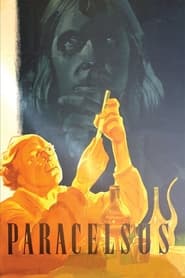
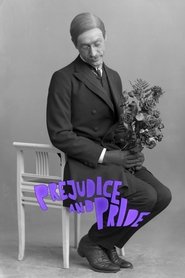
The story of the Renaissance-era Swiss physician, alchemist and astrologer Philippus Aureolus Theophrastus Bombastus von Hohenheim, better known to the world as Paracelsus.
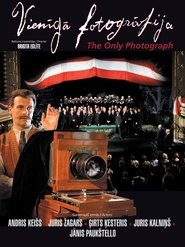
Historical reenactment of preparation in Nov. 17 and proclamation of independence of Latvia in Nov. 18, 1918 and in epicenter is only taken photograph of this historical moment.
After 12 years, the Chinese women's volleyball team again reached the Olympic final. The ups and downs of the Chinese women's volleyball team for more than three decades have slowly spread away.
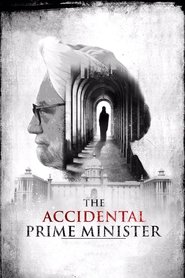
Based on the memoir by Indian policy analyst Sanjaya Baru, The Accidental Prime Minister explores Manmohan Singh's tenure as the Prime Minister of India, and the kind of control he had over his cabinet and the country.
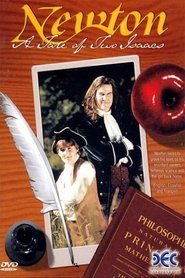
As Newton devotes himself to the difficult and solitary path of challenging the existing view of the universe and proving his own theories on celestial movement and gravity, his young scribe Humphrey wavers between pursuing science or following his heart.
From all over Japan, the greatest warriors: Yagyu Jubei, Miyamoto Musashi, Araki Mataemon, and more came to test their blades in a tournament of swords. But behind the match a bloodthirsty plot is born. Tokugawa Yorinobu, a corrupt shogunate official plans to assassinate Shogun Iemitsu and take his place. With scheming samurai Yui Shosetsu and ruthless Negoro ninja leader Genyusai, he plans to incite a ronin uprising and cut a bloody trail across Japan, with terrifying Chinese gunboats to back his play. Matsudaira Izu-no-kami, councilor and friend to the shogun, along with master swordsman Yagyu Jubei and ninja master Hanzo Hattori must stop Yui Shosetsu and his army of ronin and ninja assassins from tearing the country in half and taking over the government!
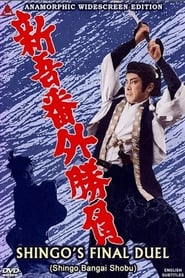
After Aoi Shingo, the illegitimate son of Shogun Yoshimune has gained prominence as the finest swordsman in the land, he tries to lead a peaceful life with his mother far away from the seat of government in Edo. Not wanting to inconvenience his father anymore his plan is to stay away from the city and enjoy life like a normal man. Unfortunately for him, his past comes back to haunt him in the person of his mortal enemy, the one swordsman that is skillful enough to defeat him. This is the most perilous moment of Shingo's life as he must face his deadliest foe in a battle to the death!
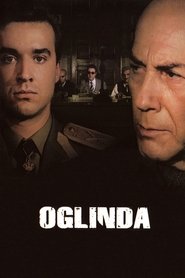
Depicts Romania during World War II, focusing on the Royal Coup that toppled Ion Antonescu, the Axis-allied Conducător and authoritarian Prime Minister. Focused around the August 23rd 1944 coup against Marshal Antonescu, the movie also tackles other topics from the same era such as the Iron Guard rebellion and the execution of political leaders by communists.
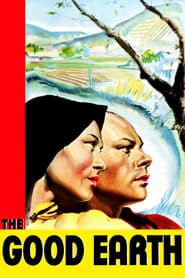
China, during the rule of the Qing Dynasty. The arranged marriage between Wang Lung, a humble farmer, and O-Lan, a domestic slave, will endure the many hardships of life over the years; but the temptations of a fragile prosperity will endanger their love and the survival of their entire family.
In 1993, Canadian Lieutenant General Roméo Dallaire was sent by the United Nations to Rwanda as commander of the United Nations Assistance Mission for Rwanda (UNAMIR). Its mission, to ensure the ceasefire, is underfunded, excessively bureaucratized and made up of military units which come from dozens of countries and which each have a very different program... These are Lt Gen Dallaire's efforts to stop the madness of the Rwandan Genocide, despite the complete indifference of his superiors.
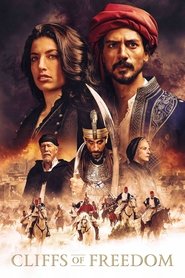
The timeless story of an ill-fated romance between a young Greek village girl and a conflicted Turkish officer during the dawn of the Greek War for Independence against the Ottoman Empire in 1821.
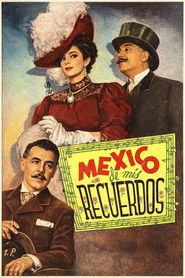
After listening to the waltz "Carmelita", dedicated to his wife, President Diaz instructs Don Susanito seeking the composer Chucho Flores to give her a piano. Don Susanito located Chucho, a bohemian who lives drunk and surrounded by poets and artists. Don Susanito was named patron protector of artists and aspiring young stars of the stage, which leads to a series of adventures in the middle of songs, dances and loves.
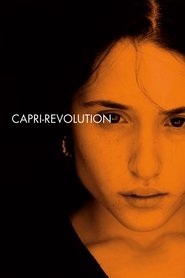
In 1914, with Italy on the cusp of joining World War I, a group of foreign artists establishes a commune on the rural island of Capri, catching the attention of young Lucia, a local illiterate shepherdess who soon falls under their spell.
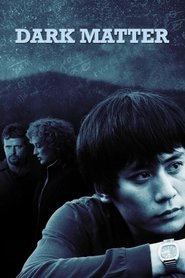
Liu Xing a brilliant Chinese student, arrives at University and makes the transition into American life with the help of Joanna Silver. Xing joins a cosmology group working to create a model of the origins of the universe. He is obsessed with the study of dark matter and a theory that conflicts with the group's model. When he begins to make breakthroughs of his own, he encounters obstructions.
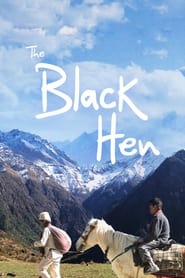
We are in the year 2001, a temporary ceasefire brings a much-needed break to a small war-torn village in Northern Nepal, bringing much joy among the residents. Prakash and Kiran, two young close friends, are also starting to feel the change in the air. Though they are divided by caste and social creed, they remain inseparable, and start raising a hen given to Prakash by his sister, with hopes to save money by selling her eggs. However, the hen goes missing. To find it, they embark on a journey, innocently unaware of the tyranny brought by the fragile ceasefire.
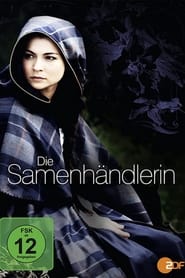
A young woman defies the social conventions of the time and goes her own way. The historical truth is clearly overshadowed by the great, universal themes of love, hate, jealousy and greed.
In the late 6th century, the leaders of the Yamato Dynasty had no clear plan for the creation of a unified state. Battles still raged among various warrior clans. Prince Shotoku, second son of Emperor Yomei, strived to create a new nation out of this chaos. NHK captures this great man from a time in history rarely depicted on screen, in a story of epic proportions.
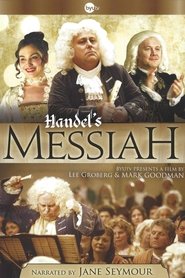
Discovered at age nine and a celebrated composer by age eighteen, George Frideric Handel experienced a meteoric rise to success, with forty-two operas performed on three continents in his lifetime. As enduring as Handel's operatic work is, the prodigious German genius is best known for his oratorio Messiah. Now you can learn in poignant detail how Handel's magnum opus came to be.
We have detected that you are using an ad blocker. In order to view this page please disable your ad blocker or whitelist this site from your ad blocker. Thanks!