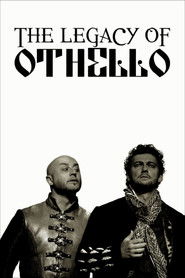
A fascinating exploration of the literary — The Tragedy of Othello, the Moor of Venice, by English playwright William Shakespeare (1604) — and lyrical — Othello, by Italian opera composer Giuseppe Verdi (1887) — myth of Othello, the desperately tragic story of a Moorish general in the army of the Venetian Republic whose absurd jealousy poisons his love for his wife Desdemona.
Based on the first novel, Spring Snow, of Mishima Yukio's Sea of Fertility tetralogy, it follows the troubled and illicit affair between two youngsters amongst the aristocracy and rich of early twentieth century Japan.
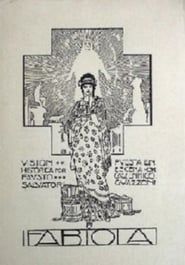
In "Fabiola" (1918) Herr Guarzzoni moved from the earliest days of Christianity when the new faith was struggling to just survive to a later period in the Roman Empire when the religion was a major force and attempting to win over Rome.
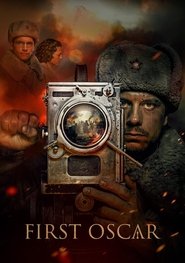
The film follows two student cinematographers who, as the war approaches Moscow, refuse to be evacuated and instead volunteer to be front-line cameramen capturing the horrors of war and heroism of the soviet soldiers. At the same time, we witness another storyline taking place in the US. After the premiere screening of the already completed documentary “Moscow Strikes Back”, one of the members of the Academy Awards selection committee is trying to persuade his fellow colleagues to establish a new category of Best Documentary in the upcoming Oscars event.
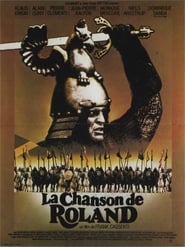
Roland des Roncesvalles is a legendary knight from the age of chivalry in France. In the 11th-century epic La Chanson de Roland, he is depicted as a key figure in halting the advance of the Arabs into France. In this story, the 10th-century legend is staged by a group of 12th-century pilgrims using the 11th-century poem. Their acting is interrupted by a violent peasant uprising, which kills many of the pilgrims. However, one of the survivors, is converted to the peasant cause and later speaks out in favor of more just treatment for the downtrodden.
A decades spanning mystery commencing in 1945 after the mysterious deaths of Adolf Hitler and Subhash Chandra Bose, and culminating in 2022 at the height of the Russo-Ukrainian War.
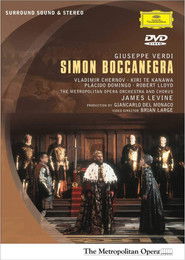
This evocative production by Giancarlo Del Monaco sumptuously captures the look and feel of 14th century Genoa and is a perfect compliment to Verdi’s setting of this story of searing conflict between public duty and private grief. Plácido Domingo is Gabriele Adorno, sworn enemy of the doge of Genoa, Simon Boccanegra (Vladimir Chernov). Gabriele is in love with the beautiful Amelia (Kiri Te Kanawa at her most affecting) who turns out to be none other than the long-lost daughter the doge. James Levine’s authoritative conducting of the Met orchestra and chorus reveals the dark power of Verdi’s score. Performed January 26th, 1995.
The artistic career of American actress Mia Farrow has been that of a passionate and committed woman who became the embodiment of a special kind of femininity, halfway between innocence and madness.
A film about a man with a breakthrough history of Poland in the background. Edward Gierek is one of the most important figures of the 20th century in the collective memory of Polish people.
In "Agrippina" (1910), Guazzoni recreates the particular and troublesome relationship between Agrippina, the second wife of the Emperor Claudius, and her son Nero.
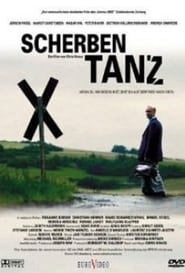
To find a bone marrow donor for himself, fashion designer Jesko visits his upper-class family in southwest Germany where he has to confront mental illness and long-held grudges.
American soldiers of the 2/3 Field Artillery, a group known as the "Gunners," tell of their experiences in Baghdad during the Iraq War. Holed up in a bombed out pleasure palace built by Sadaam Hussein, the soldiers endured hostile situations some four months after President George W. Bush declared the end of major combat operations in the country.
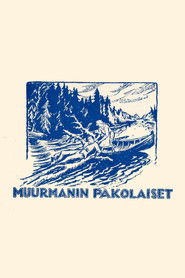
In northern Finland in the fall of 1916, Saima Niva rescues a man drifting in the river, who turns out to be a German lieutenant Braun. Braun and his six comrades have managed to escape the prisoner of war at the Muurmann railway station, but the lieutenant has had to get rid of the lost group. While Braun is recovering, under the good care of Saima, Niva's neighbor and henchman of the gendarmes, the greedy policeman Simpura, gets a tip about the refugees camped in the desert.
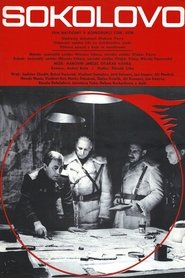
The plot begins in the Soviet Union showing first efforts to establish the Czechoslovak legion in 1942. The film also shows the assassination of Heydrich and the subsequent annihilation of Lidice. The main topis of the film is battles with German troops for Sokolovo.
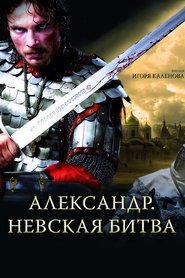
Young prince Aleksandr has to hold out against two enemies - the Horde in the east and the Teutonic order and Sweden in the west. He discovers that some boyars are plotting against him and are ready to betray Novgorod to the Swedes and the Germans to boost their trade. Meanwhile, his best friend falls under suspicion, as somebody tries to poison the young prince at his own wedding feast. Aleksandr has no way out - to defend his people against the invaders and to find the true poisoner.
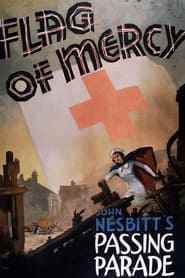
The 1939 dramatic short "Angel of Mercy," about Red Cross founder Clara Barton, is reedited to relate the story to America's involvement in World War II. Edited from Angel of Mercy (1939)
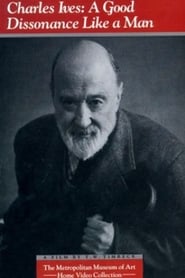
A thoroughly researched biopic of Charles Ives, America's greatest and most innovative composer (and insurance executive), who combined strikingly futuristic experimentalism with gentle nostalgia. Includes narration taken directly from Ives's own writings, and reminiscence from those who knew him.
We have detected that you are using an ad blocker. In order to view this page please disable your ad blocker or whitelist this site from your ad blocker. Thanks!