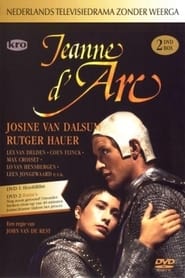
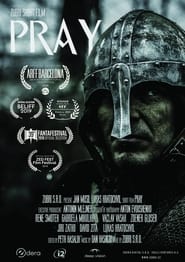
Set in medieval times about the cursed Moonshield family. The young knight Erland Moonshield fall in love with a gypsy enchantress, Singoalla, he meet in the forest.
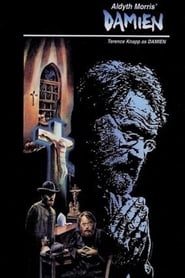
Terence Knapp plays Father Damien in this TV adaptation of the stage play. Damien goes to Hawaii in the late 1800s to care for lepers. Now deceased from leprosy, Father Damien appears as a spirit recounting his life as his funeral procession is carried out.
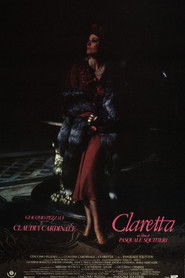
A journalist wants to make a film about the life and death of Claretta Petacci, the mistress of Benito Mussolini. For this, she will turn to her sister Miriam.
The film interweaves the personal accounts of polio survivors with the story of an ardent crusader who tirelessly fought on their behalf while scientists raced to eradicate this dreaded disease. Based in part on the Pulitzer Prize-winning book Polio: An American Story by David Oshinsky, Features interviews with historians, scientists, polio survivors, and the only surviving scientist from the core research team that developed the Salk vaccine, Julius Youngner.
In 1944, a group of high command officers plot an attempt against Hitler, and one of the leaders of the conspiracy, Stauffenberg, goes to a meeting with the Fuhrer in charge of exploding the place. However, Hitler survives and the officers are executed. This unsuccessful operation was called "Valkyrie Operation", and this realistic movie discloses this true event.
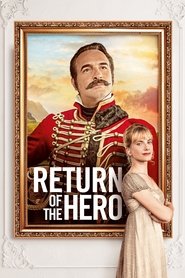
France, 1809. Captain Neuville is called to the front, leaving his future bride heartbroken. Her sister decides to write letters on his behalf to cheer her up.
Zeitgeist: Addendum premiered at the 5th Annual Artivist Film Festival. Director Peter Joseph stated: "The failure of our world to resolve the issues of war, poverty, and corruption, rests within a gross ignorance about what guides human behavior to begin with. It address the true source of the instability in our society, while offering the only fundamental, long-term solution."
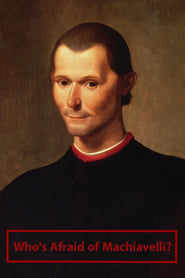
Famous for lines like 'It is better to be feared than loved', Machiavelli's notorious book, The Prince, has been a manual for tyrants from Napoleon to Stalin. But how relevant is The Prince today, and who are the 21st century Machiavellians?
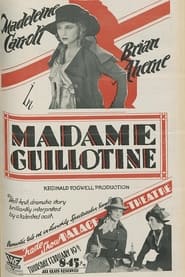
Prince Algabert, upholding the traditions of his forefathers, wages a ceaseless feud against the house of Rodembourg, whose reigning lord has one daughter, Elisabeth. One day, the Princess Elisabeth is captured by Algabert's vassals and, forgetful of feuds and quarrels, the Prince falls under the spell of her beauty. Prince Algabert, having released the Princess, goes to her father and begs for her hand, which is, however, haughtily refused. So the breach between the two houses widens. Elisabeth decides to take the veil. On the day of her renunciation Algabert makes an ineffectual attempt to see her. Then, in despair, he provokes the Rodembourgs. He meets them single-handed in the convent cloister and receives his death stroke. Elisabeth till the day of her death mourns her lover and daily tends his grave.
Against the backdrop of the Edo treasury devaluing currency and driving many into poverty, Hanzo Itami enforces the law without regard to status. He shows inadequate respect to the treasurer, who wants him dead.
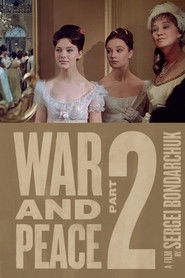
As 1809 nears its end, Natasha attends her first ball, where Andrei falls in love with her with the intent of marriage. However, as her father demands they wait, the prince travels abroad, leaving Natasha in desperate longing. But she meets Anatol Kuragin and forgets Andrei. Part two of the four-part adaptation of Leo Tolstoy's 1869 novel.
When Aurangzeb recruits his trusted soldier Udaybhan to control the Kondhana fort, Shivaji's military leader Tanhaji Malusare and his army of Maratha warriors set out to recapture the fortress.
We have detected that you are using an ad blocker. In order to view this page please disable your ad blocker or whitelist this site from your ad blocker. Thanks!