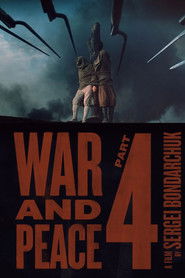
As Moscow is set ablaze by the retreating Russians, the Rostovs flee their estate, taking wounded soldiers with them, and unbeknownst to them, also Andrei. Pierre, dressed as a peasant, tries to assassinate Napoleon but is taken prisoner. As the French are forced to retreat, he's marched for months with the Grande Armée, until being freed by a raiding party. Part four of the four-part adaptation of Leo Tolstoy's 1869 novel.
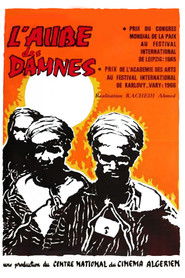
This excellent feature-length documentary - the story of the imperialist colonization of Africa - is a film about death. Its most shocking sequences derive from the captured French film archives in Algeria containing - unbelievably - masses of French-shot documentary footage of their tortures, massacres and executions of Algerians. The real death of children, passers-by, resistance fighters, one after the other, becomes unbearable. Rather than be blatant propaganda, the film convinces entirely by its visual evidence, constituting an object lesson for revolutionary cinema.
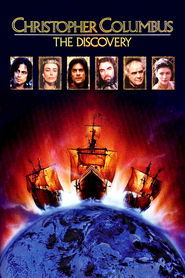
Genoan navigator Christopher Columbus has a dream to find an alternative route to sail to the Indies, by traveling west instead of east, across the unchartered Ocean sea. After failing to find backing from the Portugese, he goes to the Spanish court to ask Queen Isabella and King Ferdinand for help. After surviving a grilling from the Head of the Spanish Inquisition Tomas de Torquemada, he eventually gets the blessing from Queen Isabella and sets sail in three ships to travel into the unknown. Along the way he must deal with sabotage from Portugese spies and mutiny from a rebellious crew.
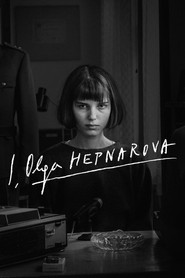
Olga is a complex young woman desperate to break free from her unfeeling family and social conventions. With her Louise Brooks-like tomboyish looks she drags herself, chain-smoking, from one job to another until she appears to find her niche as a truck driver. Although she has female lovers she does not form a bond with any of them; instead she clashes, time and again, venting herself in wordless emotional outbursts and other behavioural extremes.
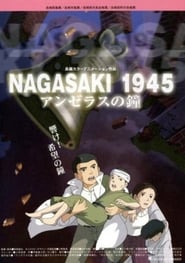
August 1945. In a converted theological seminary on the outskirts of Nagasaki, a young doctor works to help his patients, as unsettling news comes of a new weapon used by the Americans on the city of Hiroshima. When the second nuclear weapon is dropped on Nagasaki, the hospital staff must work to save lives in the midst of the concentric circles of death that their city has become.
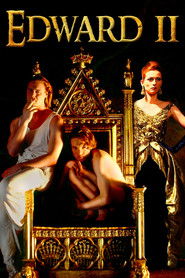
England, 14th century. King Edward II falls in love with Piers Gaveston, a young man of humble origins, whom he honors with favors and titles of nobility. The cold and jealous Queen Isabella conspires with the evil Mortimer to get rid of Gaveston, overthrow her husband and take power…
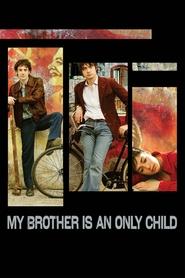
Accio and Manrico are siblings from a working-class family in 1960s Italy: older Manrico is handsome, charismatic, and loved by all, while younger Accio is sulky, hot-headed, and treats life as a battleground — much to his parents' chagrin. After the former is drawn into left-wing politics, Accio joins the fascists out of spite, but his flimsy beliefs are put to test when he falls for Manrico's like-minded girlfriend.
Gottland provides an unconventional look at Czechoslovak 20th century history. Inspired by the bestselling book “Gottland” from the Polish journalist Mariusz Szczygiel, this feature-length film is comprised of short stories portraying peculiar fates. Young documentary film makers from renowned Prague Film School FAMU, inspired by the book, take a closer look at the history of post-war Czechoslovakia and Czech Republic, in order to discover new heroes and remind us of the ones that were forgotten or erased from the history.
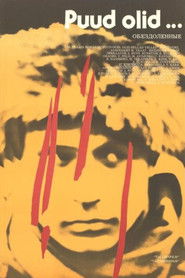
Typhus has killed the father, mother and older son of Palanumäe farm. Hind, younger son, realizes that he won't be able to manage the shabby farm alone. Paabu, the wife of older son, is good at housework and Hind likes her; however, more help than that is needed for maintaining the farm. Jaak, the farmhand, does more harm than good. The rumour is around that when converting to orthodoxy one will lead better life in a warm country - this, of course, attracts Hind, but angers the estate owners. How come this young inexperienced man wants something else than serving the Livonian feudals?
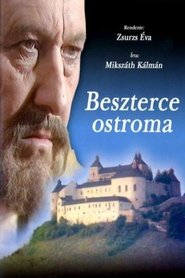
István Pongrácz, lord of the castle of Nedec, is a strange man. He does not like his own time, so he imagines himself as a medieval lord of the castle. His surroundings also accept his whimsy, and in this way they give him a horse to ride. Like centuries before, he launches a campaign against the disobedient city of Banská Štiavnica. In their great embarrassment, the serious city fathers offer the haughty warlord a 'hostage': Apolka, the city's orphan. Her presence changes Count Pongrácz, who grows fond of the beautiful and innocent creature. But Apolka's heart belongs to another.
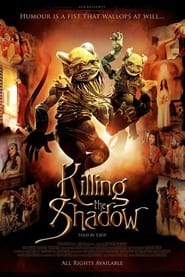
Killing The Shadows is a bawdy comic fable set in the Ottoman Empire during the mid-14th century based on two legendary figures in Turkish folkore, the jester Hacivat (Beyazit Ozturk) and the nomad Karagoz (Haluk Bilginer), men who apparently lived and died by their sense of humour.
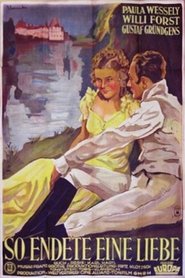
The political advisor to the French emperor Napoleon, and the Austrian emperor Franz I, arrange a marriage between Napoleon and the Austrian archduchess Marie-Luise in order to prevent another war.
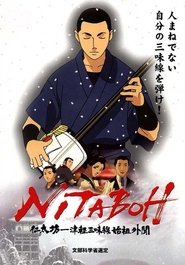
At a young age, Nitaroh is stricken with an illness that leaves him blind. He inherits the shamisen guitar once used by his mother and is taught its basics by a blind travelling shamisen player. In time with the help of friends old and new, he walks the paths that leads to his ultimate fate - that of founder of the Tsugaru style of shamisen play.
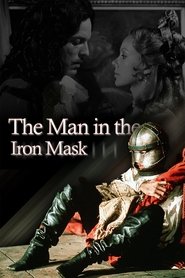
Years have passed since the Three Musketeers, Aramis, Athos and Porthos, have fought together with their friend, D'Artagnan. But with the tyrannical King Louis using his power to wreak havoc in the kingdom while his twin brother, Philippe, remains imprisoned, the Musketeers reunite to abduct Louis and replace him with Philippe.
The story of Freda Kelly, a shy Liverpudlian teenager asked to work for a young local band hoping to make it big: The Beatles. Their loyal secretary from beginning to end, Freda tells her tales for the first time in 50 years.
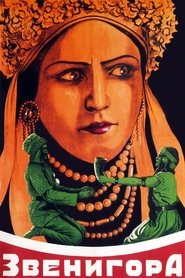
The momentous film stars Mykola Nademskyi as the grandfather of Tymish, whom he alerts to the secret treasure buried in the mountains of Zvenygora – a treasure that rightfully belongs to his homeland. The film wonderfully blends both lyricism and politics and uses its central construct to build a montage praising Ukrainian industrialization, attacking the bourgeoisie, celebrating the beauty of the Ukrainian steppe and retelling ancient folklore. Sergei Eisenstein said of the film, "As the lights went on, we felt that we had just witnessed a memorable event in the development of the cinema".
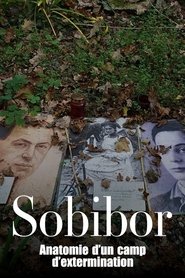
In 1943, the Nazis completely dismantled the Sobibór extermination camp, determined to erase every trace of their crimes. Archaeological digs and eyewitness accounts have recently uncovered the inner workings of this horror machine.
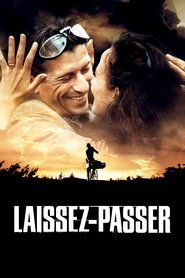
During the Nazi occupation of France as two filmmakers attempt to navigate their careers without compromising their ideals. Facing pressure from the Vichy government, assistant director Jean Devaivre uses his position at the German-controlled studio Continental Films as a cover for his resistance activities, while screenwriter Jean Aurenche uses his wits to keep from being involved in the creation of any collaborationist propaganda.
We have detected that you are using an ad blocker. In order to view this page please disable your ad blocker or whitelist this site from your ad blocker. Thanks!