The story of D-Day has been told from the point of view of the soldiers who fought in it, the tacticians who planned it and the generals who led it.
But that epic event in world history has never been told before through the perspective of the strange handful of spies who made it possible.
D-Day was a great victory of arms, a tactical coup, and a moral crusade. But it was also a triumph for espionage, deceit, and thinking of the most twisted sort.
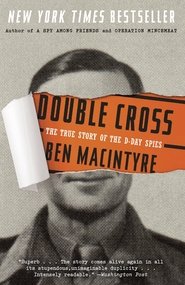
Following on from his hugely successful BBC Two documentaries, Operation Mincemeat and Double Agent: The Eddie Chapman Story (Agent Zigzag), writer and presenter Ben Macintyre returns to the small screen to bring to life his third best-selling book - Double Cross The True Story of the D-Day Spies.
Macintyre reveals the gripping true story of five of the double agents who helped to make D-day such a success.
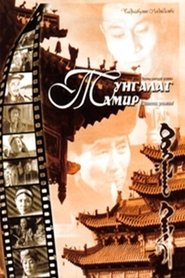
The image of the Mongolian countryside, the struggle for freedom, and the changes in the minds of the people of the new social relations are reflected in the form of an epic. The main characters of the film are the well-known characters such as Erdene, his wife Dolgor, the rich Itgum, and Timur, a good glass man called "silicon", and the complex events of their lives. appears.
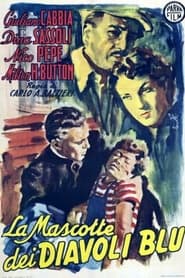
An Italian child becomes blind due to an accident with German cavalrymen during an American bombing, but regains his sight thanks to American physicians.
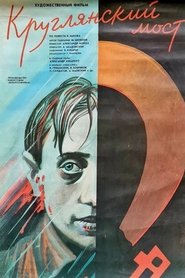
Four partisans are tasked with blowing up a bridge that has no strategic significance. The order is unclear, but without questioning their superiors, the heroes set off, not yet knowing what they will have to endure. Based on the novel of the same name by Vasily Bykov.
Close shot of 4.7" naval gun pointing to the left with group of British naval ratings standing around it. The gun fires and the men run up to reload, the begin to pull the gun forward.
How do these people live, how do they endure the confinement and pain of the country's borders ? Under the splendor of the landscapes we can feel the constant threat of a cold war In the heart of Caucasus. The villagers have learned to live with the sound of reports, while knowing that the next bullet may be for them. Scenes from ordinary life, in a country where the threat of war may never be forgotten: yet a feeling of life prevails: resident forever, forever. This film talk about the current state of the world and humanity with respect to imposed violence, in a set of border areas.
A grenade fired from a nearby hill kills the parents of a ten year old boy during the siege of Sarajevo in 1992. The Boy looses his ability to speak. A lady neighbor adopts and takes care of him. The Boy is thrown out from his destroyed apartment and begins to prowl around the city with a schoolmate. Too early and too soon, he goes through the process of growing up. He learns the meanings of such words as force, death, sex. He learns how to achieve. He learns about the values. He learns what matters the most. The Lady neighbor that takes care of him tries to shelter him and protect him. Unsuccessfully. The Boy rides to fall. Death and suffering become more frequent, and more severe. When the Lady neighbor's teenage son is killed by a sniper as a collateral damage, she then rejects the Boy. The Boy escapes the siege, and shoots from a cannon at the city.Fifteen years later, the Boy - now twenty five - and the Lady neighbor meet again. They are united in pain and suffering.
Temnikar's family prepares for Christmas, but to him, it's the time of dark premonitions and anxiety. In the mountain cave, hidden by snow, the wounded partisans are hiding, and Temnikar suspects the treason. Once the White Guard patrol shows up at Temnikar's doorstep, he finds out about their plan to go and finish off the wounded partisans.
The film, produced by Filoteo Alberini and released in 1909 is a short drama about a young boy who is killed during the Spedizione dei Mille, a military campaign led by revolutionary Giuseppe Garibaldi in 1860 to defeat the Kingdom of the Two Sicilies, an expedition aimed at unifying Italy. Both films were restored by the Centro Sperimentale di Cinematograf ia–Cineteca nazionale as part of a joint project between them and the Grand Orient of Italy to mark the bicentennial celebrations of the birth of Guiseppe Garibaldi.
Flush riveting is a way of connecting two pieces of sheet metal together, using rivets whose heads do not protrude above the surface of the metal. In aircraft construction, a flush rivet reduces drag, thus increasing aircraft performance. This World War II-era Walt Disney industrial-training film teaches four methods of flush-riveting aircraft aluminum sheet metal: the Countersink method, the Double Dimple method, the Pre-Dimple method, and the Combination Pre-Dimple and Countersink method. The choice of method to use is based upon the thicknesses of the top and bottom metal sheets.
Through interviews we meet some of the people who risked their lives to hide Jewish children during World War II and how this experience has continued to affect the survivors.
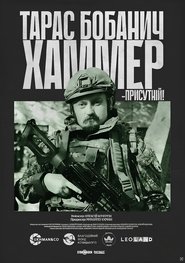
The film is about the legendary Ukrainian volunteer, officer, and public figure Taras Bobanych "Hammer". Taras started his fight on the Maidan. Since 2016, he has been a member of the 1st Separate Assault Company of the Right Sector and, at the same time, a friend and associate of Dmytro "Da Vinci" Kotsyubaylo. With the beginning of the full-scale Russian invasion, "Hammer" led the battalion and defended first Kyiv and then Kharkiv regions from the enemy. The film about Taras is a collection of stories of the Ukrainian people's ten-year struggle for their freedom. The legendary "Hammer" has always played a prominent role in this struggle.
This documentary, filmed after October 7, places recent events in context and retraces the extraordinary history of this region to shed light on the present, interviewing actors and witnesses to this conflict: Islamists, Jewish nationalists, imams, rabbis, intellectuals, urban planners, soldiers, etc.
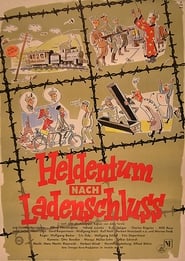
"Heroism after Hours" (German: "Heldentum nach Ladenschluß") is a 1955 West German anthology comedy film. It is in four parts each portraying a different tale of German soldiers attempting to get home at the end of the Second World War.
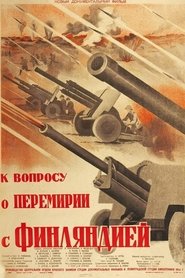
A rare documentary that shows how Soviet war propaganda presented the events of the Finnish front in 1941–1944. The main emphasis is on the resolution of the war. The film contains plenty of unique footage of the final stages of the Continuation War.
1917, Yakutia. 9-year-old Mikita is growing up beyond his years, as he, along with adults, learns the difficult life of a Yakut cattle breeder, where every day is a struggle for survival. New challenges await the boy, as the events of the revolutionary, rebellious time violently invade the traditional way of his family, violating the values and way of life that have been established for centuries.
We have detected that you are using an ad blocker. In order to view this page please disable your ad blocker or whitelist this site from your ad blocker. Thanks!