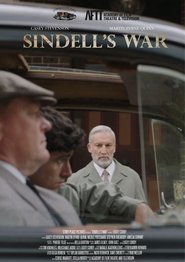
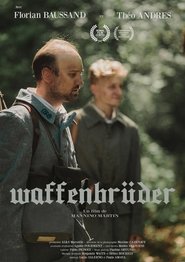
Based on a true story. In the 1920's a soldier with shell-shock came back to the Kenmore Mental hospital, where inside he grew the suspicion that the Doctor and Nurses were there not to help, but to kill him.
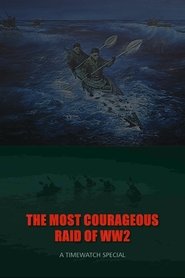
Lord Ashdown, a former special forces commando, tells the story of the 'Cockleshell Heroes', who led one of the most daring and audacious commando raids of World War II. In 1942, Britain was struggling to fight back against Nazi Germany. Lacking the resources for a second front, Churchill encouraged innovative and daring new methods of combat. Enter stage left, Blondie Hasler. With a unit of 12 Royal Marine commandos, Major Blondie Hasler believed his 'cockleshell' canoe could be effectively used in clandestine attacks on the enemy. Their brief was to navigate the most heavily defended estuary in Europe, to dodge searchlights, machine-gun posts and armed river-patrol craft 70 miles downriver, and then to blow up enemy shipping in Bordeaux harbour. Lord Ashdown recreates parts of the raid and explains how this experience was used in preparing for one of the greatest land invasions in history, D-day.
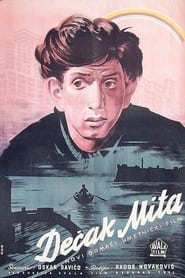
Instead of going to Belgrade, a boy called Mita joins illegal movement. Germans, who occupied Belgrade in the meantime, start to hunt down communists. Many of them are killed, but Mita succeeds to get to the freed land together with a girl who was going to Belgrade with him.
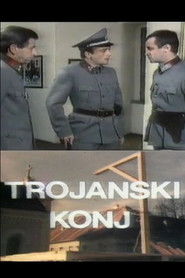
During the WWII, the communist resistance, with the help of a few local anti-fascists, makes sabotage and obstructs the actions of the Yugoslav quislings.
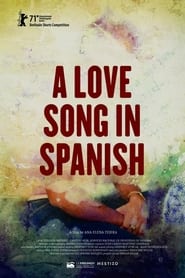
The piece, an experiment that begins on the skin, in the skins of a family that spoke in silence about a tropical dictatorship in the 1980s, the dictatorship of a house. The skins whispered silently and their voices were heard in the corners, on the walls, in the cooking pot, on the soupspoon, on the wet beans. As the soldiers marched in the streets, the echo of their footsteps resonated in the walls of the home of a military man’s family, a house where the words were forgotten. With few oral resources, some photographs and some stolen confessions, the director proposes an exploration that goes from the personal to the political through a fictionalized experience of the family story related to the dictatorship of Panama.
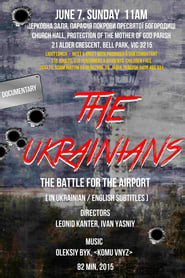
Documentary about specific phases of the battle for the Donetsk airport and about the hero-fighters of the Ukrainian Volunteer corps in Pisky. The film presents the war in extreme focus – adrenaline, humor, pain, anguish, and courage are tightly packed into 82 minutes of screen time. It shows scenes of the battle, evacuation of the wounded, the capture of the new airport terminal, and civilians, who live near the fighting’s epicenter. It features death and frontline humor, and a bit of philosophical discussions as well.
In Luanda, one of the world's poorest and most dangerous places, three students from Angola's only music school work towards their end-of-year concert. The Music School is Angola's first and only school of its kind. It houses some 80 students, most of them desperately poor. Many face disapproval and outright rejection from their families who can't see a future in music. This film asks if, despite the ravages of 27 years of civil war, musical passion can overcome terrible hardships.
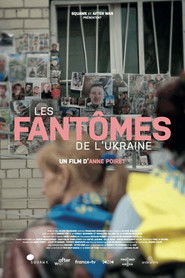
Ludmilla and Ludeshka's husbands disappeared on the Ukrainian front, while Tetiana's husband, a farmer from the Kherson region, was kidnapped during the first months of the Russian occupation. Torn between the hope of finding them and the anguish of impossible mourning, these three women are fighting a long and painful battle to obtain information. Director Anne Poiret followed them for two years.
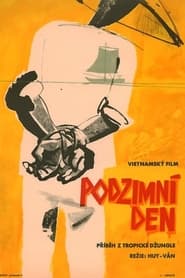
Duong and Tho are two military intelligence officers tasked with investigating enemy positions. They arrive in a rural area and meet Kien, a guerrilla fighter. Kien's wife, who deeply loves her husband, fears that if he continues his activities, he will be targeted by terrorists, leading to the destruction of their family's happiness. For this reason, she tries to stop her husband and clashes with Tho.
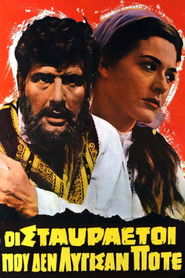
A gunman, during the Turkish occupation of Greece, collides with the landlords, considering them traitors. But when he learns that belong to the Society of Friends and prepare the Revolution, would become their ally.
Documentary about the first attempt to fight the military dictatorship since 1964. On the mountains of Caparaó, in august 1966, a group of former officers tried to start a great national reaction against the new regime, in an attempt to replicate a "Sierra Maestra" on Brazilian lands.
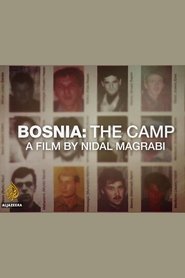
From May to August of 1992, during the Bosnian War, more than 3000 Bosnian Muslims--known as Bosniaks--and Croats were murdered by Serbian authorities in the town of Prejidor, Bosnia, and its surroundings and in the Omarska concentration camp near the city.
We have detected that you are using an ad blocker. In order to view this page please disable your ad blocker or whitelist this site from your ad blocker. Thanks!