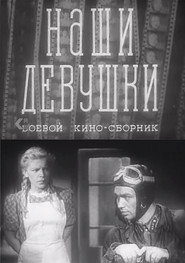
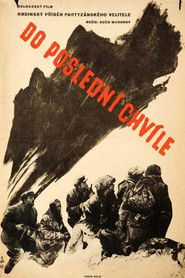
One of the anthology films about Soviet citizens resisting the Nazi invaders during World War II, the feature consists of two stories, one about a teenage woman telephone operator who sacrifices herself, the other about a farm girl tending a sick pig who deals with two paratroopers seeking shelter.
Elga Pulaski and her brother Ossip live in Warsaw. They belong to a secret society whose goal is to liberate Poland and Russia from the Romanoffs. Elga is loved by Baron Jan Slozek. But Slozek is a spy who has Ossip and other members of the society arrested. When Slozek is slain, Ossip is the key suspect. He escapes to America with his sister. There, Elga meets Norman Hutchinson, and marries him without telling him her past. When Hutchinson learns the truth, he leaves Elga. Eventually, when Elga appeals to him, he sees the light.
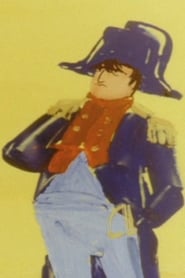
An instructional video that teaches, through stop-motion animation, how to build a bridge over a gorge that can hold heavy military equipment. Preserved by the Academy Film Archive in 2004.
Moments from the action and personality of Lela Karagianni, the legendary ""Bouboulina"" of the Resistance, are portrayed through the tender, personal perspective of her son, Giorgos. Wanted during the German Occupation, the young man secretly met with his mother, Lela, for the needs of the struggle. Yet, even under those harsh conditions, he had the chance to experience the tenderness and affection of the heroine, who never ceased to be a mother. Illegal film footage captures rare images of Occupied Athens, while Giorgos’ fragmented memories still carry something of ""Violetta di Parma,"" Lela Karagianni's favorite perfume.
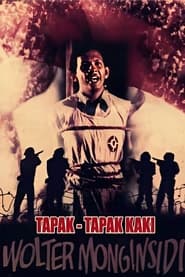
This is the story of one of the heroes of independence from South Sulawesi - Wolter Monginsidi. Monginsidi is portrayed as a flamboyant young man, brave and daring yet emotional at times. He and his troops always ambush the Dutch until they are finally caught. His father is persuaded to sign the clemency form, which turns out to be a trap, set up by the Dutch. He receives the death sentence instead.
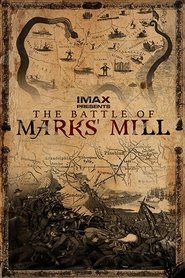
In April 1864, 1,800 Union Army soldiers were attacked along a supply road deep in the muddy forests of South Arkansas. This is the story of those US soldiers, their Confederates attackers, and the battle that ensued during Red River Campaign.
Journalist Max Arian retells his experience as a survivor of the Holocaust in the Netherlands while contemplating on why more Jewish people were deported from the Netherlands than from any other Western European nation.
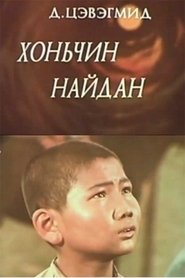
Based on the novel "Shepherd Naidan" by writer Dondo Tsevegmid, this film shows the hardships of Mongolia before the People's Revolution of 1921 through the life of a little boy Naidang, how he experiences great hardships and the beginning of good times.
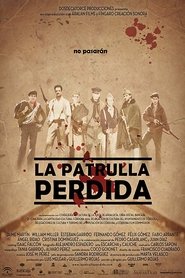
1936. Somewhere in Andalusian countryside, a patrol of Spanish Republican soldiers cross the enemy lines to destroy a very important railroad for enemies communications.
Set in a small village in Vientiane Province in the early 1970s. Pathet Lao troops have gained the upper hand over the US-backed Royal Laotian army. The government wants to use the village as a base for a counter-offensive.
We have detected that you are using an ad blocker. In order to view this page please disable your ad blocker or whitelist this site from your ad blocker. Thanks!