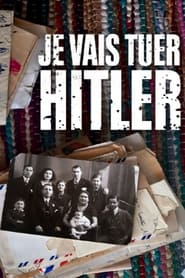
One day, in Savigny, an 18-year-old boy left his house in the middle of the war, saying: "I'm leaving, I'm going to kill Hitler." His name was Joseph, he was Jewish, he was my great-uncle. He disappeared during the night of the Occupation, and his existence became a family secret. He disappeared from history, the small as well as the big: he is not on any deportation list, and the only archive where he appears is a family photo of him as a child. It disappeared like a stone at the bottom of the water, instead of going up in smoke in the sky of Poland. What did he become? And why didn't anyone mention his name anymore?
Since the spring of 1943 and during the national socialist regime, a branch of the Mauthausen concentration camp had been located in the Upper Austrian village of Zipf. The prisoners were forced to work in a factory in which the propellants for the "Wunderwaffe" (wonder weapon), the V2 rocket were tested. Most of the people who live in the vicinity of the former concentration camp deny this.
A documentary film which confronts a historic actuality with oral witnesses.
A man is sitting on a bench in the middle of the desert. The world around him starts to develop and prosper rapidly, deserts turning to pastures and then to modern buildings. The man watches these developments with the change of generations until global wars break out. Eventually, all developments vanish and the scene goes back to the desert
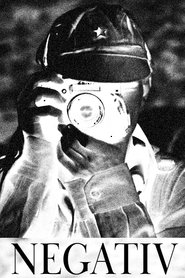
A photographer during the Soviet-Afghan war becomes obsessed with a mysterious figure that appears in his images every time the person photographed dies.
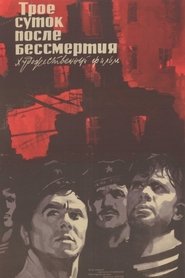
It is the 250th day of the defense of Sevastopol. On the outskirts of the bombed-out city, without radios and with only a handful of ammunition, 12 Soviet soldiers are holding out with their last ounce of strength. With them in the shelter are the wounded, women, and children. A report from Sovinformburo that Sevastopol has been abandoned by Soviet troops reveals the harsh truth to them—now they are alone with the enemy. Their only hope is to make their way to the sea, but at what cost will the valiant soldiers make their way out of this fiery hell over four heroic days?
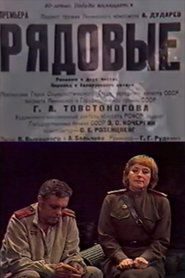
The action takes place shortly before the Victory in the ruins of Berlin. But it is not the military actions that are at the center of what is happening, but the fate of people, their sorrows and hopes. A young first-year Dandelion, drafted in the last days of the war, suffers completely childishly from the fact that he will not get military glory. His older friend, Dervoed, in front of whom his wife and son died, is suffering unable to cope with the mental pain. In contrast, the Rebel, who was taken to the military enlistment office right from his own wedding, is nervous and fierce. A real "war dog", he only knows how to kill. What to do when the war is over, where to put yourself?
The piece is an analysis of a person's attitude in the face of imminent danger, and its action takes place just after World War II. In the train station waiting room, two young men lead a beer discussion, one of whom tells the other an unpleasant incident of his own life.
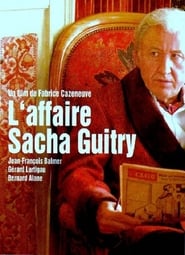
On the morning of 23 August 1944 Sacha Guitry was arrested at his Paris appartment, as the French capital was being liberated. Accused of collaboration with the enemy, the author of successful plays ("My Father was Right," "Let's Make a Dream," "Quadrille") and director of the theatre of the Madeleine was to remain captive for sixty days. His detention took from from the depot, to the Vel' d'hiv', then Drancy, and finally Fresnes Prison.
We have detected that you are using an ad blocker. In order to view this page please disable your ad blocker or whitelist this site from your ad blocker. Thanks!