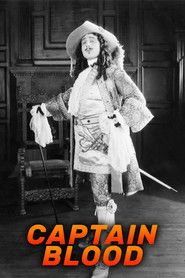
Young Irish physician Peter Blood is exiled as a slave to Barbados, where he and his friend Jeremy are purchased by Colonel Bishop at the behest of his niece Arabella. With other slaves he captures a Spanish galleon and becomes the terror of the Caribbean privateers until offered a commission in the English Navy. He defeats the French at Port Royal, and as a reward he is named governor of Jamaica and marries Arabella.
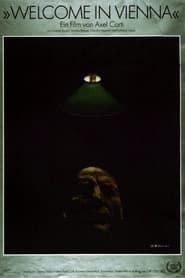
Freddy, a Viennese Jew who emigrated to New York after Hitler's invasion, and Adler, a left-wing intellectual originally from Berlin, return to Austria in 1944 as soldiers in the U.S. Army. Freddy falls in love with the daughter of a Nazi, and Adler attempts to go over to the Communist Zone. But with the advent of the Cold War and continuing anti-semitism, the idealism of both characters is shattered as they find themselves surrounded by cynicism, opportunism, and universal self-deception.
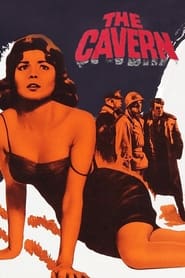
Adventure drama during WW2 in Italy where a mixed group of people get trapped inside a cave after a bomb raid. But can they co-operate? And will they survive?
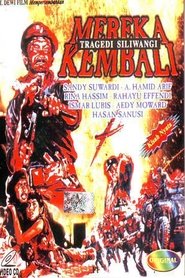
The "Long March" Story of the Siliwangi Division from Yogya returned to Bandung, when the Renville Agreement failed on 18 December 1948. Panglima Sudirman received the Siliwangi Division again. The long journey was a full and challenging journey, both against the Dutch, and also against the Darul Islam (DI) mob.
A Ukrainian village must suddenly contend with the Nazi invasion of June 1941. Re-edited version of The North Star (1943), to remove positive references to Soviet Union and include narration about the Hungarian Uprising of 1956.
In the autumn of 1991, a small group of Croatian soldiers go on patrol in an improvised armored vehicle. Soon after that they would get ambushed and their vehicle would get destroyed, in that situation they were forced to hide in a nearby house. Whilst stationed in that house they would get attacked by rebel Serbs, Serbian Special Forces and the JNA (Yugoslav People's Army, also reffered to as Yugoslavian National Army). Their resistance to the attackers would last 24 hours whilst their fellow combatants would attempt to try and get them out of there. The movie and story is based on true events which happened during the Croatian War of Independence.
Three young army members come to congratulate a veteran of the Great Patriotic War on the holiday. He shares memories of his wartime childhood in Siberia, telling stories about the small and big feats of his friends.
During the Balkan Wars, Sonia is a young woman living in Montenegro and left to care for her younger brother Milos and the family farm while elder brother Marko goes off to battle. Unable to handle the daily tasks following her brother’s tragic death, help comes in the form of Mahmud Hassan, a captured Turk nobleman, now a prisoner of war. Tasked with helping Sonia, their initial frosty relationship soon melts into romance. As the war rages on Sonia, Mahmud and Milos will face near-insurmountable obstacles in their quest for a better life amidst the hell of war.
Summer 1943. A group of scouts from an artillery division stumbles upon a 12-year-old boy during a raid behind enemy lines. The scouts are shocked by his appearance - completely wild, dirty, ragged, angry and hungry - a real "wolf cub". The scouts take him with them and study that he has been wandering through the forests for about two years, feeding on what infections, and hiding all the time.
True story (based on the book by Eleanor Coerr) about a Japanese girl named Sadako Sasaki, who was two years old when the atom bomb fell on her city of Hiroshima. Like so many other survivors of that horrific day, she subsequently developed leukemia. To keep herself occupied during her illness, she begins the monumental task of folding a thousand origami cranes--in the hopes that it will save her life.
John Henry Balch was a Pharmacist's Mate attached to the 3rd Battalion 6th Marine Regiment when his unit entered the Belleau Wood. His dedication to the Marines under his care earned him the Medal of Honor.
The untold story of a world-renowned place of remembrance of the Holocaust in France, the internment camp of Drancy, which was the central transit for the near totality of the 76 000 deported Jews of France during World War II.
Told by gauchos from Brazil, Argentina and Uruguai, the legend says that Anahy de las Missiones wandered around the Plata Basin during the time of Cisplatina War (1825-1828), stealing the dead.
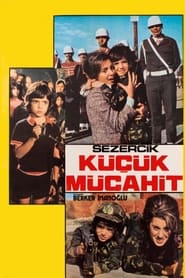
The film tells the story of Sezer and those around him during troubled times in Cyprus. Lale is deeply shaken by the unexpected death of her husband Murat. Lale, a school teacher, marries Murat, a pilot officer. However, Murat dies in a plane crash. At this time, Lale, who is pregnant, moves in with Murat's sister Aynur, who lives in Cyprus. One day, Lale returns to Turkey for a short time. During this time, Aynur's house in Cyprus is raided by a group of EOKA militants. Aynur and her husband are killed. Lale's young son Sezer is rescued by a man who happens to be at the scene. Years later, Sezer learns the truth about his past as a result of an EOKA attack. He will do everything in his power to find his mother and inform the fighters about what happened.
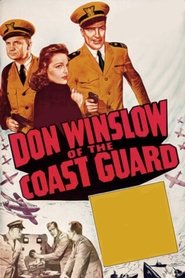
Don Winslow (titular hero of the serial "Don Winslow of the Navy") is reassigned to the United States Coast Guard, to guard the coast against saboteurs and sneak attacks.
Archive footage from Potemkin (1925), with English dialogue dubbed in by American actors, is combined with new footage to tie together the brave stand of Odessa Russian guerrilla bands of the 1940's against German forces with the similar situation of 1905 when Odessa citizens aided in the revolt against the Czar as depicted in Eisenstein's classic Potemkin (1925).
We have detected that you are using an ad blocker. In order to view this page please disable your ad blocker or whitelist this site from your ad blocker. Thanks!