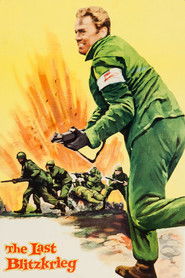
The fanatical son of a Nazi General leads a squad of German commandos, disguised as American Troops, behind the lines in order to sabotage the Allied Forces.
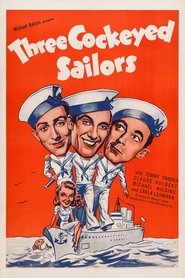
Three sailors get drunk while on shore leave and end up on the wrong ship. When they realise their mistake they scramble off it and onto their warship, HMS Ferocious. However, they soon realise that the vessel they have boarded is not the Ferocious but a German battleship.
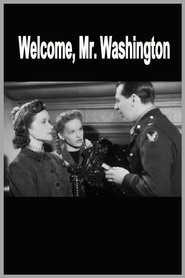
Based on a story by author Noel Streatfeild, the film trells the story of two sisters who are left penniless by their father's sudden death and lease their estate as an airbase to US forces in Britain to help the war effort. Both eventually fall for American servicemen.
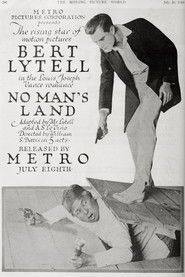
Free and easy Garrett Cope loves Katherine Gresham, but his rival, Henry Miller, who is really Heinrich Mueller, a World War I German spy, gets rid of Garrett by having him arrested for the murder of Pembroke Van Tuyl. While Garrett is in prison, Katherine marries Mueller, but Sidney Dundas, knowing that the German actually committed the crime, finally confesses, and Garrett is freed. Meanwhile, Mueller takes Katherine to a remote island called No Man's Land, which he uses as a base for blowing up Allied ships.
1830s, guerrillas in the hills resisting the French occupation. Meanwhile, their leader has a French officer and another guy chasing after his fiancé, and...
An old couple decide to bring home their war veteran son from the hospital. Reza (their son) is angry to be home but something comes up to surprise them all.
After graduating college a group of friends from the UK decide to take a trip to the Balkans. Little did they know that a war was about to break out. As the fighting spreads to the city of Sarajevo they must escape for their lives through the countryside. After witnessing a massacre in Bosnia they are detected and pursued by a ruthless Yugoslav People s Army Officer and his brutal fighters. With limited supplies winter approaching and murderous special armed forces chasing them down will they ever make it home alive?
This animated short by Claude Cloutier is a pictorial account of an attack on Canadian soldiers during WWI. On the edge of the battlefield, recruits are dreading the order to attack. At the signal, a young soldier leaps into a hell of fire and blood where the earth engulfs both the living and the dead. Blending archival images and Cloutier’s hypnotizing brushstroke, the film is a dazzling illustration of the futility of war.
After the planes hit on 9/11, Morgan Stanley security chief Rick Rescorla put into effect plans that he had developed years before. Rick had seen the potential for an airborne suicide attack on the twin towers as part of evaluating the risk posed to his wards within their building. After the attack in 1993 Rick took it personally to prepare and avoid the chaotic scenes that came with the 93 attack. This documentary tells the story of the man who predicted the 9/11 attacks and saved thousands of lives and died in the process.
In 1913, in the state of Santa Catarina, Brazil, the Government gives some lands to a foreign railway company, giving rise to revolt by the former owners of the land. The episode became known as Guerra dos Pelados.
The testament of a former concentration camp prisoner confronts and turns the lives of two young people from different worlds around, shedding light on the tragic history of their family.
During the Battle of the Bulge, word goes out to watch for German soldiers dressed as GIs. That's when black sergeant Chris Christiansen begins wondering if the GI who befriended him is really a friend--or the enemy.
We have detected that you are using an ad blocker. In order to view this page please disable your ad blocker or whitelist this site from your ad blocker. Thanks!