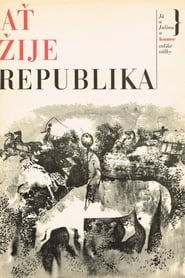
Oldrich is the runt of his village, beaten by his father, bullied by the other boys. But he has imagination on his side, and a wiry toughness they can’t defeat. The village is in turmoil, because the Nazi occupiers have just retreated and the Red Army is advancing. Oldrich dodges amid the mayhem and panic, taking his share of blows but always managing to stay one step ahead. Beautifully shot and darkly ironic, Karel Kachyna’s forgotten masterpiece jumbles reality, memory and fantasy to capture the intensity and confusion of childhood in a war zone.
The incredible story of swimmer Alfred Nakache, played by Amir Haddad. Alfred Nakache is one of those modern-day heroes whose story is little known. Born in Constantine and raised in Toulouse, he was France's best swimmer in the 1940s. Arrested by the Gestapo and then deported, he swam in the unsanitary pools of Auschwitz, from which his wife and daughter never returned. In their memory, this survivor of horror picked himself up and resumed competition until he regained his title as French Champion and once again represented his country at the Olympic Games. Filmed at Studio Marigny at the Théâtre Marigny in Paris's 8th arrondissement.
When war erupts in Ukraine, three women from different worlds collide at the Romanian border: an Italian woman searching for her missing husband and unborn child, a Romanian mother fighting to save her daughter, and a young Ukrainian surrogate forced to choose between survival and motherhood. Blending documentary reality with fiction, the film explores resilience, sacrifice, and the fragile bonds that emerge in times of conflict.
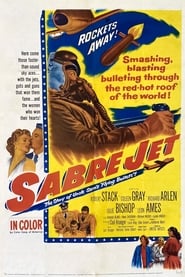
The story of jet pilots flying over Korea by day, from their Itazuke Air Base in Japan, and of their wives, on station with them, who have dinner ready when they return. Jane Carter (Coleen Gray), a reporter for a large newspaper syndicate arrives... she's also the estranged wife of the assistant squadron commander, Colonel Gil Manton (Robert Stack.) At first, she goes at her assignment of getting a story on the pilots wives with the same ruthlessness and persistence that broke up her marriage - but a mirror isn't needed to peek around the corner to where this one is headed.
When the malevolent Dr. Hauser, the Third Reich's maddest scientist, rises again with murder and mayhem on his mind, psychic journalist Elisa Ivanov awakens her own angel of death in Blade.
This is a propaganda film about the Hungarian Air Force. The story begins with the love stories of three young amateur pilots, captain Torday, Bandi and Pista.
Atmospheric image from the Wars of Liberation. The poet Theodor Körner, who was later killed in battle, is shown reciting a poem while the soldiers listen with emotion.
In 1936, the Spanish Civil War has just begun. Rebel army is taking at force a republican village, So, Juan and "Bicho" are obligated to go away the death. They will try to arrive the mines, where some refugees want to create a resistance against the rebels. Will they get their purpose?
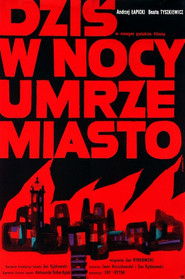
An unlikely couple - a Polish concentration camp inmate and a young German girl - stick together and try to survive the RAF bombing of Dresden in February 1945.
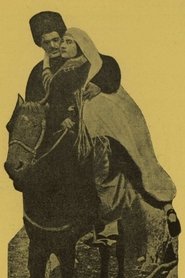
Sarajevo June 28, 1914. Dushan, the Serbian mayor of a Hungarian town, has come to see the parade of Archduke Ferdinand. While there he runs into Geza, an old friend in the Hungarian Army and invites him to come to his house and visit him and his new wife.
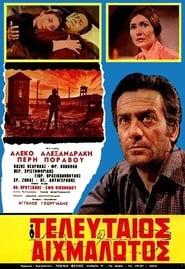
Dinos, the sole survivor of a group of saboteurs who were exterminated by the Germans for treason, finds refuge in the house of a crippled girl. She hides him in the basement and, falling in love with him, keeps him prisoner without telling him that the war is over, not wanting to lose him. When Dinos manages to escape from the basement, he faces the bitter reality. His girlfriend doesn't care for him, his friends died in the Occupation, and the one who betrayed the group was a fellow soldier. He decides to return to the basement and the girl who really loved him.
Set both in Latin America and the United States, the film explores the historic and current relationship of Washington with countries such as Venezuela, Bolivia and Chile. Pilger says that the film "...tells a universal story... analysing and revealing, through vivid testimony, the story of great power behind its venerable myths. It allows us to understand the true nature of the so-called "war on terror". According to Pilger, the film’s message is that the greed and power of empire is not invincible and that people power is always the "seed beneath the snow".
Serhii, a young man who fills his days with volunteer work, loses contact with his mother living in occupied territory. When his mother finally decides to evacuate, he learns that a humanitarian convoy from his hometown has been destroyed in a bombing raid.
The events unfold during the years of the Civil War. Commissar Fadeytsev once spared the life of a White officer, Chugureyev. Now, in the days of the counter-revolutionary uprising, Chugureyev, sent by his command to a remote island, encounters Fadeytsev, who is hiding in the house of a gamekeeper named Maksim. The gamekeeper is sentenced to hang, and the sentence is carried out. Fadeytsev manages to escape captivity, but being on an island, he knows full well that he won’t get far from the enemy...
We have detected that you are using an ad blocker. In order to view this page please disable your ad blocker or whitelist this site from your ad blocker. Thanks!