Seven months after the declaration of the Greco-Italian War, a volunteer nurse and a small group of confidants who take part in the Resistance, face incarceration and horrible tortures, as they refuse to betray their country.
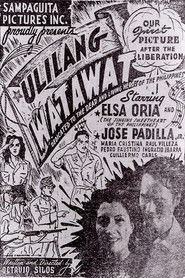
In the final days of the war, Duyên faces a daily struggle to take care of her young son and ailing father-in-law, all the while hiding from them the fact that her husband has recently been killed in battle.
Girlfriends Zoya, Natasha and Asya live in Petrograd. Before the Civil War, young heroines are aware of the social injustice of life. When the war begins, the girls are recorded by the orderlies of the working group to protect the Bolshevik Petrograd from the advance of the whites.
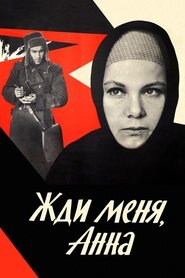
Фильм снят по повести Сергея Говорухина "Никто, кроме нас". Эта картина не столько о самой войне, сколько о взаимоотношениях кинооператора Евгения Левашова и Наташи - женщинm
The plot of the film is based on real events of the Great Patriotic War. When the Nazis occupied Crimea, the actors of the drama theater of the city of Simferopol entered the underground group Sokol. The activities of the underground members were diverse: they put up leaflets with information from Soviet Information Bureau, compiled maps showing the strategic objects of the enemy, and supplied the partisans with medicines. On April 10, 1944, 3 days before the liberation of Simferopol, the underground members died from enemy bullets — they were shot on the outskirts of the city.
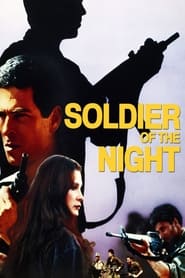
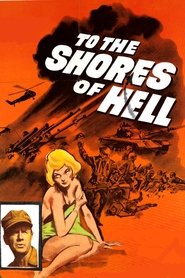
A romance ends for a woman when she discovers the nature of her boyfriend's nocturnal excursions. Rejected by the army, he carries out a vendetta against society. The woman places herself in danger when she stands firmly between the boy and his mission.
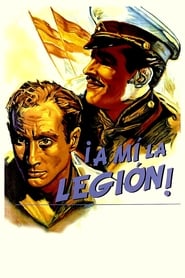
In North Africa, in a detachment of the Spanish Legion, el Grajo, a brave veteran, and Mauro, who has just enlisted, become close friends. When an unfortunate circumstance results in the death of a man, suspicions fall on one of them.
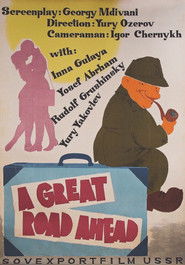
About the great Czech satirist Jaroslav Hašek, who was captured by the Russians during the First World War. Not wanting to fight for the interests of the Austro-Hungarian monarchy, Hašek enters the Red Army and, as a commissar of the international brigade, goes the military way from Samara to Irkutsk.
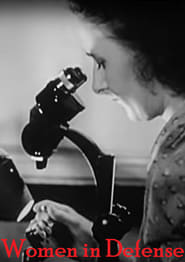
Short documentary extolling the virtues and necessity for women to participate in America's preparation for war, showing women working in scientific, industrial, and voluntary-services activities. Preserved by the Academy Film Archive in 2008.
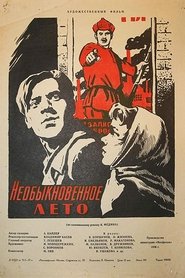
The film takes place in 1919 in Saratov. Student Kirill Izvekov becomes Commissioner of the Red Army and participates in the battle with Wrangel and the capture of the city.
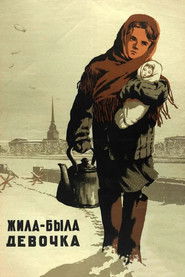
Woven around the daily lives of two children, nine-year-old Nastenka and five-year-old Katia, this is a story of the 17 months' siege of Leningrad and of the people and families shattered by the war, their homes bombed and destroyed, their lives in a constant anticipation of the advancing German army and air raids.
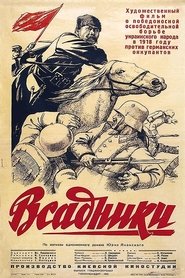
Episodic story of the resistance to the German invasion of Ukraine in 1918 during World War 1, and made as an example of the guerrilla warfare and fierce spirit in which Ukrainian peasants were again resisting Teuton onslaughts in 1939. Highlights a small band of guerrillas and their battles using scythes, shotguns and, often, just clubs against the Kaiser's army in the Ukrainian forests.
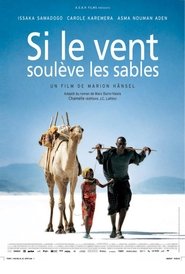
On the one hand, there’s the desert eating away at the land. The endless dry season, the lack of water. On the other there’s the threat of war. The village well has run dry. The livestock is dying. Trusting their instinct, most of the villagers leave and head south. Rahne, the only literate one, decides to head east with his three children and Mouna, his wife. A few sheep, some goats, and Chamelle, a dromedary, are their only riches. A tale of exodus, quest, hope and fatality.
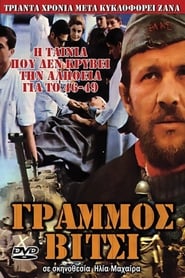
During the German Occupation, two brothers, Takis and Christos, fight the invaders with great ferocity. Both of them belong to resistance groups – different ones. After the withdrawal of the Germans, the two brothers find themselves in rival camps. One is a captain of ELAS (Greek People’s Liberation Army) and the other one a captain in the Greek army. In the attempt by ELAS to seize the Makrygiannis Gendarmerie Regiment, one of the brothers is killed. A little before the Civil War breaks out, the other brother is transferred to Florina. There, the heroes will experience the tragic events of the Civil War, until the complete collapse of the partisans on the ridges of Mt. Grammos.
We have detected that you are using an ad blocker. In order to view this page please disable your ad blocker or whitelist this site from your ad blocker. Thanks!