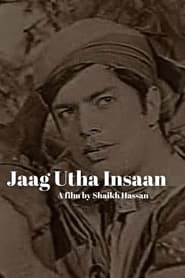
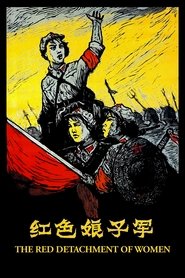
Nguyet is an orphaned child living with her grandma in a seaside village of devout Catholics. When the village becomes a battlefield, the grandma, enraged by the fact her son died due to Vietcong mine traps, begins throwing grenades against the winning Vietcong soldiers. To ensure a strategical victory, Dung, a young combatant, is deployed to gun down the old woman.
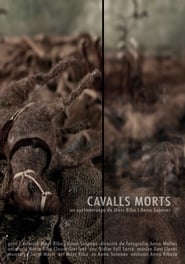
In an isolated and unknown place during a war, a child is forced to flee. Along the way, he sees horse corpses everywhere. Only dead horses. Why? Why have the horses decided to kill themselves?
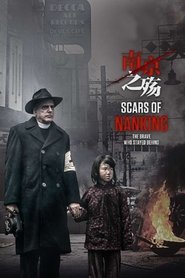
During the brutal invasion of China in 1937 by Imperial Japanese forces, tens of thousands of civilians and prisoners of war are murdered and women raped in what is known simply as "The Rape of Nanking." This docudrama is a stirring account of a small band of courageous American missionaries who choose to stay in Nanking to try and protect a quarter million vulnerable Chinese civilians who are trapped in a city ruled by a savage, out of control army. Their stories are brought vividly to life through actual real-time letters and diaries as they bear witness to one of the worst wartime atrocities in history.
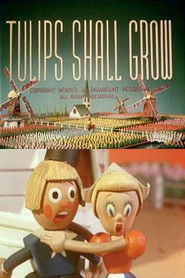
In this Puppetoon animated short film (an Academy Award Best Short Subject, Cartoons nominee), a young Dutch couple find their idyllic countryside being overrun by unfeeling, unthinking mechanical men and machines that lay waste to everything in their path. In 1997 this film, deemed "culturally, historically, or aesthetically significant," was selected for preservation in the United States National Film Registry.
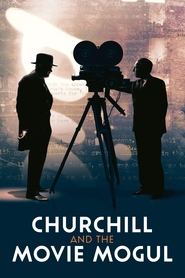
Winston Churchill understood the power of films, but the true extent of his use of cinema as a propaganda tool is rarely explored. In 1934, one of Britain's most celebrated film producers, Alexander Korda, signed Churchill up as a screenwriter and historical advisor. It was the start of a unique collaboration. Churchill provided script notes for Korda's productions and penned an epic screenplay. When war broke out, their collaboration took on national importance. Korda was sent on a mission to Hollywood to help bring America into the war, with positive results. With access to previously undiscovered documents, this film documentary examines that mission and a friendship that underpinned a unique, creative partnership.
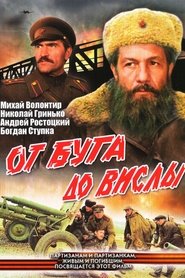
The Soviet war film tells the story of the last raid by the Ukrainian partisan division named after S. A. Kovpak, led by P. P. Vershigora, into enemy territory in 1943-1944, its advance to the state border between the USSR and Poland, and its international assistance to the Polish people in their liberation from the fascist invaders.
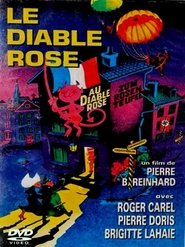
Double-agent Brigitte Lahaie is the star attraction at a strip-joint/brothel called "Le Diable Rose" in Nazi occupied France which is frequented by both Nazis and Partisans alike.
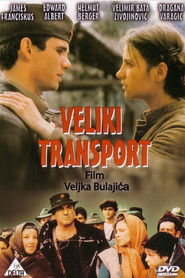
This WW2 epic was one of the last movies of that kind made in former Yugoslavia. It tells the true story of great transport of Partizans from Vojvodina to Bosnia in 1943.
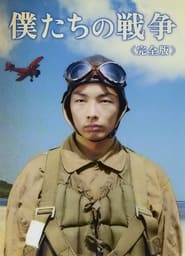
"Our War" is a special drama produced by Japanese TBS TV. This is the third bomb of the war-themed TV series after the "Song of Sugarcane Field" and "Guangzhou·Showa August 6th, 20th." It is said that in 2005, young people from the end of the island, Kenji and Showa’s 19-year-old pilot, Shi Tingwu, changed their identity because of time and space, and then used their respective perspectives to look at the Pacific War and the youthful story of peaceful modern life.
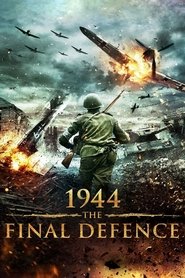
The Soviet army breaks through the Finnish defences on the Karelian Isthmus in June 1944, advancing with overwhelming force. Somehow, the Finnish troops must find the strength to fight back, with all odds against them. The Battle of Tali-Ihantala was the largest battle ever fought in the history of the Nordic countries. This film depicts the true events through five separate stories.
Australian newsreel, telling of the besieged Australian forces in Tobruk. Coverage shows dawn patrols, wrecks in Tobruk Harbour, tank patrols, anti-aircraft action against German planes, gun barrages, etc. also seen is the grave of first Australian VC (Victoria Cross) Corporal Edmondson and his mother at home holding the award.
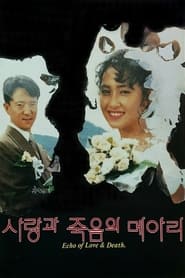
Kang-wook, a law student at Seoul National University, finds himself in a tight spot financially after losing contact with his family in North Korea. He sells his own blood at a hospital to make ends meet, and there he meets and grows close to nurse Jin-young. As Kang-wook faces financial difficulties, Ki-yong, a son of a landlord's agent, appears and tricks Kang-wook into joining left-wing activities. Ki-yong's true identity is revealed by Yoon-ae, a friend from hometown, leading to his arrest. Meanwhile, Kang-wook and Jin-young marry with the blessings of Professor Park and their friends, while Kang-wook's friend Do-hyeon struggles to hide his feelings for Jin-young. Their sweet days together come to an end with the outbreak of the Korean War, separating them. Jin-young, unable to wait for Kang-wook any longer, decides to flee the war with Do-hyeon. Kang-wook, hiding at Yoon-ae's house, is eventually arrested by Ki-yong and the leftists, who had been freed from prison.
During the Japanese invasion of the Philippines, an assorted group of refugees, including an American soldier, an Army nurse, a priest and a group of local children, try to make their getaway aboard a rattletrap, creaky bus.
We have detected that you are using an ad blocker. In order to view this page please disable your ad blocker or whitelist this site from your ad blocker. Thanks!