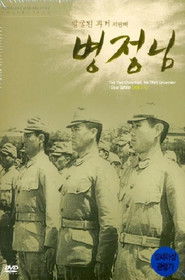
In May 1945, Japan's defeat was imminent after the attacks on Saipan, Iwo Jima, and the Philippines, and Tokyo was reduced to a sea of fire by another massive air raid. However, within the Ministry of the Army, there were still officers who were enthusiastic about a decisive battle on the mainland. Eventually, the Okinawa garrison was annihilated, and the US military was approaching the mainland, but on July 27th, the Potsdam Conference between the US, Britain, and the Soviet Union broadcast the Triple Joint Declaration, which set out the final terms of surrender for Japan.
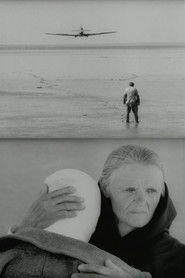
This film ballad is dedicated to those who never returned home from WW2. A group of retreating Soviet soldiers, crossing a lunar terrain in a desperate attempt to escape death, is attacked by a German fighter plane that appears like a bolt from the blue. One by one they are killed. Then suddenly, in an unlikely denouement bordering on the mystical, the attacker is shot down with a simple rifle. For ideological reasons that defy understanding this film, one of Viktor Hres’ earliest works, was shelved in 1967 by Soviet censors. In 2010, it was restored by the Debut Studio of the Oleksander Dovzhenko Film Studio with the support of the Ministry of Culture and Tourism of Ukraine.
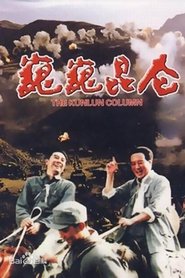
Partisans attack a column of hundred german trucks cisterns, that carry fuel to the front. However, their action is difficult, as Germans have chained Soviet prisoners to the driving wheels. The mission is to stop and destroy the column and save the lives of the prisoners.
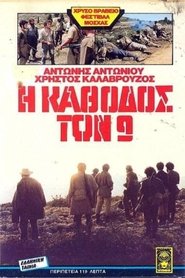
Summer 1949: end of the civil war in Greece. The last band of guerrillas of the Democratic Army is forced to abandon Mount Taygetus and to head for the sea. Everything behind them has collapsed and they can count on help from no one. In this long, desperate and aimless march, the group will end up by being annihilated by the National Army and the armed villagers.
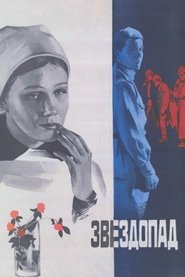
Falling Star is based on three stories by the contemporary Russian writer Viktor Astafyev and centers on a young soldier on the front lines who is wounded and taken to the hospital. Once there, he muses about his childhood and a little girl he had loved - someone who could easily have grown up to be the nurse that is attending to him now. As he recuperates, he and the nurse fall in love and he very much wants to marry her. At this point, the nurse's mother comes for a visit and advises him against such an action because if they were to marry and he were subsequently killed or maimed in action - the fighting is still close to the hospital - the nurse would suffer much more than if he just left her alone. Now it is up to the soldier to make a decision one way or the other.
In 1940, on the eve of the Greek-Italian war, in life of Colonel Diagoras Vartanis, his sister Christina and her husband Captain Hector Psachos appears a second Hector Psachos, which insists that this is true of the two. Christina is still in a dilemma while Vartanis lead the committee to interrogate and investigate which of the two men who claim to be the captain Psachos, is real and what is a spy.
"Burgemeestersmoord" tells the true story of the assassination of Mayor Piet Smulders of Someren and Mayor Willem Wijnen of Asten. Both mayors were part of the resistance and did everything they could to make things as difficult as possible for the occupying forces.
In German-occupied North Brabant, Jan searches for his place in the war. One thing is certain for him: this cannot continue. When Jan gets a job at the town hall, he becomes entangled between the mayors of Someren and Asten and the German officer Von Obernberger.
From the moment Jan is embraced by the resistance, his actions increasingly draw the attention of the Germans. These deeds will have major consequences for both Someren and Asten.
The autistic postman had been diligently delivering mail since childhood. The whole town knew and loved him, and a few families held a special place in his heart. One day, he couldn’t bring himself to deliver a death notice. Instead, he wrote a “letter from the front”. From then on, he replaced death notices with letters, and no one ever suspected the deception because the postman was a talented man – his letters seemed to be written by different people. But this didn’t last long, because during wartime, the military authorities closely monitored the mail.
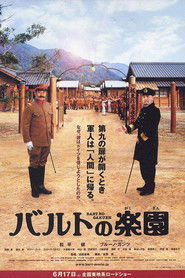
Based on the true story of the Bandō prisoner-of-war camp in World War I. It depicts the friendship of the German POWs with the director of the camp and local residents at the stage of Naruto, Tokushima Prefecture, in Japan.
From its old age, a SIG-510 rifle tells the story of its military service as a weapon used by the Chilean army. It tells of his military training, its frustrated desire to serve his country, and the memories it has of the Coup d'état that occurred in 1973.
We have detected that you are using an ad blocker. In order to view this page please disable your ad blocker or whitelist this site from your ad blocker. Thanks!