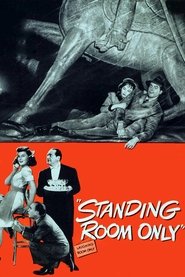
Because of the war, a 12-year-old boy from England, Hugh, is sent to live with the Andrews family in Ohio. Don, the Andrews' 11-year-old son, eagerly accepts the English boy, and is happy when his school-friends do the same. But his isn't so happy when things begin to change when his father fore-goes their evening game of Chinese Checkers to play chess with Hugh, and Hugh shows himself to be a formidable scholar, and impresses Don's girlfriend Betty, and becomes more popular with the boys than Don was...and Don is beginning to think that Hugh is too much of a good thing. Don gets downright depressed and decides to run away. Uh, oh, here comes Hugh.
Heroes of Shipka was the first solo effort for Soviet director Sergei Vasilyev, who had previously collaborated with his late brother Georgi. As head of the Leningrad Film Studios, Vasilyev was obliged to traffic in propaganda, but he never forgot how to make his material entertaining. The film is set in 1887 during the pivotal battle between the Russians and the Turks at the Shipka Pass. Stressing the solidarity of the Soviet states, tribute is paid to the courageous Bulgarian volunteers who helped the Russians fend off their mutual enemy. American critics were impressed by Heroes of Shipka, but felt that the film would have been twice as effective had it been lensed in Cinemascope rather than "standard aspect."
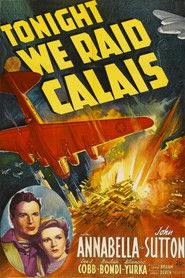
A British commando is on a one-man raid to destroy a bomb factory in Nazi-occupied France. He must enlist the aid of French farmers to complete his mission.
During France’s Hundred Years’ War, a Parisian student seeks refuge by the sea and falls in love with an aristocrat. As they find shelter in a monastery, their romance is overshadowed by the ongoing conflict between peasants and noblemen.
On the Pacific front, towards the end of World War II, Japan's imperial armed forces launched 'kamikaze' attacks - suicide missions by aircraft laden with bombs. It was a mad operation with no hope of returning alive, but the nation went wild, and the attacks continued for ten months, literally until the very last day of the war. Close to 4,000 Japanese airmen died, and nearly 7,000 Allied military personnel were killed, and thousands more were injured by the attacks. How could this happen? Utilising 15 years' worth of extensive interviews with US and Japanese World War II veterans, Takayuki Oshima’s film delves into the mechanism of how a crazed madness swept through an entire nation.
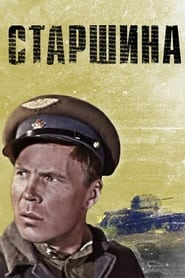
After leaving the hospital, Sergeant Katsuba, who has bid farewell to frontline service, travels to a provincial town to teach military science to cadets. However, his relationship with the 17-year-old boys does not go well: they consider their instructor to be unfair and overly critical...
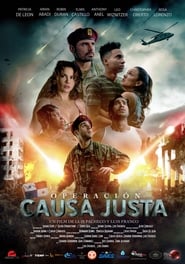
The stories of a Panamanian officer who feels betrayed by his superiors, of a young man from the neighborhood trying to prevent his friends from going out to fight, of a fisherman going through a thousand adventures trying to bury his compadre, of an imprisoned American businessman for conspiring as a CIA agent against the dictatorship and an alcoholic prostitute who cannot escape her past ... all in the middle of the Christmas preparations, just as the US invasion of Panama begins.
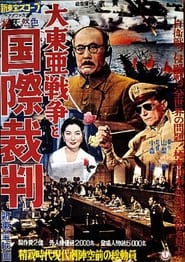
In 1941, overpopulated Japan faces an economic boycott and its armed forces push further to the south. And despite negotiations between Japan and the U. S. A. war is declared with the attack on Pearl Harbour. Victories follow for Japan on land and sea and her forces push forward to the borders of India. But gradually the tide turns in favour of the Allies and after the atom bombings of Hiroshima and Nagasaki, Japan is compelled to accept the Potsdam Declaration and by the order of the Emperor agrees to unconditional surrender. Under the supervision of the occupation forces the International Military Tribunal opens in Tokyo to try the Japanese war leaders. Established in the cause of justice, and to prevent future aggressive wars the trials drag on for two and a half years. And on December 23, 1948, General Tojo and six other war leaders mount the thirteen steps to the gallows at Tokyo's Sugamo prison.
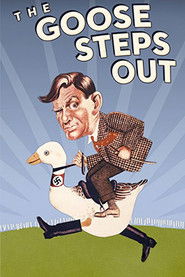
Schoolteacher William Potts is the double of a captured German spy, so he is sent to Germany by British Intelligence to obtain the plans of a new secret weapon, causing chaos in a Hitler Youth school in the process.
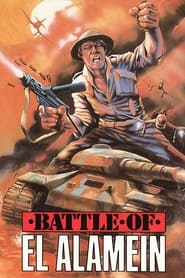
June 1942. As Rommel swept toward the Nile, the fall of Egypt and the capture of the Suez Canal seemed inevitable. Italian and German advance units raced toward Alexandria. Mussolini had given explicit orders: The Italians must arrive first!
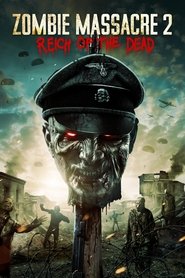
Set in the WWII it tells the story of a bunch of american soldiers fighting against a horde of zombies created by the Nazis using the prisoners of the camps... They have only one night to save their own lives but the enemy is stronger and stronger...
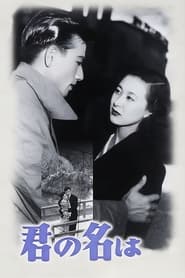
Machiko Ujiie and Haruki Atomiya first meet and fall in love on Ginza’s Sukiyabashi Bridge during the Great Tokyo Air Raid in March 1945. Machiko and Haruki pledge to meet again at the bridge in six months but part without asking each other’s names.
Norman Pitkin and Mr Grimsdale are council workmen mending the road outside an Army base when they come into conflict with the military. Shortly afterwards, they get drafted and fall into the clutches of the Sergeant they have just bested. They are sent to France to repair roads in front of the Allied advance but get captured. Pitkin takes advantage of a useful similarity to impersonate General Schreiber and manages to return a hero
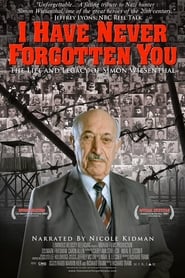
"I Have Never Forgotten You" is a comprehensive look at the life and legacy of Simon Wiesenthal, the famed Nazi hunter and humanitarian. Narrated by Academy Award winning actress Nicole Kidman, it features interviews with longtime Wiesenthal associates, government leaders from around the world, friends and family members--many of whom have never discussed the legendary Nazi hunter and humanitarian on camera. Previously unseen archival film and photos also highlight the film. What was the driving force behind his work? What kept him going when for years the odds were against his efforts? What is his legacy today, more than 60 years after the end of World War Two?
During WWII, an executive and his secretary arrive in Washington, DC on business but, because of the housing shortage, are unable to find hotel rooms. In desperation, they pretend to be married and hire themselves out as a butler and maid in order to secure lodgings. Comedy.
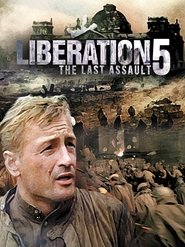
In Berlin, Lieutenant Yartsev's infantry and Tzvetaev's battery fight their way in the U-Bahn. Captain Neustroev's company is selected to hoist the Victory Banner atop the Reichstag.
We have detected that you are using an ad blocker. In order to view this page please disable your ad blocker or whitelist this site from your ad blocker. Thanks!