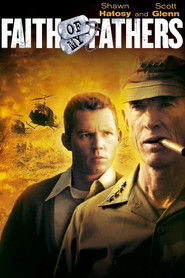
Faith of My Fathers is based on the story of Lieutenant Commander John McCain's experiences as a prisoner of war in North Vietnam for five and a half years during the Vietnam War, interleaved with his memories of growing up in a heritage rich with military service.
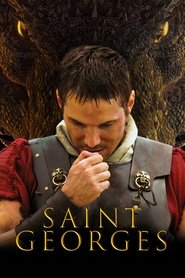
After winning yet another battle, Jorge is decorated as the new captain of the army, and now finds himself faced with his greatest challenge, whether to be faithful to his faith or succumb to the excesses of Emperor Diocletian.
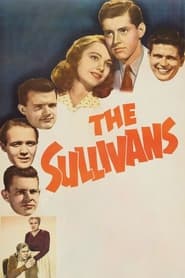
The lives of a close-knit group of brothers growing up in Iowa during the days of the Great Depression and of World War II and their eventual deaths in action in the Pacific theater are chronicled in this film based on a true story.
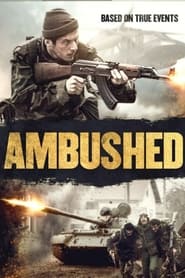
In the autumn of 1991, a small group of Croatian soldiers go on patrol in an improvised armored vehicle. Soon after that they would get ambushed and their vehicle would get destroyed, in that situation they were forced to hide in a nearby house. Whilst stationed in that house they would get attacked by rebel Serbs, Serbian Special Forces and the JNA (Yugoslav People's Army, also reffered to as Yugoslavian National Army). Their resistance to the attackers would last 24 hours whilst their fellow combatants would attempt to try and get them out of there. The movie and story is based on true events which happened during the Croatian War of Independence.
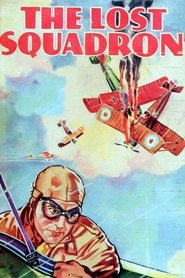
When World War I comes to an end, three pilots find themselves on hard times. They wind up in Hollywood, where they work as stunt fliers for a sadistic director.
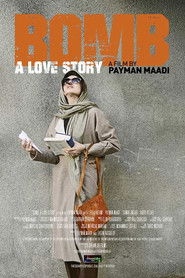
It’s 1988 and, at the height of the Iran-Iraq War, Tehran is bombed relentlessly. The days that pass are full of foreboding, and yet, love, affection, hope and life itself manage to sweep away the fear of death from those surrounded by it. Love may often be difficult to comprehend, but death is a horrible certitude. ‘Bomb, A Love Story’ shows how, even when faced with the darkness of death, love and hope will find a way.
This film, set at the beginning of the 17th century, is the first East-European "Eastern". Bocskai István orders the free Heyducks to shepherd a huge herd of cattle through the country torn to three parts, to the Dalmatian coast, where he can get weapons in exchange, for fighting the Austrians.
In 1942, the Far North was home to an icebreaker, almost devoid of weapons. Despite this, it stood as a formidable force, blocking the path of a German cruiser. Led by Captain Anatoly Kacharava, a small detachment of sailors held back the enemy for over three hours. This daring act thwarted Operation Wunderland, a meticulously planned Nazi operation aimed at preventing a Soviet convoy from delivering essential supplies to Arkhangelsk.
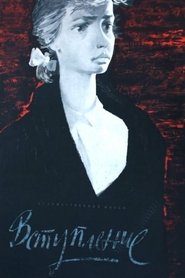
A boy from Leningrad has his world turned upside down by his parent's separation and World War II. He leaves town amidst the fighting and returns to find a friend in his step-brother. The war is seen through the eyes of children and told in flashback form. The film was a special prize winner at the Venice Film Festival.
In 19th-century Montenegro, the free mountain territories are surrounded by Turkish forces, isolated from the West and steeped in conservatism, patriarchy, and superstition. Morlak, a poet and bishop inspired by the historical figure Petar II Petrović Njegoš, leads his tribe in resisting the invaders. Gravely ill, he is sent to southern Italy in search of a cure. The journey takes him to a house in Naples, a city that contrasts sharply with his homeland’s isolated hills. As Morlak contemplates his existence, his loyal servant Djuko struggles with profound nostalgia, driven by the fear of his master’s death in a foreign land.
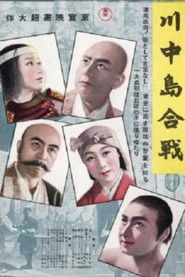
This epic depicts the battle between Uesugi Kenshin and Takeda Shingen. The focus of the story is the struggle by the unit leader in charge of the main supply wagons and the supply troops to transport materiel to the Uesugi army. To this are added episodes involving an itinerant woman.
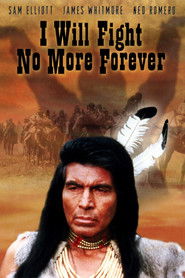
Pursued by 2,000 US soldiers and cavalry, Chief Joseph leads his tribe of 800 Nez Perce on a 1,700 mile journey across the West and towards Canada. Based on the true story of the westward expansion of the United States and the military force used to displace Native Americans from their lands.
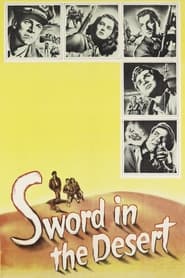
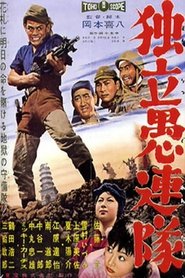
When Sergeant Okubo's brother is murdered at a Japanese outpost in Northern China during the Second World War, Okubo poses as a war correspondent and seeks out his brother's killer.
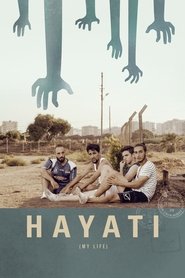
In 2015, Ossamah Al Mohsen and her son were the victims of a trip on the Hungarian border by a television reporter in her desperate flight from a Syria at war. The cameras captured this moment by scandalizing public opinion. This kick allowed Ossamah, famous soccer coach in his country, to arrive in Madrid and resume his profession. But the rest of his family did not have the same luck. The story of Ossamah allows us to reflect on the survival of thousands of Syrian families trapped in Turkey but also that of Moatassam, Youssef and Muhannad, three promising Syrian footballers who were robbed of the best years of their lives by war.
We have detected that you are using an ad blocker. In order to view this page please disable your ad blocker or whitelist this site from your ad blocker. Thanks!