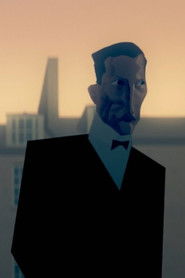
As rebels planned Ireland’s 1916 Easter Rising, they were watched by two spies code-named Granite and Chalk. This documentary delves into British intelligence to tell their story, one century on. Funded by Bord Scannán na hÉireann/the Irish Film Board, After ’16 is a creative response by Irish filmmakers to the events of Easter 1916. This collection of nine short films is a mixture of live-action, animation and documentary, telling stories from the eve of the Rising all the way to the Troubles in 1970s Northern Ireland and beyond.
In occupied Poland 1943, German official Martin Wolff is sent to a remote village to investigate the disappearance of a Jewish lawyer. His arrival unsettles the fragile order between scarred villagers, corrupt collaborators, and Nazi authorities, unearthing a web of betrayal and greed tied to whispers of the lawyer’s hidden fortune. Yet as the village’s darkest truths come to light, Wolff’s search may be hiding more than it reveals.
In the beginning of the Second World War, Germans, Austrians and persons without nationality living in France are sent to the concentration camp of Les Milles by France government. Commander Charles Perrochon is the responsible for this camp and he promises to the leaders of the prisoners to protect them from the Nazis. When France is invaded by the Germans, Commander Perronchon will disobey orders and his superiors trying to save these men. He gets a train, a ship and money from USA to send about eight hundred of these prisoners to the safety of Casablanca, in Marrocos.
A Security Service Major wishes to "buy" gullible priest Zieja and turn him into an agent who will discredit the opposition. The priest's interrogations become a natural pretext for a journey through the history of Poland in the twentieth century: from the Bolshevik war of 1920, through World War II, up to modern times. It turns out that the seemingly naive Father Zieja is actually a clever rebel.
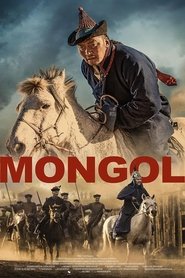
1910, Mongolia is under the dominion of the Manchu Qing Dynasty. The young nomad Mongol is in love with Serchmaa, his lord’s daughter. But a sinister plot strips Mongol of everything he holds dear, including his love with Serchmaa. Mongol must summon his inner strength to navigate a world fraught with treachery and deception, fighting not only for survival but also for justice. During his journey, he ignites inspiration and unity among his people.
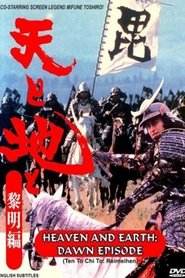
Some of the greatest battles during the Age of Civil Wars were fought between the Uesugi and Takeda clans. Leading up to them was the incredible life of Uesugi Kenshin, who rose from a son out of favor with his...
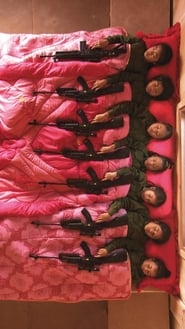
In a small house with oversized furniture, located in a rice field in Asia, some children wearing army clothes and weapons, start playing war, creating between each other two armies and using children's toys, laser weapons, machine guns and helicopters. Slowly, as the game progresses, they start imitating war scenes as seen on TV, such as negotiations and death scenes. At the end of the film, the children are coming out of the house and they deposit their weapons in front of it. The smallest child comes out in the end with a burning bramble stick in his hand and lights the pile of weapons. All the children leave while the pile is burning. In over twenty countries around the world, children are direct participants in war. Denied a childhood and often subjected to horrific violence, an estimated 200,000 to 300,000 children are serving as soldiers for both rebel groups and government forces in current armed conflicts. Dangerous Games is a work of fiction.
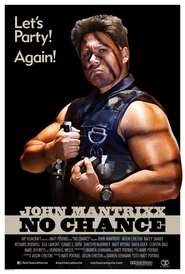
When a group of international criminals from his past kidnap his daughter, the world's greatest commando sets out for revenge in this action-packed parody of everything you loved about the '80s.
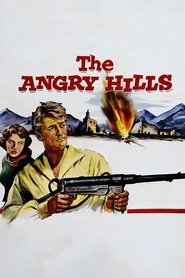
In 1941 Greece, on the eve of German occupation, cynical American foreign correspondent Michael Morrison arrives in Athens, intending to depart for London the following day. While there he is tricked into smuggling a list of resistance leaders out of the country and is pursued by the Germans.
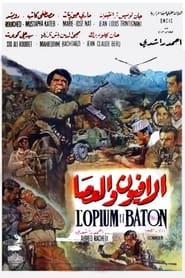
In 1950, in Algeria, in a village in Kabylia, Algerian resistance fighters resisted the French occupation army. Bachir returns to the village to escape the clashes ravaging Algiers. In Thala, he has two brothers, Ali and Belaïd. The first is engaged with the ALN (The National Liberation Army) and fights against the colonizer. His second brother, Belaïd, the eldest, is convinced of a French Algeria. His family torn apart, Bachir decides to join the war and takes sides against the repression of the French army. The French army is trying in vain to turn the population against the insurgents by using disinformation. The more time passes, the more the inhabitants of the village and surrounding areas, oppressed, rally to the cause of the FLN, their houses and their fields will be burned... Adaptation to the cinema of the eponymous novel Opium and the Stick, published in 1965, by Mouloud Mammeri, the film was dubbed into Tamazight (Berber), a first for Algerian cinema.
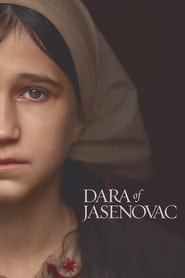
During the Nazi-occupied Ustasha regime "NDH" in former Yugoslavia during WWII, little girl Dara is sent to the concentration camp complex Jasenovac in Croatia also known as "Balkan's Auschwitz".
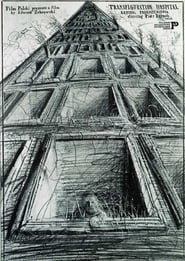
Shortly after the beginning of World War 2 a young idealist doctor is employed in a psychiatric hospital, where his notions of proper care for the patients are challenged by staff and the German occupation.
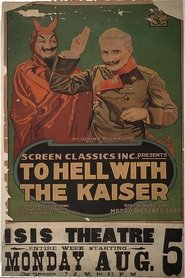
A farce in which the German Kaiser and the Crown Prince are defeated and made sport of by a plucky American girl and several American prisoners of war.
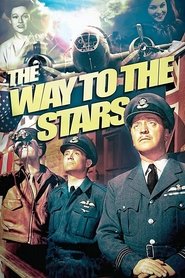
Life on a British bomber base, and the surrounding towns, from the opening days of the Battle of Britain, to the arrival of the Americans, who join in the bomber offensive. The film centres around Pilot Officer Peter Penrose, fresh out of a training unit, who joins the squadron, and quickly discovers about life during war time. He falls for Iris, a young girl who lives at the local hotel, but he becomes disillusioned about marriage, when the squadron commander dies in a raid, and leaves his wife, the hotel manageress, with a young son to bring up. As the war progresses, Penross comes to terms that he has survived, while others have been killed.
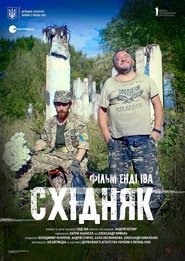
This is a portrait of a man, for whom the war in Eastern Ukraine has become a personal challenge. Beard is a native of the Donbas, a man of about forty-five, a family guy, an ordinary worker. Director is a young man of about twenty-six, single, a west-man, coming from the intelligentsia. This is the usual day of the ordinary military. These are events and people whom you can meet there. This is the relationship between people who have to be here and now during the war. This is not only a unique life experience but also a kind of cultural exchange between different social strata and communities. This is the birth of new, special traditions.
We have detected that you are using an ad blocker. In order to view this page please disable your ad blocker or whitelist this site from your ad blocker. Thanks!