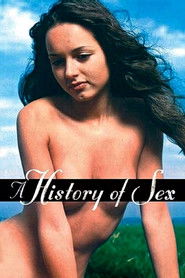
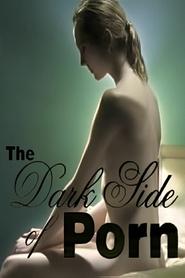
Andres Serrano (born August 15, 1950 in New York City) is an American photographer and artist who has become notorious through his photos of corpses and his use of feces and bodily fluids in his work, notably his controversial work "Piss Christ", a red-tinged photograph of a crucifix submerged in a glass container of what was purported to be the artist's own urine. This documentary explores the work and soul of this acclaimed artist & how he creates his haunting and explicit images. It takes us deep into Amsterdam and reveals the backdrops Serrano uses for what is one of his most confronting and moving collection based on all aspects of sex.
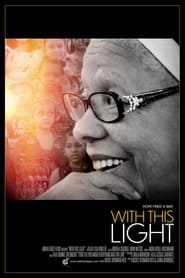
For over 70 years, Sister Maria Rosa Leggol helped over 87,000 Honduran children escape poverty and fortified her legacy as an activist and visionary. Her work continues with Maria and Rosa, two teens in her programs fighting to create their own lives.
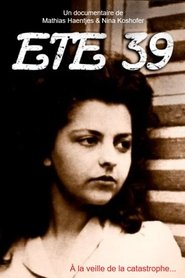
In the summer of 1939, people enjoyed the good weather, ignoring politics and pessimistic predictions. Images of everyday life that was about to change dramatically in a Europe in turmoil.
A documentary about the greatest mass exodus from a nazi concentration camp, which took place at the upper Austrian hills, in 1945. The following hunting is still known there under the cynical title "Mühlviertler Hasenjagd" - "The Mühlviertel's hare hunting".
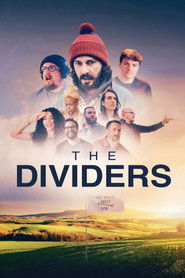
Following the inauguration of Donald Trump in 2017, Shia LaBeouf and his artist friends launched a live stream art project called 'HE WILL NOT DIVIDE US' that ran for four years, the duration of Trump's presidential term. But what began as a spirited display of resistance against the divisive presidential election result quickly devolved into an internet meme. The live stream attracted attention from the darkest corners of 4CHAN, encouraging trolls who made it their life's mission to ruin Shia's art project.
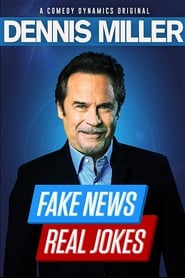
Five-time Emmy award winner Dennis Miller takes on the current climate like no other can in Fake News, Real Jokes! From selfies and airline travel to Trump and journalists, he delivers his signature critical assessments in his low key style that has been deemed by The Hollywood Reporter as "the most cerebral, astute and clever standup ever".
Dennis Rodman is on a mission. After forging an unlikely friendship with North Korean leader Kim Jong-un, he wants to improve relations between North Korea and the US by staging a historic basketball game between the two countries. But the North Korean team isn't the only opposition he'll face... Condemned by the NBA and The Whitehouse, and hounded every step of the way by the press, can Dennis keep it together and make the game happen? Or will it go up in a mushroom cloud of smoke? For the first time, discover the true story of what happened when Dennis Rodman took a team of former-NBA players to North Korea and staged the most controversial game of basketball the world has never seen.
October 2003, Alma and Lila Levy are excluded from the Lycée Henri Wallon in Aubervilliers solely because they were wearing a headscarf. What follows is a deafening political and media debate, justifying in most cases the exclusion of girls wearing head-scarves to school. February 2004, a law was eventually passed by the National Assembly. "A thinly veiled racism" is about this controversy since the affair of Creil in 1989 (where two schoolgirls were excluded for the same reasons) and attempts to "reveal" that maybe what hides behind is the desire to exclude these girls. This film gives them a voice as well as others - teachers, community activists, feminists, researchers - gathered around the group "A School for You-All" fighting for the repeal of this law they consider sexist and racist ... This movie was censured in Septembre 2004 in France.
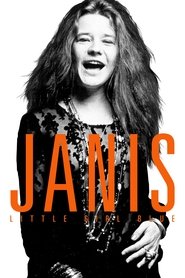
Janis Joplin is one of the most respected and iconic rock & roll singers of all time, a tragic and misunderstood figure who captivated millions of listeners and blazed new creative trails before her death in 1970 at age 27. Director Amy Berg explored Joplin's story in depth. A portrait of a complicated, driven and often beleaguered artist. Joplin's own words recount a series of letters she wrote to her family over the years. Janis was a vessel of energy when she sang. Her rapid rise and untimely death changed music forever.
Documentary focusing on 25 year-old actress Jane Fonda as she and her director Andreas Voutsinas prepare a stage play called The Fun Couple for Broadway.
Filmed in 1994 while the actress was in a clinic to detox from heroin, Rony Daopoulos' portrait of Lilli Carati for the television program “Storie vere” (True Stories) ideally closes the circle of the F For Femmine cycle that began with Frammenti di una vita da eroina (Fragments of a Heroin's Life), filmed by Daopoulos herself with Annabella Miscuglio in 1976, starring the poet Patrizia Vicinelli. An intimate and passionate portrait without moralizing.
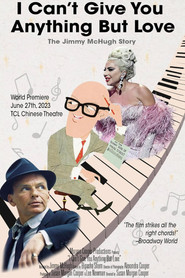
An aspiring singer is tasked with promoting the music catalogue of his great-grandfather, the famous songwriter Jimmy McHugh, recorded by everyone from Sinatra to Lady Gaga. While licensing these songs for movies, commercials, TV and Broadway shows, the singer journeys through the magic of his great-grandfather's stellar career.
A summer on an island of leisure in the Paris region. Land of Adventures, dredge and transgression for some, place of refuge and escape for the other. Its pay range to its hidden nooks, the exploration of a Kingdom of childhood, in resonance with the bustle of the world.
An Honest Liar tells the incredible story of the world-famous magician, escape artist, and world-renowned enemy of deception, James 'The Amazing' Randi. The film brings to life Randi's intricate investigations that publicly exposed psychics, faith healers, and con-artists with quasi-religious fervor. A master deceiver who came out of the closet at the age of 81, Randi created fictional characters, fake psychics, and even turned his partner of 25 years, Jose Alvarez, into a sham guru named Carlos.
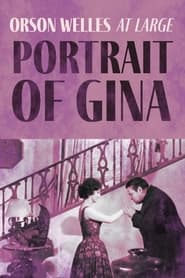
An unbroadcast 1958 essay-film by Orson Welles, blending documentary, personal reflection, and cultural portraiture in a subjective study of Italy and actress Gina Lollobrigida.
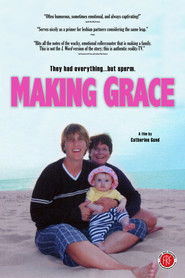
Documentary that examines lesbian motherhood through the eyes of longtime partners Ann Krsul and Leslie Sullivan, who desperately want to have a child.
Marie-Philip is a PhD student and part-time professor who loves cats and Harry Potter. But one week before her 29th birthday, she is diagnosed with breast cancer. For a year, without false modesty, we follow her through each step as she confides in us with shocking honesty. An ode to life, to courage and to the resilience of all those who fight every day against disease.
We have detected that you are using an ad blocker. In order to view this page please disable your ad blocker or whitelist this site from your ad blocker. Thanks!