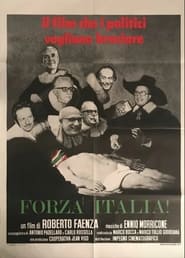
Much-censored documentary encompassing thirty years of Italian politics under the governance of the Christian Democracy (DC), entirely composed of — occasionally dubbed — archival footage.
VMX Temptress Skye Gonzaga turns up the heat, taking desire to daring new heights and delivering the fantasies we can’t resist in one unforgettable lineup.
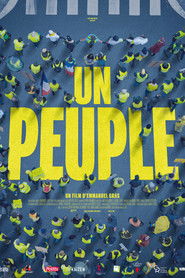
October 2018, France. Macron’s government decrees a tax increase on the price of fuel. A wave of protests starts to grow. Citizens mobilize throughout the country: this is the beginning of the Yellow Vests movement. In Chartres, a group of men and women gather daily. Among them, Agnès, Benoît, Nathalie and Allan commit themselves to the collective struggle. Like a whole nation, they discover that they have a voice to be heard...
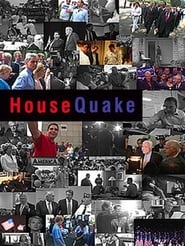
Capturing political theater at its most basic level, this documentary recounts the Democratic Party's stunning takeover of the U.S. House of Representatives in the 2006 elections, inspired by the aggressive tactics of strategist Rahm Emmanuel.
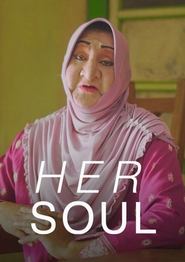
Shinta Ratri, a 57-year-old Muslim trans woman, recounts her life experiences—childhood memories, struggles of growing up, marriage—and her journey as the founder of the Islamic Boarding School of Al-Fatah in Yogyakarta, Indonesia.
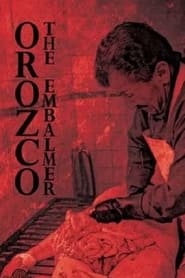
In 1996, Tsurisaki Kiyotaka, one of Japan’s most infamous death photographers, ventured into the center of Hell itself - the Rue Morgue neighborhood of Bogota, Colombia. With death and murder rampant, the corpses eventually find their way to embalmer Froilan Orozco, who has been tending the dead for over 50 years. We watch as bodies are brought in to his shop and he prepares them for their funerals.
On June 17th, 2015, 21-year-old white supremacist Dylann Roof walked into a bible study and murdered nine African Americans during their closing prayer. This is the story of the victims and survivors of that night.
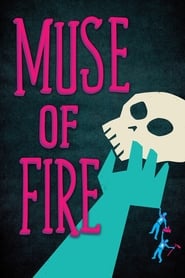
Funny, passionate, exciting, and smart: ‘Muse Of Fire’ will change the way you feel about Shakespeare forever. This unique feature documentary follows two actors, Giles Terera and Dan Poole, as they travel the world to find out everything they can about tackling the greatest writer of them all. Together they have directed and produced an inspiring film that aims to demystify and illuminate Shakespeare’s work for everyone: from actors, directors and students of all disciplines, right through to the? man on the street? Denmark with Jude Law, Baz Luhrmann in Hollywood, Prison in Berlin, and on the street with Mark Rylance. Think Shakespeare is boring? Think again!
The story of Keanu Reeves, from a turbulent upbringing to becoming not only one of the most beloved actors in the world, but also one of the most beloved people.
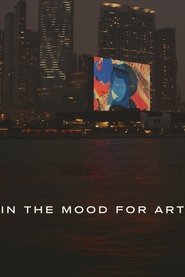
A rare foray into the art world of Hong Kong since the city’s return to China, exploring the aftermath of an extended lockdown and a failed revolution, under the strictures of a rigorous security law. This documentary delves into the opening of the M+ Museum, designed by Swiss architects Herzog & de Meuron and enriched by the donation of Chinese contemporary art pieces from Swiss collector Uli Sigg. It examines the museum’s and the art scene’s contributions to the debate on Hong Kong’s future, unveiling a new generation of artists and offering an unprecedented perspective on this Asian metropolis in search of its identity.
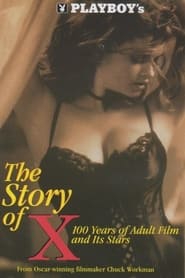
The Story Of X takes you to the earliest days of adult films when men peddled stag reels and projectors out of the trunks of their cars, then through the movie house years to the arrival of the home video business, and now the Internet. Meet the men behind the camera, such as "King of Sexploitation" Dave Friedman and the preeminent breast man Russ Meyer. Considered pariahs at the time, they're now hailed as pioneers in the fight against censorship. The Story of X visits the 60s when women's rights, not nudity, became the issue and recounts porn's arrival in Hollywood, led by director Bernardo Bertolucci's Last Tango In Paris. In the 70s, several groundbreaking films, including Behind The Green Door featuring Marilyn Chambers and Deep Throat featuring Linda Lovelace, took the genre to a new level.
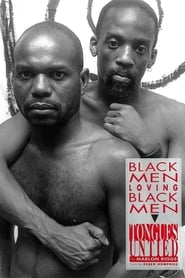
Marlon Riggs, with assistance from other gay Black men, especially poet Essex Hemphill, celebrates Black men loving Black men as a revolutionary act. The film intercuts footage of Hemphill reciting his poetry, Riggs telling the story of his growing up, scenes of men in social intercourse and dance, and various comic riffs, including a visit to the "Institute of Snap!thology," where men take lessons in how to snap their fingers: the sling snap, the point snap, the diva snap.
A documentary shot by filmmakers all over the world that serves as a time capsule to show future generations what it was like to be alive on the 24th of July, 2010.
Zambia's copper resources have not made the country rich. Virtually all Zambia's copper mines are owned by corporations. In the last ten years, they've extracted copper worth $29 billion but Zambia is still ranked one of the twenty poorest countries in the world. So why hasn't copper wealth reduced poverty in Zambia? Once again it comes down to the issue of tax, or in Zambia's case, tax avoidance and the use of tax havens. Tax avoidance by corporations costs poor countries and estimated $160 billion a year, almost double what they receive in international aid. That's enough to save the lives of 350,000 children aged five or under every year. For every $1 given in aid to a poor country, $10 drains out. Vital money that could help a poor country pay for healthcare, schools, pensions and infrastructure. Money that would make them less reliant on aid.
A man that is a stranger, is an incredibly easy man to hate. However, walking in a stranger’s shoes, even for a short while, can transform a perceived adversary into an ally. Power is found in coming to know our neighbor’s hearts. For in the darkness of ignorance, enemies are made and wars are waged, but in the light of understanding, family extends beyond blood lines and legacies of hatred crumble.
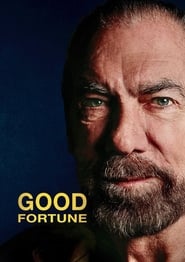
GOOD FORTUNE is the rags to riches tale of conscious capitalism pioneer John Paul DeJoria. Born with nothing, at times homeless on the streets of LA, “JP” spent his early adulthood in and out of motorcycle gangs only to wheel and deal his way to the top of a vast hair and tequila empire. A modern day Robin Hood, JP’s motto is “Success unshared is failure.” The son of immigrants, JP defies the stereotype of 'the 1%' and is the poster boy of the triple bottom line – people, planet and profit. A success story full of ups and downs, GOOD FORTUNE is the portrait of an extraordinary business man.
We have detected that you are using an ad blocker. In order to view this page please disable your ad blocker or whitelist this site from your ad blocker. Thanks!