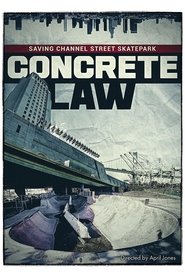
Channel Street Skatepark successfully existed for over a decade under the Interstate 110, despite its illegal creation, until overpass construction led to an ongoing shutdown. Channel Street founders and advocates continue to push for a reopening but the legal matter proves to be a much more complex task than anyone ever imagined. Concrete Law explores the battle between Channel Street Skatepark and bureaucratic control. This film uncovers the history of the park, from creation to current status, through interviews with park founders, local and pro skaters, business owners, and city officials.
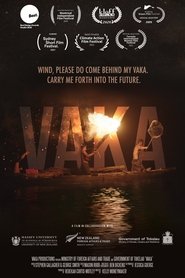
VAKA is a short documentary about the energy and resilience of the Tokelauan people as they weave their customary-wisdom regarding the environment with modern eco-technologies to respond to climate change.
November 2016 : The United States of America are about to elect their new president. AMERICA is a deep dive into the heart of Arizona, meeting the inhabitants of a little town crossed by Road 66, the broken inheritors of the American Dream who deliver us their hopes and fears.
Organist Korla Pandit was an alluring enigma, a television pioneer and the godfather of exotica music. He never spoke a word on 900 episodes of his groundbreaking 1950s TV program but captured the hearts of countless Los Angeles housewives with his soulful, hypnotic gaze and theatrical performance of popular tunes and East Indian compositions on the newly developed Hammond B3 organ. In the ’90s he resurfaced as a cult figure with the tiki/lounge music aficionados and ended up immortalized in the film Ed Wood. Often pegged as a “man of mystery,” Korla lived up to that billing when he took an amazing secret with him to his grave in 1998—one that is finally revealed in KORLA.
Deep rooted religious beliefs seemingly going back to the Pilgrim Fathers' puritanism dominate a society which is entertained by violence to no end on a daily basis. If it is true that American movies reflect American society, the United States have yet another severe problem: a lack of open sexuality and eroticism.
An aging chef from Minnesota has his life turned upside down when a relentless filmmaker from Las Vegas tries to make the chef's onion rings world famous.
An investigative look and analysis of gender disparity in Hollywood, featuring accounts from well-known actors, executives and artists in the Industry.
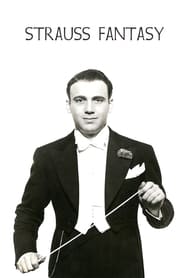
Johnny Green leads the MGM Symphony Orchestra in a medley of waltzes and other familiar pieces by three members of the Strauss family. Filmed in CinemaScope.
The music they make gives us joy and comfort. Now they will get something back. Christine Dancke brings pop stars on the road trip with surprises and delicious music. This time with the famous Norwegian singer AURORA
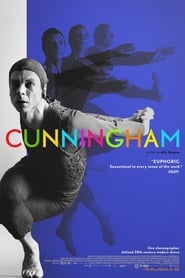
The iconic Merce Cunningham and the last generation of his dance company is profiled in Alla Kovgan's 3D documentary, through recreations of his landmark works and archival footage of Cunningham, John Cage, Robert Rauschenberg, and more.
Puccini Conservato uses a CD, a sound recording of some Puccini music (from La Bohème). The source of the sound (the loudspeakers) in a continuous hand-held panning (guided by the music), is intercut with shots of flowers or wood-fire, exemplifying the lyricism in Puccini’s music. By being a recording of a recording, the work proclaims the artificiality of the sound. However the beauty and humanity of the music comes through too.
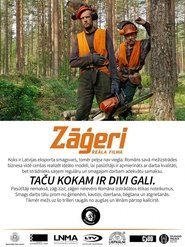
They fell trees in the forest, work in brigades and live in trailers or empty apartments far from home. The work is heavy. During moments of respite, the loggers like to sit on the stumps and talk about life. And about women – those waiting at home, or those they imagine.
A portrait of the life and work of the great Hungarian composer Béla Bartók, exploring both his music and his passionate interest in his country's folklore.
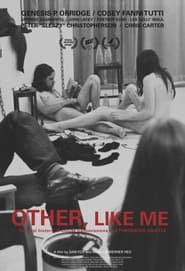
Hull, England, 1970. In a run-down commune in a tough port city, a group of social misfits - mostly working class, mostly self-educated - adopted new identities and began making simple street theater under the name COUM Transmissions. Their playful performances gradually gave way to work that dealt openly with sex, pornography, and violence. COUM lived on the edges of society, surviving on meager resources, finding fellowship with others marginalized by the mainstream. At the core of the group were two artists, Genesis P-Orridge and Cosey Fanni Tutti. As their work evolved, Cosey embarked on a career modeling for pornographic magazines, which she claimed for herself as a conceptual artwork, using it to forge a specific position in relationship to 1970s feminism. In performances, Genesis pushed himself to extremes, testing the limits of the human body.
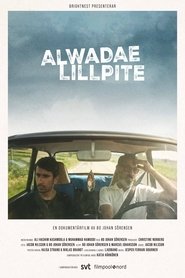
Ali has become an important part of the sleepy little village Lillpite. His car workshop is a second living room for the residents. But what happens when Ali's application for permanent residence gets rejected, and he decides to leave?
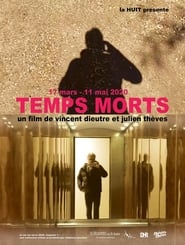
One is confined to Paris, the other to the countryside. One is a writer, the other a director. In the spring of 2020, both correspond with their phones. They film the real and film themselves in the test, during the epidemic. This crossing of time is a historical document, intimate and collective, funny and profound, shot in the urgency of the event. What to do with this “dead time”, this regained time?
We have detected that you are using an ad blocker. In order to view this page please disable your ad blocker or whitelist this site from your ad blocker. Thanks!