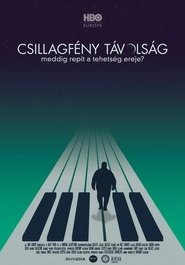
Self-effacing Hungarian pianist, József, has a unique talent for fusing contemporary jazz with traditional Roma music. This new sound catches the attention of the acclaimed saxophonist Tim Ries and the two begin performing together. József dreams of escaping his humdrum life and making it big in the home of jazz: America. Along the way, he conquers his demons and learns that when shooting for the stars, success is not the destination, but the journey itself.
How Frans Afman, a banker from the Netherlands, developed a new system for film financing, revolutionized independent filmmaking in Hollywood, but could not prevent it all from crashing down, when ambition of others turned into greed.
How does the vision of the brilliant Spanish filmmaker Luis García Berlanga (1921-2010) remain relevant in a time whose popular culture has little to do with his own? Since to understand the secrets of an artist it is essential to know the person behind, his family, his friends, his collaborators, as well as prestigious filmmakers and actors trace a collective portrait of a creator as singular as he is universal.
Concert clips and behind-the-scenes footage spotlight the singer, joined by Kenny G, the Morris Chorus gospel choir and an orchestra conducted by David Foster.
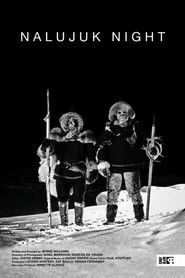
Nalujuk Night is an up close look at an exhilarating, and sometimes terrifying, Labrador Inuit tradition. Every January 6th from the dark of the Nunatsiavut night, the Nalujuit appear on the sea ice. They walk on two legs, yet their faces are animalistic, skeletal, and otherworldly. Snow crunches underfoot as they approach their destination: the Inuit community of Nain. Despite the frights, Nalujuk Night is a beloved annual event, showing that sometimes it can be fun to be scared. Rarely witnessed outside of Nunatsiavut, this annual event is an exciting chance for Inuit, young and old, to prove their courage and come together as a community to celebrate culture and tradition. Inuk filmmaker Jennie Williams brings audiences directly into the action in this bone-chilling black and white short documentary about a winter night like no other.
With the country's debt growing out of control, Americans by and large are unaware of the looming financial crisis. This documentary examines several of the ways America can get its economy back on the right track. In addition to looking at the federal deficit and trade deficit, the film also closely explores the challenges of funding national entitlement programs such as Social Security, Medicare and Medicaid.
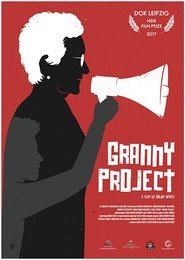
Three charming 20-something grandsons take a unique journey with their grannies to discover their historic and personal legacies through stories from the Second World War. Three grandsons embark an anarchic journey into the past – a complex road movie about intergenerational dialogue in Great Britain, Germany and Hungary. Granny Project is a seven-year-long investigation of three young men coming to terms with their heritage through the extraordinary lives of their grandmothers: an English spy, a dancer from Nazi Germany and a Hungarian communist Holocaust survivor. The film deals with classic values and taboo-like historical topics, and the method used is equally important as it gives an insight to the zeitgeist of the young today.
The Art of Dubbing…, a documentary about Hungarian dubbing, was made with the participation of dozens of well-known actors and professionals working in the field. The documentary is a fitting tribute to the legendary Hungarian dubbing actors and actresses and the dubbing profession. The film also talks about the origins, golden age, present and possible future of Hungarian dubbing.
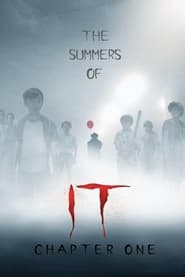
This documentary focuses on the actors and their journey over two summers to create the remake to the original IT, by Stephen King. The documentary originally released as bonus material, bundled with IT: Chapter Two.
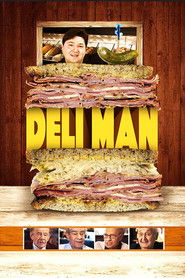
Every story needs a brave and trustworthy guide, and Deli Man's is the effusive and charming Ziggy Gruber, a third-generation delicatessen man - his uncle and great-uncle owned Berger's in the diamond district, and the Woodrow Deli on Long Island. His grandfather owned the famous Rialto Delicatessen on Broadway, and Ziggy was stuffing cabbages atop of a crate when he was eight. Now he is owner and maven (as well as a Yiddish-speaking French trained chef) of one of the country's top delis, Kenny and Ziggy's in Houston – yes, Texas…Shalom y'all. Of course the story of deli isn't Ziggy's alone. Deli Man has visited meccas like the Carnegie, Katz's, 2nd Avenue Deli, Nate ‘n Al, and Canter's, as well as interviewed some of the great connoisseurs of deli, including Jerry Stiller, Alan Dershowitz, Freddie Klein, Dennis Howard, Jay Parker (Ben's Best), Fyvush Finkel, and Larry King.
In an attempt to launch their careers, two young actors investigate a disturbing viral video of a French psychic's prophecy. As they shed light on the mysterious footage, their journey will test their friendship, threaten their lives and reveal a most troubling secret.
Mariken Halle first asked around her neighborhood if she might make a school film about one of her neighbors. When that didn’t work, she and her small film crew began addressing people on the streets of Göteborg. How would they imagine a movie that they would want to star in? The results were far from fantastic – she encountered dismissively amused responses and boring, confused ideas. But some of the people she talked to were different. They try getting into their “life role” – and she begins to direct them....
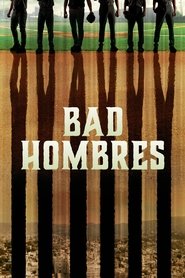
Meet the Tecolotes de los Dos Laredos, the world’s only binational pro baseball team, during a staggering low point in U.S.-Mexico border relations. Go beyond the headlines to explore America's pastime on both sides of the border, as the Tecos divide their home games between stadiums in Laredo, Texas and Nuevo Laredo, Mexico. Explore the lives of the players, their families and the wider community affected by divisive rhetoric, but united by a common history, shared traditions and the love of the game.
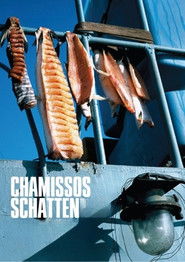
A three-chapter 720-minute cinematic exploration inspired by historical explorers like Adelbert von Chamisso. The film intertwines past and present travel experiences, using readings and visual materials to explore themes of cultural knowledge loss and change, drawing parallels to Chamisso’s “Wondrous Story” of Schlemihl and his shadow.
We have detected that you are using an ad blocker. In order to view this page please disable your ad blocker or whitelist this site from your ad blocker. Thanks!