"Sisters Rising" is the story of six Native American women fighting to restore personal and tribal sovereignty in the face of ongoing colonial violence against indigenous women in the United States. Dawn was in the Army, now she’s a tribal cop in the midst of the North Dakota oil boom that threatens to pull the last threads of her Native culture apart. Patty teaches indigenous women’s self-defense across the Great Plains of her people. Sarah is an attorney and scholar fighting to overturn restrictions on tribal sovereignty and increase legislative protections for Native women. Loreline and Lisa are grassroots advocates working outside of the system to support survivors of violence and influence legislative change. Chalsey is writing the first anti-sex trafficking code to be introduced to a reservation’s tribal court.
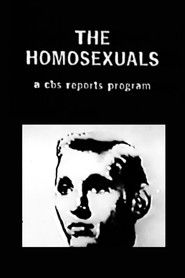
On March 7, 1967, 40 million Americans tuned in to watch CBS Reports: The Homosexuals, network television’s first documentary on homosexuality. Near the top of the program, host and interviewer Mike Wallace calls homosexuals “the most despised minority in the United States.” The hour that follows is filled with salacious location footage, sermonizing therapists, and shadowed interviews with distraught homosexuals.
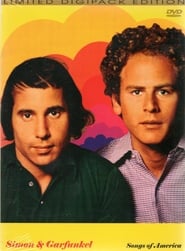
“Songs of America” shows the two on stage, in the studio and on a concert tour across a turbulent country. Their ambitious Bridge Over Troubled Water album had yet to be released and the glorious title song was heard here by the general public for the very first time. The program showed news clips of labor leader/activist Cesar Chavez and the United Farm Workers, the Poor People’s Campaign’s march on Washington, the assassinations of Martin Luther King, JFK and Robert Kennedy and other events that were emblematic of the era. “Songs of America” was originally sponsored by the Bell Telephone Company, but the execs there got cold feet when they saw what they’d paid for—legend has it that they looked at the footage of JFK, RFK and MLK during the (powerful!) “Bridge Over Troubled Water” segment (approx 12 minutes in) and asked for more Republicans! (Not assassinated Republicans, just more Republicans...you know, for balance!) The special was eventually picked
The life of Bambi, a male roe deer, from his birth through childhood, the loss of his mother, the finding of a mate, the lessons he learns from his father, and the experience he gains about the dangers posed by human hunters in the forest.
The digital revolution of the last decade has unleashed creativity and talent of people in an unprecedented way, unleashing unlimited creative opportunites. But does democratized culture mean better art, film, music and literature or is true talent instead flooded and drowned in the vast digital ocean of mass culture? Is it cultural democracy or mediocrity? This is the question addressed by PressPausePlay, a documentary film containing interviews with some of the world’s most influential creators of the digital era.
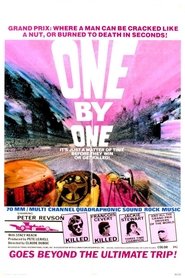
Intended to be about the passing of the torch from Stewart to Cevert; One By One is a documentary chronicling the lives of Formula 1 racers in the seventies.
Gives viewers a behind-the-scenes look at Rihanna's unprecedented globetrotting concert tour that hit seven countries in seven days with seven shows to promote her seventh album.
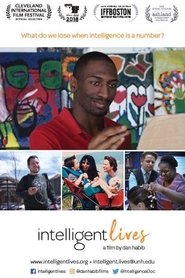
Three pioneering young adults with intellectual disabilities - Micah, Naieer, and Naomie - challenge perceptions of intelligence as they navigate high school, college, and the workforce.
A film about people and the space in which they live. From country cottage to council flats, stately detached houses, railway arches and tiny bedsitters - this is a journey with the camera through living rooms of all sizes, designed in all kinds of taste. It's a journey, too, through the lives of the people who inhabit these rooms; a film producer who lives in an empty house with bare walls and floor, a young Gloucestershire couple who have filled every inch of space with mementoes of their life together, an artist's model whose walls are crammed with paintings of herself, an architect who lives in a bedsit one-and-a-half metres square. Couples, families and single people appear in this film, some happy and secure within their living space, others lonely, or simply alone.
What stories can old films and photographs tell? A movie camera, projector and 4 reels of developed film belonging to painter Edvard Munch, were donated to the Munch museum in Oslo some years ago. This find, along with the painter's photographical self portraits, written notes and letters, set the stage for "the narrator" (Frank Robert) to set out on a journey throughout Europe in the footsteps of Munch. He wants to see like the great painter did. Little by little, "the narrator" is able to see for himself ...
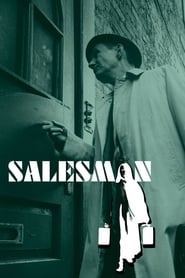
This documentary from Albert and David Maysles follows the bitter rivalry of four door-to-door salesmen working for the Mid-American Bible Company: Paul "The Badger" Brennan, Charles "The Gipper" McDevitt, James "The Rabbit" Baker and Raymond "The Bull" Martos. Times are tough for this hard-living quartet, who spend their days traveling through small-town America, trying their best to peddle gold-leaf Bibles to an apathetic crowd of lower-middle-class housewives and elderly couples.
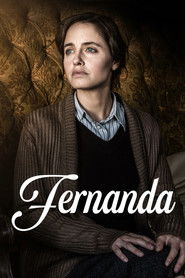
The story of Fernanda Wittgens, the first director of the Brera Art Gallery and the architect, during the war, of the rescue of many works of art and many Jews destined for deportation.
From the idea that glass, even when cooled, is a liquid that changes in appearance over time, an offscreen narrator launches a recollection of the bygone days of manual glassmaking and an observation of the impact of the mass-produced glass on the changing appearance of England over time.
We have detected that you are using an ad blocker. In order to view this page please disable your ad blocker or whitelist this site from your ad blocker. Thanks!