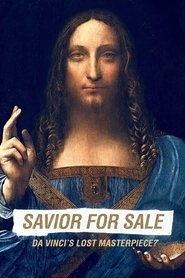
In November 15, 2017, the painting Salvator Mundi, attributed to Italian artist Leonardo da Vinci (1452-1519), was sold for an unprecedented $450 million. An examination of the dirty secrets of the art world and the surprising story of how a work of art is capable of upsetting both personal and geopolitical interests.
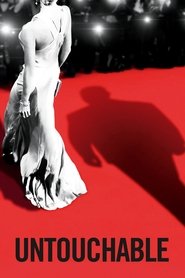
The inside story of the rise and fall of Harvey Weinstein reveals how, over decades, he acquired and protected his power even when scandal threatened to engulf him. Former colleagues and accusers detail the method and consequences of his alleged abuse, hoping for justice and also to inspire change.
Two professional European gamers navigate the exploding world of electronic sports. Packed with youthful ambition and impeded by reality, the ProGamers struggle to thrive in the fledgling industry of eSports.
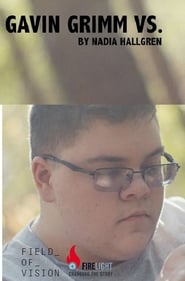
In 2016, transgender teen Gavin Grimm sued his local school board after its members refused to let him use the bathroom of his choice. He was ready to take his case all the way to the Supreme Court—and then the election happened.
In “Everybody’s Cage”, German film artist Sandra Trostel turns John Cage and his approach to art into a tangible fascination, without giving in to explain just a single bit of it.
Ava Benjamin Schorr and Bianca Cline are cinematographers who also happen to be trans women. The film explores who they are beyond their trans identity, what it means to be a female cinematographer and last but certainly not least, what it means to be a woman in this moment in time.
Unveils the crime where someone had extorted millions from Collin Street Bakery in Corsicana, Texas, and how people and the FBI are still amazed of how the crime was solved and the lavish lifestyle the culprits were living.
Mother Teresa once said, "If you know how to look, you will find Calcutta all over the world." Kamieńska found those for whom Calcutta was in Poland. The film about the Congregation of the Missionaries of Charity proved to be a turning point in her artistic career. She took up the theme of faith, which had been absent from her work until then, and which would henceforth recur in her subsequent documentaries. In Missionaries of Charity, Kamieńska observes the work and prayer of young nuns. The complementary nature of "ora et labora" in their lives is reflected in the structure of the film. We alternate between places where the sisters help people in need and Mass with Mother Teresa.
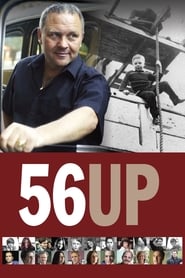
When a cross-section of seven-year-olds were interviewed for 7 Up in 1964 it was immediately evident that their social backgrounds influenced their attitudes towards life. While the upper class children were confident and self-assured, those from middle and working class backgrounds were resigned to a challenging life of hard work. This premise was put to the test every seven years when the same group were interviewed about the progression of their lives. 49 years in the making, the changes that occurred to the original 14 make for fascinating television and are in many ways the stories of all our lives. From success and disappointment, marriage and childbirth, to poverty and illness, nearly every facet of life has been captured on film. Now, at the age of 56, the group are once more brought together and, with the benefit of hindsight, assess whether their lives have been ruled by circumstance or self-determination.
Benjy is a 1951 American short documentary film directed by Fred Zinnemann. It won an Oscar in 1952 for Documentary Short Subject. Henry Fonda narrates this short film about a boy who was handicapped from birth. An orthopedic pediatrician wants to provide a therapeutic regimen that could cure the child, a scoliosis patient, but first he needs to convince the boy's parents, who have rejected the child because of his disabilities.
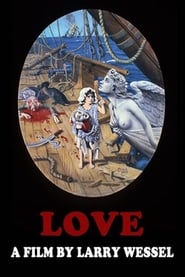
Beth Moore-Love is perhaps the greatest living artist working in America today. Her works can be found in private collections throughout the United States and Europe. She is a national treasure and yet, she is virtually unknown. Filmmaker Larry Wessel is determined to change that with his nine year labor of love.
Alan Clarke's documentary about Soviet writer and dissident Vladimir Bukovsky, who had left the Soviet Union in 1976 after years spent in their prisons and psychiatric wards. The film was completed in 1977 but never broadcast, subject only to private screenings. The documentary appears publicly for the first time as a special feature of the BFI's 'Dissent and Disruption: Alan Clarke at the BBC (1969-1989)' box set, alongside 50 minutes of outtakes.
We have detected that you are using an ad blocker. In order to view this page please disable your ad blocker or whitelist this site from your ad blocker. Thanks!