In 1954 Colombia, Esmeralda Arboleda leads women fighting for suffrage. During a crucial assembly debate, she faces fierce opposition and a personal crisis when her son has an accident, testing her resolve between family and cause.
A career officer and his wife work with a police detective to uncover the truth behind their son's disappearance following his return from a tour of duty in Iraq.
An account of the life and work of the Swiss writer Johanna Spyri (1827-1901), the barely known artistic mother of Heidi, her brave alpine heroine, who was first introduced to the world between 1880 and 1881, in a novel published in two parts, and became definitely immortal thanks to an anime series, released in 1974, directed by the Japanese genius Isao Takahata.
A combination of the epic story of the Mahabharata with contemporary social issues. It starts with a focus on a new social order, featuring three social workers, including Suvarnarekha, dedicated to eliminating idleness. The main narrative then unfolds by incorporating well-known mythological events like the Draupadi Swayamvar and the Sabha (Court) incident, progressing toward the Kurukshetra war. Throughout the film, these epic sequences are mixed with modern "social sequences" and philosophical lessons from the Bhagavad Gita in an attempt to address and provide solutions for national problems.
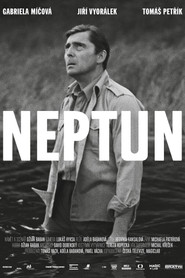
In 1964, the discovery of secret Nazi documents in the bottom of a lake in the Šumava hits the press worldwide. Years later, it is revealed that the sensational event was orchestrated by the communist regime in a campaign against West Germany, code-named Neptune. Revisiting recent political past of the Cold War in a noir pastiche, this docufiction contributes to the process of myth-making as a necessary construction of our perception of the history.
The movie takes place in the early 18th century on the borders between Bosnia and Dalmatia, the crossroad between the Ottoman Empire and the Republic of Venice. It deals with issues relating to the region's native Croats as they struggle between to live between two empires and two faiths: Catholicism and Islam.
Year 1947. Commander of UPA Danylo Chervonyi gets into the terrible slaughter of Stalin's camps, where he must go through hell and inhumane prison conditions, prosecution of criminal leaders, meanness, betrayal and despair. Danylo finds the strength to resist repression of the camp commander and makes a desperate attempt to break free, raising the first rebel in the camp.
The film tells the story of two Highlander brothers – Maciek and Andrzej. After the death of their father, which Andrzej contributed to, and the loss of his beloved Bronka, Andrzej leaves the family home. On his way, he meets the mysterious Wolfram, an anthropologist and climber. He shares with him his mountaineering technique and knowledge about the Prague origins of the highlanders. Andrzej returns to Zakopane, war breaks out. To protect the Highlanders from wartime destruction, he wants to persuade them to cooperate with the Germans. Andrzej and Maciek are standing on opposite sides of the barricade. The brothers' confrontation is bloody and painful.
Hardly anyone would have predicted that Žanis Lipke would miraculously become a hero. He was a completely ordinary Latvian blue-collar worker. In order to be able to support his family under wartime conditions, he worked at the German military aviation warehouses and supplemented his income by smuggling at night. This film attempts to answer the question whether Žanis’ courage stems from his adventurous and daring spirit, stubbornness, or a sense of responsibility towards people in need.
When a minor German prince becomes an unlikely king candidate, the assignment to teach him the language of his future subjects seems purely formal at first. But as the offbeat candidate is elected king, the pupil and his tutor find themselves in the midst of ugly political intrigue. Ultimately, both of them have to give up their life dreams in order to save a nation from ruin.
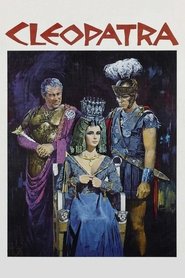
Determined to hold on to the throne, Cleopatra seduces the Roman emperor Julius Caesar. When Caesar is murdered, she redirects her attentions to his general, Marc Antony, who vows to take power—but Caesar’s successor has other plans.
The bittersweet story of young lovers caught up in a political struggle waged by farmers against the grain trade, the banks, and the railroads. Set in 1915–16 North Dakota, a largely forgotten era of American history.
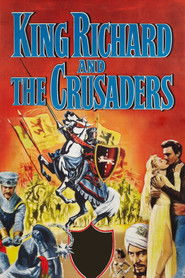
Based on Sir Walter Scott's The Talisman, this is the story of the romantic adventures of Christians and Muslims during the battle for the Holy Land in the time of King Richard the Lionheart.
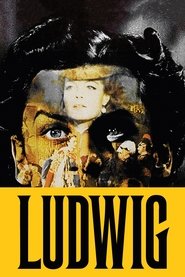
Historical evocation of Ludwig, king of Bavaria, from his crowning in 1864 until his death in 1886, as a romantic hero. Fan of Richard Wagner, betrayed by him, in love with his cousin Elisabeth of Austria, abandoned by her, tormented by his homosexuality, he will little by little slip towards madness.
The romanticized gallant adventures of Pauline Bonaparte, Napoleon's sister. First "engaged" to the Conventionnel Fréron, then separated from him by her brother for political reasons, Pauline joined Napoleon in the Italian army, where she fell in love with the comté de Canouville. But the First Consul married her to his friend, General Leclerc, whom she followed on the expedition to Saint-Domingue. Unconcerned about fidelity, she began to love her husband just as he was about to die of yellow fever. Back in France, she was soon consoled by other gallants. Napoleon, now emperor, hastened to marry her off to Prince Borghese, but he was unable to make her love him. She soon returned to Paris to lead the life of a gallant woman, incognito, and again met Canouville, whom the emperor tried in vain to separate from her. But soon the Russian campaign begins, and her lover is killed. All that remains for Pauline, this time disconsolate, is to reconcile with her brother on the road to exile.
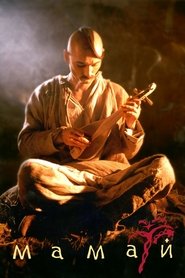
Mamay draws on traditional Ukranian and Tatar folktales for its Romeo and Juliet-like love story and parable about chivalry and the struggle for freedom. Hundreds of years ago, in the wild steppes of Crimea that form an uneasy border between East and West, Europe and Asia, nomad and farmer, the proud Cossack Mamay falls in love with the Tatar beauty Omai. The title, like the storyline, holds a variety of different meanings taken from different cultures. In Turkic languages, it means "no one," but it was also the name of a famous Mongol conqueror, the great grandson of Ghengis-Khan. In Persian legends, mamay literally means "the spirit of the steppes. "
We have detected that you are using an ad blocker. In order to view this page please disable your ad blocker or whitelist this site from your ad blocker. Thanks!