At the turn of the 20th century, Sofia Okunevska fights gender discrimination to study and practice medicine. Against societal barriers, she earns her medical degree and becomes one of the Austro-Hungarian Empire’s most respected physicians.
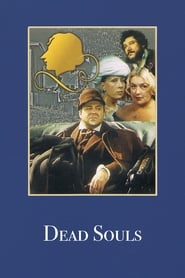
Pavel Ivanovich Chichikov plans to buy the titles to “dead souls” and use them as collateral to obtain a large loan. He comes to a small provincial town and begins to proposition the local landowners. These landowners are revealed to be so petty and avaricious that not even Chichikov’s amazing offer can be worked to his advantage on them. Some stall, some refuse for no obvious reasons, some promise and then renege, and others want “in on the deal.” In the end, Chichikov, having concluded that the landowners are a hopeless lot, leaves for other regions.
First Invasion: The War of 1812, a History Channel documentary that first aired in 2004, portrays a young United States of America "on the brink of annihilation" as it battles the largest and most powerful empire on earth. Critics say the documentary is far too pro-American, and that it ignores or downplays crucial elements of the War of 1812. Others praise First Invasion for its compelling presentation of a far too neglected period of history.
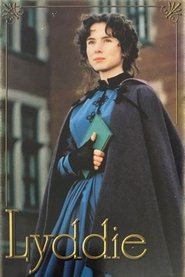
Lyddie faces a daunting task: She's struggling to reunite her family and save their farm. To do that, she takes a job at a cotton mill and, with the help of Diana (who's toiled in the mills since age 10), learns that there are risks involved with being a factory girl -- namely, dangerous working conditions and low wages. Soon, Lyddie finds herself in the forefront of a suffrage movement to better those appalling conditions.
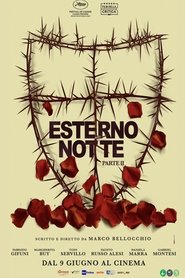
One night, while trampling the emotions memories of Federico, a chain of decisions leads even point of no return. And when I least expected it, not knowing when your clock showed, his life changed forever ... for eternity. Regardless of the name, neither good nor bad he did, or how others judge them, only their decisions will make the difference when you get ... the Zero Hour.
When it is discovered that the Zygmunt mine in Upper Silesia has been deemed unprofitable and is to be closed by flooding, the miners go on strike and a violent demonstration ensues.
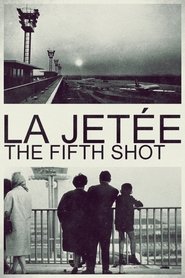
In Paris, at an exhibition on the French writer, photographer and filmmaker Chris Marker (1921-2012), Jean-Henri Cabrera thinks he sees himself in a specific shot of the short film La Jetée, directed by Marker in 1962.
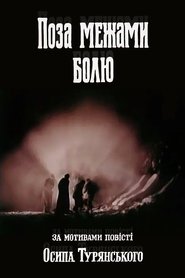
The screen adaptation of Osip Turyansky's novel "Beyond the boundaries of Pain", which is considered one of the best works, depicting the First World War as a hell through which seven people doomed to death, including the future author of the novel, passed.
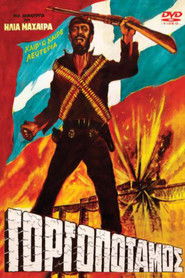
While Greece is under German occupation, a group of soldiers starts from Cairo and arrives in Athens to organize the blasting of the bridge at Gorgopotamos.
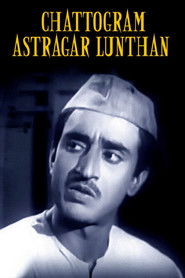
Master Da Surya Sen, along with his companions and some major national freedom fighters, goes through various struggles and sacrifices while fighting for India's freedom from British rule.
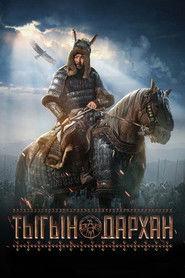
The film tells about a difficult period in the fate of the legendary ancestor of the Hangalass clan Tygyn Darkhan. At the turn of the century before the advent of the Russian Cossacks, he waged a difficult struggle to unite the tribes and clans that lived on the territory of modern Yakutia. The film is based on the eponymous work of Vasily Yakovlev-Dalan.
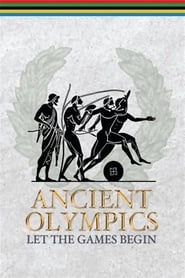
Come back with us to Ancient Greece, 2,500 Years ago to the original Olympic Games. The ancient Games, like our modern Olympics, included champions and cheaters, glory and scandals, bitter rivalries and contests of strength, speed and savage combat. Set in 448 BC when the pounding of horse's hooves and the brutal hand-to-hand combat could be heard and seen by the crowds that filled the Olympic stadium. This one-hour special event follows the glory and corruption of the arc of a single, five-day Olympiad. The competitions include chariot racing, running, jumping, discus, javelin and two man-to-man combat finals-boxing and pankration, a form of extreme fighting in which death was not uncommon. With the help of sports historians and great athletes such as George Chuvalo and Olympic medallists Donovan Bailey and Angela Schneider, viewers travel back to a very different life-in a very different world.
In this documentary the viewer meets eighteen-year-old Chamoetal Zeidler, who starts her two years of mandatory military service in the Spokesperson’s Unit of the Israeli Army (IDF). With an Israeli father and a Dutch mother, growing up in Israel and in the Netherlands, going to the army wasn’t the obvious choice for Chamoetal. In the course of the film we learn how Chamoetal experiences her time in the army and how she transforms from a teenager into a grown-up soldier, who must justify all IDF actions.
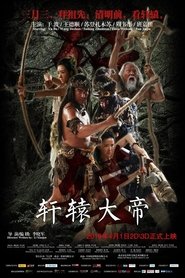
Xuan Yuan the Great Emperor tells the legendary story of the ancestor of Chinese people: Ji Di. Ji Di lived in the Yellow River basin about 5000 years ago.
We have detected that you are using an ad blocker. In order to view this page please disable your ad blocker or whitelist this site from your ad blocker. Thanks!