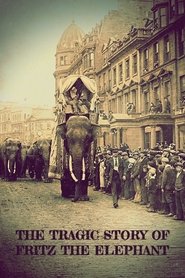
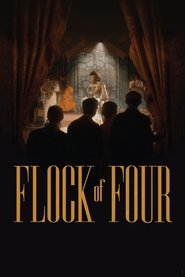
The story of the birth of the exploitation of wild animals, the fruit of the iron twinning between the Industrial Revolution and the omnipotent and arrogant logic of colonialism, told through the multiple tribulations of Fritz, an Asian elephant who, one hundred and fifty years ago, worked in the largest circus in the world.
In the 14th year of the Genroku period, Asano, the head carpenter of Edo Castle, attacked Kira, the master of ceremonies, with a sword, leading to Asano's forced suicide and Kira's punishment being overlooked. Over a year later in Edo city, Shimohashi Hyogo, a carefree ronin and the nephew of Yagyu Yoshitaka, is ordered by his uncle to investigate the activities of the Ako Ronin, a group sympathetic to Asano's cause. However, Hyogo, who sympathizes with the Ronin's plight, helps out in times of need, rescuing Oishi Kuranosuke and Horibe Yahei from danger. He also teams up with Yaenosuke, a newspaper publisher, and Otaki, a geisha, to plan an attack on Kira's estate.
The story of the film revolves around the epic of Sheikh Bouamama, a leader of the national resistance in Algeria during the French colonial era. The events are taking place in southwestern Algeria. The film also tells about different stages of the resistance, especially about one of the uprisings of the Algerian people, namely "the battle of the sons of Sidi Sheikh Bouamama", in which French General Leuti was appointed to try to suppress and end this resistance.
In 1943 Italy is crumbling. Salvo D'Acquisto, a Carabinieri officer is trying to maintain law and order. One tragic incident will unravel a chain of events leading to him having to stand between the Germans and people he swore to protect.
Clarissa Dickson Wright tracks down Britain's oldest known cookbook, The Forme of Cury. This 700-year-old scroll was written during the reign of King Richard II from recipes created by the king's master chefs. How did this ancient manuscript influence the way people eat today? On her culinary journey through medieval history she reawakens recipes that have lain dormant for centuries and discovers dishes that are still prepared now.
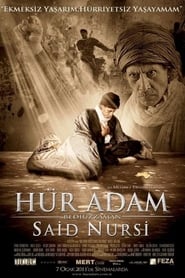
“Hür Adam” or “Free Man” in English is the real-life story of a very influential Kurdish scholar in Turkey that had lived between 1877-1960, 'Said Nursi'. A writer, philosopher, and philanthropist, he compiled many books on Islam covering various themes of faith, brotherhood, and philanthropy and exploring the reasons behind societal weakness, poverty, ignorance, and divisions.
In this film, four key witnesses, who live in Algeria today, as full-fledged Agerians, show us what this colonization was really like, so "beneficial" that they themselves perceived it as the oppression of one people by another. Three of them, who today would be called "pieds noirs," in other words, those Europeans to whom France, the occupying power, gave the best land, taken from the indigenous populations, work, and exclusive rights, not shared by the entire population, lived rather well compared to the majority of the "natives." The fourth was far from all that and lived in Argentina. Annie Steiner, Felix Colozzi, Pierre Chaulet, and Roberto Muniz explain to us what led them to show solidarity with the struggle of the weak, the humiliated, and to risk their freedom and their lives by committing to liberate Algeria.
The true story of 5-year-old Palestinian girl Hind Rajab, who was separated from her mother and trapped in a car under heavy attack in Gaza surrounded by an Israeli tank in January 2024.
The amazing story of electronic music: its epic journey from its origins in Europe, at the hands of the great artists of the post-war classical avant-garde, to the great post-industrial cities of the USA, where this genre of genres took over music stores, shady clubs and, eventually, the big stages.
Sophia Augusta's marriage to Peter III, the Emperor of Russia, is anything but the fairy-tale life that she had been promised. In a historical tale of political intrigue, sex and murder, she takes control of her life, her marriage, and her kingdom, becoming one of Russia's most celebrated and beloved monarchs.
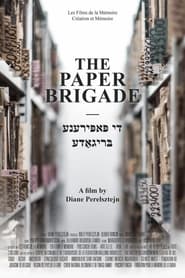
Lithuania, 1941, during World War II. Hundreds of thousands of texts on Jewish culture, stolen by the Germans, are gathered in Vilnius to be classified, either to be stored or to be destroyed. A group of Jewish scholars and writers, commissioned by the invaders to carry out the sorting operations, but reluctant to collaborate and determined to save their legacy, hide many books in the ghetto where they are confined. This is the epic story of the Paper Brigade.
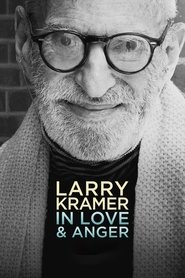
From the onset of the AIDS epidemic, author Larry Kramer emerged as a fiery activist, an Old Testament-style prophet full of righteous fury who denounced both the willful inaction of the government and the refusal of the gay community to curb potentially risky behaviors. Co-founder of both organization Gay Men's Health Crisis and the direct action protest group ACT UP, Kramer was vilified by some who saw his criticism to be an expression of self-hatred, while lionized by others who credit him with waking up the gay community — and, eventually, the government and medical establishment — to the devastation of the disease.
We have detected that you are using an ad blocker. In order to view this page please disable your ad blocker or whitelist this site from your ad blocker. Thanks!