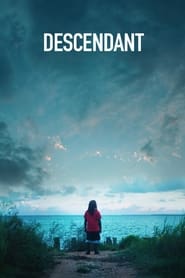
The Holy Week, around 1900, somewhere in Romania. The tense relationship between the Jewish innkeeper Leiba and Gheorghe, his Christian employee, reaches the point where the innkeeper decides to expel the latter. Revengeful, Gheorghe promises Leiba that he will return on Easter Night to “settle” his accounts. This threat comes as a last straw against Leiba’s attempts to cohabit with his hostile, anti-Semitic environment. From then on, Leiba will struggle distinguishing between the real danger and the one fabricated by his anxieties, engaging onto a path of transformation leading to extreme consequences.
History exists beyond what is written. The Africatown residents in Mobile, Alabama, have shared stories about their origins for generations. Their community was founded by enslaved ancestors who were transported in 1860 aboard the last known and illegal slave ship, Clotilda. Though the ship was intentionally destroyed upon arrival, its memory and legacy weren’t. Now, the long-awaited discovery of the Clotilda’s remains offers this community a tangible link to their ancestors and validation of a history so many tried to bury.
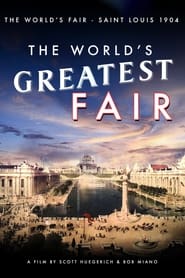
An intimate and unique look at the 1904 World's Fair in St. Louis told in the words of those who were there to experience it firsthand. With a wide range of events and attractions that included the first ever Olympic games on American soil, the first Ferris wheel, and a special appearance by the legendary Geronimo, this remarkable and extravagant fair would mark the beginning to what President Theodore Roosevelt would refer to as "the American century."
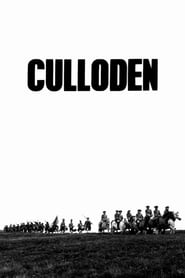
Culloden, Scottish Highlands, April 16th, 1746. It was one of the most mishandled and brutal battles ever fought in Great Britain. Its aftermath was tragic. The men responsible for such a disaster must be exposed. The men, women and children who suffered because of it must be remembered.
The first transatlantic communications cable, traversing the ocean floor from Valentia Island, County Kerry, to Newfoundland, Canada, 165 years ago was an 8 year endeavor that helped lay the foundation of the modern technology industry and explains the fragility of undersea cables today.
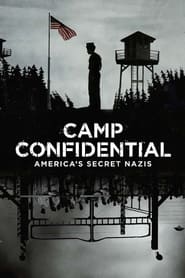
Camp Confidential: America's Secret Nazis, is a documentary short featuring animation that focuses on the story of a top secret POW camp that was classified for over 5 decades. In the midst of WWII, a group of young Jewish refugees are assigned to guard a top secret POW camp near Washington D.C. The Jewish soldiers soon discover that their prisoners are no other than Hitler's top scientists - What starts out as an intelligence mission to gather information from the Nazis, soon gets a shocking twist when the Jewish soldiers are tasked with a very different mission altogether. A mission that would question their moral values - exposing a dark secret from America's past.
648. Ukraine under the oppression of Poland. Polish nobility committing outrage, burning villages one after another. Hetman of Zaporozhian Cossacks Bohdan Khmelnytskyi gathers the army of defenders of the motherland.
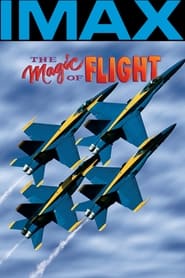
Take a technological thrill ride The Magic of Flight takes you on a technological thrill ride faster, higher and wider than modern science or even your imagination! Relive the first flight of the Wright Brothers, then soar with the Blue Angels as they defy the laws of gravity. Narrated by Tom Selleck.
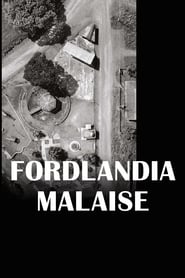
Fordlandia Malaise is a film about the memory and the present of Fordlandia, the company town founded by Henry Ford in the Amazon rain forest in 1928. His aim was to break the British rubber monopoly and produce this material in Brazil for his car production in the United States. Today, the remains of construction testify to the scale of the failure of this neocolonialist endeavor that lasted less than a decade. Nowadays, Fordlandia is a space suspended between times, between the 20th and 21st centuries, between utopia and dystopia, between visibility and invisibility: architectural buildings of steel, glass, and masonry still remain in use while traces of indigenous life left no marks on the ground.
Based on the historical legend, this commercially successful film delves into the context of why Mughal emperor Shah Jahan built the Taj Mahal in fond remembrance of his wife, Mumtaz Mahal.
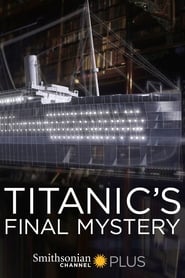
The sinking of the RMS Titanic remains one of the most enduring and mysterious tragedies of the 20th century. For decades, investigators and amateurs alike have floated theories for why it occurred and who was to blame for the extraordinary loss of life, but no one answer could fully explain what happened. Until now. To mark the 100th anniversary of the infamous disaster, Smithsonian Channel will premiere Titanic's Final Mystery. The two-hour special investigates a century of theories and uncovers astonishing new forensic evidence that proves the most likely theory for the case.
Mont Blanc, the highest peak in the Alps, rises to 4,810 m and was first climbed on August 8, 1786. Chamonix natives Jacques Balmat and Michel Paccard set out on the afternoon of August 7 and returned victorious on the morning of the 9th, after two nights spent outdoors. This film is a staging that reconstructs this great event with all the problems it created and resolved, thus contributing to the emergence of the modern concept of mountaineering. Denis Ducroz, guide and filmmaker, immerses us in the minds and times of these two men, 224 years later.
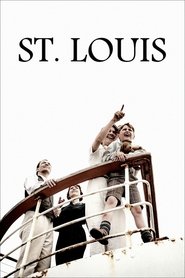
Hamburg, Germany, 1939. Getting a passage aboard the passenger liner St. Louis seems to be the last hope of salvation for more than nine hundred German Jews who, desperate to escape the atrocious persecution to which they are subjected by the Nazi regime, intend to emigrate to Cuba.
We have detected that you are using an ad blocker. In order to view this page please disable your ad blocker or whitelist this site from your ad blocker. Thanks!