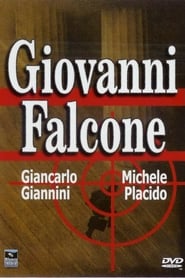
The story of the first ever "anti-mafia judges pool" established in the '80s at the Palermo Courthouse, in Sicily, in the '80s, while two mafia families started a 10-year-long war to obtain the complete control of smuggles.
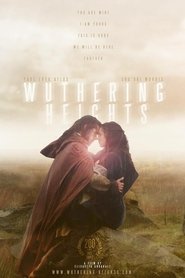
Wuthering Heights is a wild, passionate tale of the intense and demonic love between Catherine Earnshaw and Heathcliff, allegedly a Gypsy foundling adopted by Catherine's father. After Mr Earnshaw's death, Heathcliff is degraded and humiliated by Catherine's brother Hindley and wrongly believing that his love for Catherine is not reciprocated, leaves Wuthering Heights, only to return years later as a wealthy and polished man to find he is too late and that Cathy has married Edgar Linton. He proceeds to exact a terrible revenge for his miseries.Unable to bear being parted from his love he curses her on her deathbed to never rest and always be with him and so begins 20 years of her haunting his every waking and sleeping hour. A tale of love, hate, horror, haunting, but most of all a story about human nature. Emily Bronte wrote the greatest , most terrifying love story of all time.
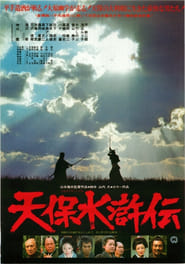
A great famine struck all of Japan: the so-called Great Tenpō famine. It was a time when there were frequent uprisings in rural areas due to farmers losing their land as a result of strict tax collection. The Tonegawa area of Boso was a lawless area for a generation, as two major forces fought against each other: Sukegoro of Iioka, who wields power with his industrial capital behind him, and Shigezo of Sasakawa, a rising yakuza. Furthermore, the successive floods of the Tone River, which could be called fate, forced the farmers into even more poverty and despair. Meanwhile, farmers in Nabe Village continue to live a lethargic life, but agricultural reform is about to begin under the hands of Yugaku Ohara, a ronin who has settled in the village.
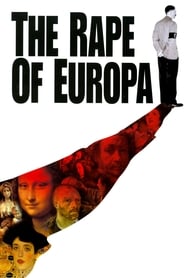
World War II was not just the most destructive conflict in humanity, it was also the greatest theft in history: lives, families, communities, property, culture and heritage were all stolen. The story of Nazi Germany's plundering of Europe's great works of art during World War II and Allied efforts to minimize the damage.
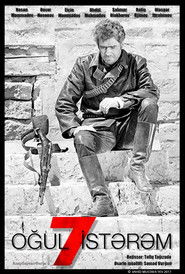
This film was based on Samad Vurgun's "Komsomol poem". Seven sons, like seven samurai become the seven komsomols (communist leaders) who were sent to a village to establish Soviet power. Seven sons become the romanticized images of people's heroes ready to take revenge.
The night of July 15, 2016 changed the history of Turkey. On that day there were coordinated attacks by parts of the Turkish army, among others in Istanbul. The aim of the military: a coup against the government. The decisive confrontation occurred on the Bosporus Bridge. While President Erdogan was still on vacation, live at TV he called on the people who were devoted to him to stand against the military. As an enemy for the masses, he presented his adversary Fethullah Gülen, whom he branded as the coup leader. He also urged the imams of the country's mosques to condition the population to resist. And so it happens that at night thousands of agitated people take to the streets to oppose the armed insurgents. The death toll was high. 352 people died across Turkey during the attempted coup. The consequences are even more serious: Erdogan used this gift, as he called it himself, to undermine democracy, to arrange mass arrests of dissidents and to transform Turkey into a dictatorship.
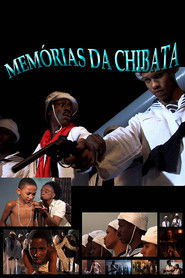
Juca, a black kid, sees his friends and his mother being hit by his stepfather, without being able to do anything against it, but when he knows that he is the great-grandson of João Cândido, the leader of the sailors rebellion against the chibata hits adopted by Brazilian Navy till 1910, he takes an extreme attitude towards changing the course of his life.
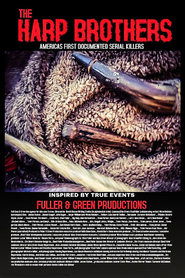
A film about America’s first serial killers. These brothers terrorized Kentucky and went across the state on a killing spree. The film is loosely based on the true story of the brothers. Filmed in historically accurate locations.
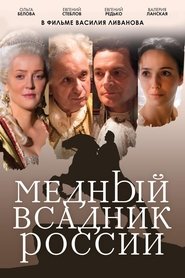
Vasily Livanov’s historical movie carries the viewer back into the 18th century and tells the story of the monument to Peter the Great through Alexandr Sergeevich Pushkin’s poem «The Bronze Horseman». The sculptor Étienne Maurice Falconet comes from France at the invitation of the Empress Ekaterina the 2nd to erect the monument. Thanks to the master’s meticulous work and painstaking creative search the monument has become not only a masterpiece of art but one of the symbols of Russia.
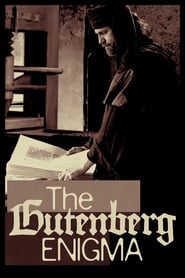
A portrait of the inventor of the letterpress, who was a key figure in the history of mankind, but also an enthusiastic inventor, a daring businessman, a tenacious troublemaker: the life of Johannes Gutenberg (circa 1400-68).
Gessler, the Rütli Oath, the apple shot, the Hollow Lane: the deeds of Swiss national hero William Tell in his fight against tyranny and violence in 1291. Based on Friedrich Schiller's drama and Aegidius Tschudi's chronicle.
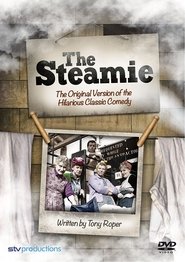
Tony Roper wrote 'The Steamie' for Glasgow's Mayfest in 1987. Return to Hogmany 1957 when a fiesty group of Glasgow women; Mrs Culfeathers, Dolly, Doreen and the irrepressible Magrit, all meet at The Steamie to do the traditional family wash before the New Year. The Steamie is a hilarious cameo of Glasgow's social history where the washing was always easier to do when the Women shared their laugher and sorrow and a scandalous supply of gossip. This is the definitive version of the most popular play of the last 20 years with the all star cast of Dorothy Paul as Magrit, Eileen McCallum as Dolly, Kate Murphy as Doreen, Sheila McDonald as Mrs Culfeathers and a very young Peter Mullan as Andy, the whisky loving handy man.
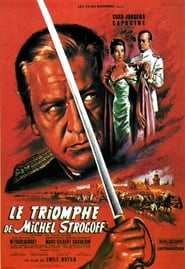
In this adaptation of the Jules Verne novel, the Czarina asks an intrepid colonel to protect her nephew as he fights an invasion in 19th century Russia.
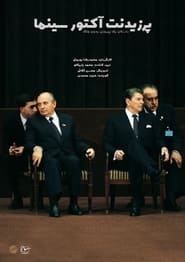
Gorbachev believed that it was impossible to achieve a successful economy until the tensions of the Soviet Union continued with the Western countries, and especially the US, so that their high priority was to tame down, establish relations and negotiate with the Americans.
We have detected that you are using an ad blocker. In order to view this page please disable your ad blocker or whitelist this site from your ad blocker. Thanks!