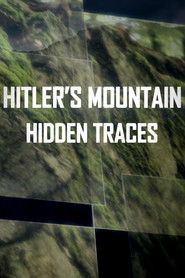
The Obersalzberg was an ordinary Bavarian mountain until Adolf Hitler discovered it in 1923. There at the Berghof, the Nazi leader spent his time surrounded by his most faithful lieutenants and his mistress, Eva Braun. Though mostly destroyed, remnants of the vast building complex still exist.
In March 1981, inspired by a dangerous obsession with the film Taxi Driver and actress Jodie Foster, a man named John Hinckley tried to assassinate President Ronald Reagan. The attack shocked the world and forever changed American history. Found not guilty by reason of insanity, Hinckley spent thirty-five years in a psychiatric hospital. Nearly 40 years later, a judge granted him his unconditional release. HINCKLEY presents an unsparing profile of a man whose shocking act of political violence forever changed a nation and still resonates today. It examines Hinckley's troubled early life, his obsessions and other attempts at assassination, the leadup and aftermath of his attack on Reagan, and whether or not redemption is possible for one of America's most infamous men, especially in a nation deeply divided by politics and gripped by gun violence.
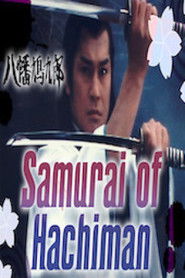
A mysterious swordsman called Hatokuro Yawata (Ken Matsudaira) who appeared from somewhere with white pigeons is actually Naotada Ii, the lord of Hikone Han. He was told that he had an older brother of twin by his mother on her deathbed. Hatokuro pretended to be a citizen in Edo and searched for his brother. However, in Edo, Murasaki Gumi, led by the mysterious Murasaki had power and used it as they like. One day, Hatokuro saved Okyu whose office-worker father was killed from Sanjuro Akaseki of Murasakigumi. It brought about a fierce fight between Murasaki and Hatokuro. What is the identity of Murasaki!?
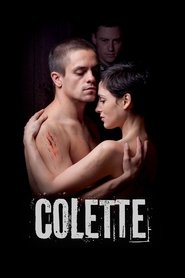
As World War II rages on, Villi and Colette are captured and sent to Auschwitz concentration camp. Imprisoned within separate compounds, the lovers must risk their lives to be together again.
A dramatization of the uprising in Odessa, Russia in 1905: A ship's crew, tired of being mistreated, mutinies and takes over their ship. When they reach land, a sailor who died during the mutiny is made a martyr, inspiring an uprising in the city. Then the authorities decide to repress the revolt with a brutal show of force.
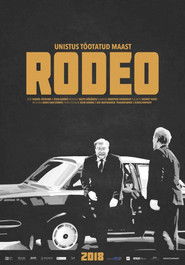
A documentary exploring the difficulties the newly-independent Estonia faced in the early 1990s after emerging from decades of Soviet rule. The film focuses especially on then-32-year-old and inexperienced Mart Laar, who became country's prime minister while there still were tens of thousands of Soviet soldiers in the country.
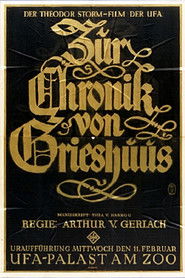
Hinrich, the son of a feudal German landowner, falls in love with the beautiful daughter of one of his father's serfs despite opposition from both families. But when he actually offers marriage to her, this is going too far. The return of his brother Detlev, with an unscrupulous aristocratic bride of his own and a rival claim to their father's estates, proves to be the trigger for tragedy.
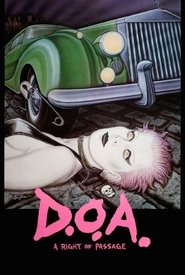
Documentary chronicling the rise and fall of the punk movement with rare interview footage of Sid Vicious and Nancy Spungen. Also concert and news footage.
A one-of-a-kind compilation offering a fascinating, entertaining, and surprising look at the Fab Four with rare newsreel footage, candid and revealing interviews, and historic performances. Included are their first U.S. concert in Washington, D.C., never-before-seen highlights from the Hollywood Bowl, a rare uncensored interview filmed just before their very last concert, and live renditions of many hits.
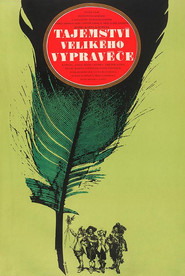
The life of the famous French writer Alexander Dumas the Elder. Screenwriter Jaroslav Dietl did not hide his admiration for this literary giant, and in addition to the screenplay he also wrote a three-part TV play about Dumas (starring Vladimír Menšík). In Kachyn's film, Dumas played the father and son of the Štěpánková brothers, and it was a very difficult and difficult task for these young actors.
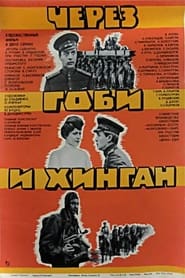
About the events of the final stage of the Second World War — the defeat by Soviet and Mongolian troops of the selected Kwantung army. Bacteriological weapons were created in the laboratory of Japanese General Ishii Shiro. Experiments were conducted on prisoners of war and political prisoners. Epidemiologist Dmitry Sokolov was assigned to solve the mystery of this laboratory. At the cost of his own life, he completed the task. The march of Soviet and Mongolian formations through the Gobi sands and the Khingan spurs was not only a brilliant military operation, but also a warning of the use of bacteriological weapons by Japan.
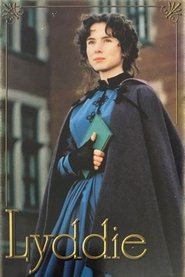
Lyddie faces a daunting task: She's struggling to reunite her family and save their farm. To do that, she takes a job at a cotton mill and, with the help of Diana (who's toiled in the mills since age 10), learns that there are risks involved with being a factory girl -- namely, dangerous working conditions and low wages. Soon, Lyddie finds herself in the forefront of a suffrage movement to better those appalling conditions.
In the 1940s, a small band of underground paramilitaries attempt to fight back against the Soviet-backed security ministry in post-war Poland. Determined to fight for their country's future, the group goes to extreme lengths to make their voice heard.
1716, Yoshimune becomes the 8th Shogun as high Shogunate officials are attacked. While the government tries to keep these incidents under wraps, they must take any means possible to get to the bottom of this mystery and find out who is behind them.
A historical and present day look at the Wilmington Massacre of 1898 and how the descendants of the victims of the event are asking for legal action in regards to compensation.
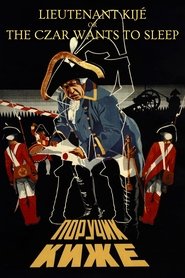
A copying error by a military scribe turns the Russian words "the lieutenants, however" into what looks like "lieutenant Kizhe". The Tsar reads the error, and wants to meet this (non-existent) lieutenant. The courtiers, eager to avoid the wrath of the temperamental Tsar, create a Kizhe to serve as their royal scapegoat.
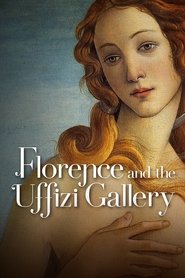
Follows a trail of over 10 museums and 150 artworks amongst the most well-known in the world. It is an artistic foray into Florence taking in everything from the Brancacci Chapel to the Bargello National Museum, from Palazzo Medici, to the narrow city streets and Brunelleschi’s Dome, from Palazzo Vecchio to the Uffizi Gallery and the Accademia Gallery, without neglecting picture postcard places such as the Ponte Vecchio and Piazza della Signoria.
Nestled below the rugged peaks of the Northern Rockies and along the crystal-clear Kootenai River lies the small logging town of Libby, Montana - an ironic setting for a town where many hundreds of people are sick or have already died from asbestos exposure.
We have detected that you are using an ad blocker. In order to view this page please disable your ad blocker or whitelist this site from your ad blocker. Thanks!