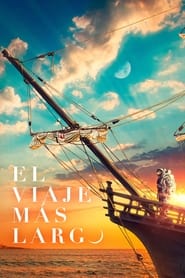
Spain, 1519. Ferdinand Magellan, Portuguese navigator in the service of King Charles I, undertakes, at the command of five ships, a commercial expedition to the Moluccas. The story of the first circumnavigation of the world, completed by Juan Sebastián Elcano in 1522.
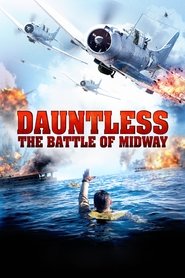
By June 1942, the Japanese Navy has swept across the Pacific. In an effort to change the course of the war, a United States carrier group is positioned off the coast of Midway, tasked with springing a trap on the enemy. During this pivotal battle, the two-man crew of a U.S. Navy dive bomber is forced to ditch in the sea. Set adrift, the men look towards their comrades for rescue; namely, the ragtag crew of a PBY Catalina, who are sent to search for survivors. Amid the vast openness of the Pacific, with days passing and the chance of rescue fading, the men are forced to face their own mortality.
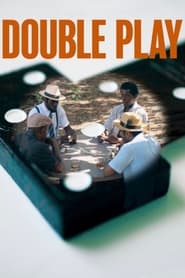
Double Play is about anolder man named Ostrik who returns to Curaçao and his childhood after many years abroad. Ostrik reminisces about 1973 and the events surrounding a game his father played which had major consequences for Ostrik’s youth. The dramatic poverty and colourful landscapes provide the background for the leads who represent Curaçao’s melting pot: a story of pride and humiliation, money and love, ambition and hope.
In 1989 Brazil, during a World Cup qualifier between Chile and Brazil, Chilean goalkeeper Roberto Rojas stages an injury during the match at the Maracanã Stadium.
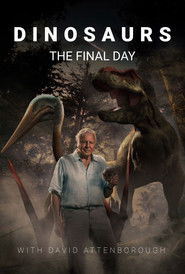
David Attenborough brings to life, in unprecedented detail, the last days of the dinosaurs. Palaeontologist Robert DePalma has made an incredible discovery in a prehistoric graveyard: fossilised creatures, astonishingly well preserved, that could help change our understanding of the last days of the dinosaurs. Evidence from his site records the day when an asteroid bigger than Mount Everest devastated our planet and caused the extinction of the dinosaurs. Based on brand new evidence, witness the catastrophic events of that day play out minute by minute.
In 1458, five years after the fall of Constantinople to the Turk, eighteen cardinals meet to elect a new pope. Rodrigo Borgia, a 27 year old cardinal learns to play a very dangerous game.
Kherson, Ukraine's embattled city, has endured invasion, occupation, and liberation. On February 24, 2022, Russian tanks entered Kherson, leading to brutal occupation marked by violence. Despite being outnumbered, local defense forces resisted, and citizens protested under the slogan "Kherson is Ukraine!" An underground resistance formed, led by brave individuals like journalist Valentyna and others who risked arrest and torture to support the cause. After nine months, Ukrainian forces liberated Kherson, but Russian destruction left the city in chaos. Shelling and drone attacks became relentless, and in June 2023, a dam explosion flooded the city, causing further devastation. Despite these challenges, Kherson's spirit remained unbroken, with citizens embracing arts and resilience. By August 2024, drone attacks specifically targeted civilians, yet the city resisted, determined to rebuild and reclaim its identity, refusing to succumb to ruin.
Like an indelible memory, this Olympic closing ceremony will be marked by audacity, fraternity and emotion. In the heart of the Stade de France, athletes from all over the world will represent their countries one last time in an incredible moment of celebration and sharing. With their eyes riveted to the flame, the emotion will be immense as we close the great Olympic book of Paris 2024.
In 1930s Berlin, Dr. Jakob Fabian, who works by day in advertising for a cigarette company and by night wanders the streets of the city, falls in love with an actress. As her career begins to blossom, prospects for his future begin to wane.
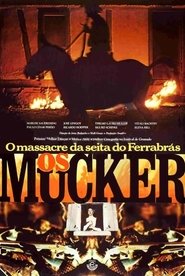
In 1873 in Rio Grande do Sul, a group of peasants come together to form a community of brothers, arousing the enmity of the rest of the population. They are immigrants from the German region and develop a communitary social model, having the Bible as a code of morals, faith and conduct. The group's economic independence ends up irritating the locals to the point of provoking successive aggressions that culminate in a bloody massacre.
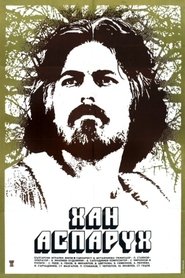
This is an epic screen presentation showing the creation, the consolidation and the power of First Bulgarian Kingdom and the first Bulgarian ruler Khan Asparuh. This is the first part of the film trilogy about the events before the creation of the Bulgarian state in the middle of the VII century. Volga Bulgaria is straining under the attacks of the Khazars. Following the testament of his father, the sons of Khan Kubrat looking for a new home for their tribes. The youngest of them - Asparukh, wander 20 years in search of "land forever" for his people and reaches the mouth of the Danube. The film is narrated by captured Byzantine chronicler Belisarius, which should Asparukh in his journeys. Byzantine witnessed the heroic efforts of the Bulgarians to win the land south of the Danube and to create their new country.
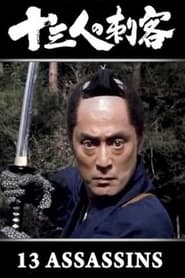
Gathering a band of 13, Inspector General Shmada Shinzaemon sets out on a death-defying journey to cut down the shogun’s half-brother, Matsudaira Naritsugu.
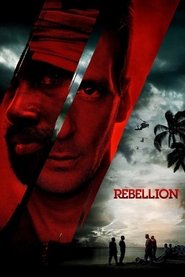
April 1988, Ouvéa Island, New Caledonia. 30 gendarmes are taken hostage by a group of Kanak freedom fighters. 300 soldiers are sent from France to re-establish order. 2 men confront each other: Philippe Legorjus, chief of the terrorist squad, and Alphonse Dianou, head of the kidnappers. Through their shared values, they will attempt to make discussion triumph. But, in the middle of a presidential election, when the stakes are political, order isn't always dictated by morality. A violent and troubling epic that marks the return of Mathieu Kassovitz in front and behind the camera.
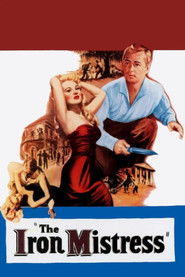
In this biopic, Jim Bowie goes to New Orleans, where he falls for Judalon and befriends her brother, Narcisse. Soon, Jim is forced to avenge Narcisse's murder, but Judalon takes up with another man. Jim eventually has another romantic interlude with Judalon and is forced to kill one of her suitors in self-defense. Jim leaves town, and falls for the daughter of a Texas politician, but his entanglement with Judalon continues to bedevil him.
We have detected that you are using an ad blocker. In order to view this page please disable your ad blocker or whitelist this site from your ad blocker. Thanks!