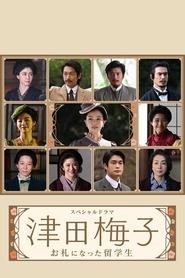
Tsuda Umeko was born in December 31, 1864 and became a pioneer in women's eductation. In 1871, Tsuda Umeko, with her father's recommendation, went to the United States to study at the age of 6. She was the youngest of the group of females to travel there. They were the first Japanese female students to study overseas at their government's expense. 11 years after studying in the United States, Tsuda Umeko returns to Japan. She wants to become a woman who is helpful to her culture, but she is shocked by the low status of women in Japan. (Source: AsianWiki)
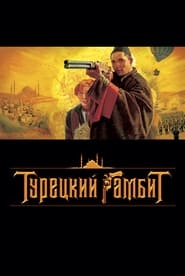
The film is based on the second book from the Adventures of Erast Petrovich Fandorin series of novels written by the Russian author Boris Akunin. The film takes place in 1877 during the Russian-Turkish war. Erast Fandorin has just escaped from Turkish prison and is trying to get on the Russian side as soon as possible to give important information about the upcoming attack of the enemy. On his way he meets Varvara Suvorova, a young lady who is going to see her fiancée - a soldier of the Russian army. Erast also knows that there is a spy somewhere in the Russian army, everyone is under suspicion.
Cafundó is a 35 mm color film which blends fact with fiction in the life of João de Camargo, a former black slave (1858-1942, Sorocaba, Brazil) who, in his old age, works miracles and devotes himself to assisting others in order to attain his freedom. João de Camargo represents the genesis of religious and cultural syncretism in Brazil.
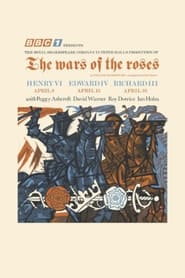
A 1965 BBC adaptation of William Shakespeare's first historical tetralogy (1 Henry VI, 2 Henry VI, 3 Henry VI and Richard III), which deals with the conflict between the House of Lancaster and the House of York over the throne of England, a conflict known as the Wars of the Roses. It was based on the 1963 theatre adaptation by John Barton, and directed by Peter Hall for the Royal Shakespeare Company.
Set at the turn of the century it presents a story of a famous Polish athlete, Zbyszko Cyganiewicz. It begins in a small town where a traveling circus attracts a shy boy into a phony wrestling game to please the crowds. The youth, however, takes his strength seriously, eventually defeating a name wrestler in a fair match. Angered circus manager fires him; he leaves happily due to two wrestler brothers who were harassing him. The wrestler goes on to fame, performing in the world's top arenas, and one day is serenaded by a tenor from the crowd. Fame brings him women and admirers but he is uncompromising on his profession. He has his revenge on one of his tormentors defeating him in the ring. One day, attending a game in a tuxedo, he is challenged by another of the brothers and drawn into a brutal game, in course of which he kills his opponent. Thus his career ends.
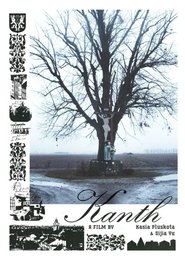
What changed and what remained in border towns where the German presence was erased after World War II? Two young filmmakers delve into what we still find in the present-day Polish city of Kąty Wrocławskie, formerly Kanth.
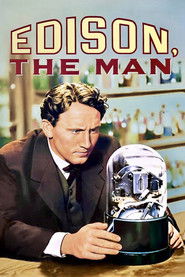
In flashback, fifty years after inventing the light bulb, an 82-year-old Edison tells his story starting at age twenty-two with his arrival in New York. He's on his way with the invention of an early form of the stock market ticker.
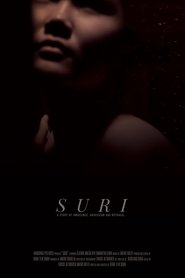
Suri (a representation of Mahsuri and ‘penunggu’) submits her whole being to an old yet charming kampong house and vows to remain devoted for better or worse. Every once a month, Suri performs a ritual that she believes will strengthen the bond between her and the house. In return, the house blesses her with beauty and grace. As she ages, Suri loses her sense of identity and starts to give in to temptations. The story then follows how Suri battles between facing her personal desires and tending to the house.
Michalina Wislocka, the most famous and recognized sexologist of communist Poland, fights for the right to publish her book, which will change the sex life of Polish people forever.
Ndola, Northern Rhodesia (currently Zambia), September 18, 1961. Swedish economist and diplomat Dag Hammarskjöld, Secretary General of the UN, dies mysteriously in a plane crash. Decades later, Danish journalist and filmmaker Mads Brügger and Swedish researcher Göran Björkdahl investigate the case in search of definitive closure.
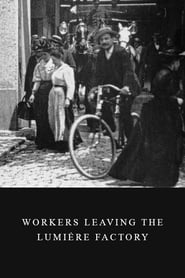
Working men and women leave through the main gate of the Lumière factory in Lyon, France. Filmed on 22 March 1895, it is often referred to as the first real motion picture ever made, although Louis Le Prince's 1888 Roundhay Garden Scene pre-dated it by seven years. Three separate versions of this film exist, which differ from one another in numerous ways. The first version features a carriage drawn by one horse, while in the second version the carriage is drawn by two horses, and there is no carriage at all in the third version. The clothing style is also different between the three versions, demonstrating the different seasons in which each was filmed. This film was made in the 35 mm format with an aspect ratio of 1.33:1, and at a speed of 16 frames per second. At that rate, the 17 meters of film length provided a duration of 46 seconds, holding a total of 800 frames.
Alexander Joseph Lisowski was born around 1575, and served as a common soldier under Jan Potocki in the campaign against the Wallachian hospodar. Later, as the leader of a confederation of rebellious soldiers, he became famous for plunder and arbitrariness. He was sentenced to banishment for this. He then enlisted in the service of Dmitri Samozwaniec. He was already a commander shrouded in legend when the stigma of infamy was lifted from him. He returned to Poland and created his famous cavalry, later known in Europe as the Polish cavalry or Lisowczycy, after its creator.
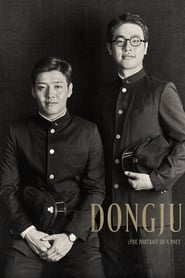
Based on a true story, renowned Korean poet, Yun Dong-ju, is detained and abused by the Japanese for participating in the Korean Independence Movement.
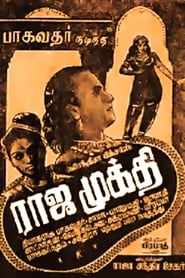
King Rajendra Varman and Queen Mrinalini are reigning the Vyjayanti empire. Mahendra Varman is the rival and the neighbouring king. Kannika is the minister’s daughter, who is in love with King Rajendra Varman and aims to attain him at any cost. This convoluted tale of palace intrigue, suspicion, unreciprocated love, seduction, villainy and piety was interspersed with excellent music.
We have detected that you are using an ad blocker. In order to view this page please disable your ad blocker or whitelist this site from your ad blocker. Thanks!